The Merlion, Singapore’s official mascot, is a mythical creature with the head of a lion and the body of a fish. It uniquely represents the nation’s rich heritage and ambitious journey. The lion’s head symbolizes Singapore’s original name, “Singapura,” meaning “Lion City,” rooted in a legendary sighting by Prince Sang Nila Utama. The fish body harks back to Singapore’s humble beginnings as an ancient fishing village known as Temasek. This iconic fusion encapsulates the country’s transformation from a maritime settlement to a thriving global metropolis, showcasing both its historical roots and its strength and courage.

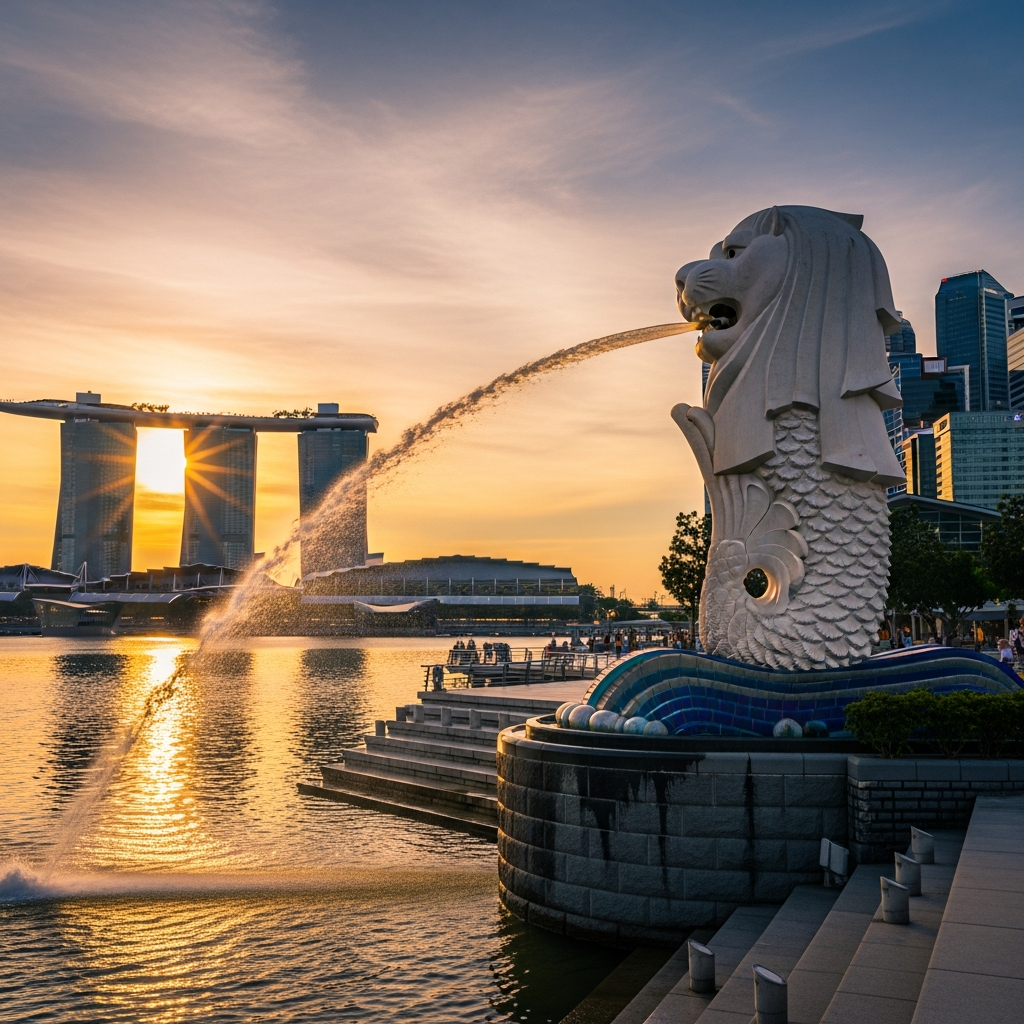
I remember my first trip to Singapore vividly. Stepping out of the air-conditioned Changi Airport into the warm, humid air, I felt an immediate sense of vibrant energy. But it wasn’t until I stood before the magnificent Merlion statue at Merlion Park, watching the water dramatically spout from its mouth against the backdrop of the city’s futuristic skyline, that I truly felt connected to the essence of Singapore. It wasn’t just a statue; it was a storyteller, a silent guardian, and a powerful emblem that seemed to hum with the very spirit of the nation. I found myself wondering, what does the Merlion represent in such a profound way to this dynamic city-state? Its presence was so commanding, so deeply woven into the city’s identity, that I knew there had to be more to this half-lion, half-fish figure than just a pretty landmark. This majestic creature, I would soon learn, tells the fascinating tale of Singapore’s past, present, and future, making it an indispensable symbol for locals and a captivating mystery for visitors.
The Birth of a Legend: Origins and Creation
The story of the Merlion truly begins in the mid-20th century, a time when Singapore was actively seeking to carve out a distinct identity on the world stage, especially as a burgeoning tourist destination. In 1964, the Singapore Tourist Promotion Board (STPB), now known as the Singapore Tourism Board, embarked on a quest to find a compelling emblem that could represent the country’s unique narrative and attract visitors. This was a pivotal moment, recognizing the power of a strong visual identity to captivate global audiences and succinctly convey a nation’s character.
The visionary behind the Merlion’s initial design was Mr. Fraser Brunner, a British ichthyologist and the then-curator of the Van Kleef Aquarium. He meticulously combined two historically significant elements that were intrinsically linked to Singapore’s heritage. His ingenious concept brought together the regal strength of a lion and the maritime essence of a fish, crafting a creature that was both fantastical and deeply symbolic. This design was not merely an artistic whim; it was a carefully considered synthesis of historical narratives and national aspirations, a symbol that could stand tall and proudly declare “This is Singapore.”
From 1964 until 1997, the Merlion served as the official logo of the STPB, playing a crucial role in the promotion of Singapore as a must-visit destination. Its registration as a trademark in 1966 further solidified its status as an official representation of the city-state. The Merlion quickly became synonymous with Singapore, appearing on countless promotional materials, postcards, and souvenirs, effectively broadcasting the island’s charm and unique appeal to a global audience. This initial purpose laid the groundwork for the Merlion’s enduring legacy, transforming it from a mere emblem into a beloved national icon. The question of what does the Merlion represent became clearer through its widespread use and recognition, signifying the nation’s emerging presence.
A Tale of Two Halves: Decoding the Merlion’s Symbolism
To truly grasp what does the Merlion represent, we must delve into the individual meanings embedded within its unique form: the powerful head of a lion and the graceful body of a fish. Each half tells a vital part of Singapore’s foundational story and its journey through time, creating a rich tapestry of cultural significance that resonates deeply with its people and captivates visitors worldwide. This dual nature is not just a creative design; it is a profound historical statement, blending myth with reality to forge a national identity.
The Majestic Lion’s Head: Singapura and Strength
The most striking feature of the Merlion is undoubtedly its majestic lion’s head. This powerful symbol directly references the ancient legend of Prince Sang Nila Utama. According to the Malay Annals, this Sumatran prince arrived on the shores of an island called Temasek in the 14th century. While hunting, he encountered a magnificent creature he initially mistook for a lion. Fascinated by its grandeur and imposing presence, he decided to rename the island “Singapura,” a Sanskrit term derived from “Singa” (lion) and “Pura” (city), thus christening it the “Lion City.” This legendary event is a cornerstone of Singaporean identity, providing a romantic and heroic origin for the nation’s name.
Beyond this captivating origin story, the lion’s head embodies a broader spectrum of virtues that Singapore cherishes. It symbolizes strength, courage, and power, reflecting the resilience and bold spirit that have characterized Singapore’s journey. It speaks to the nation’s ability to overcome challenges, to stand strong amidst adversity, and to assert its presence on the global stage despite its small size. The lion’s head also represents excellence, an aspiration that drives Singapore’s continuous pursuit of progress and innovation. This relentless drive for achievement, often against seemingly insurmountable odds, is a core part of the national ethos. When we ask what does the Merlion represent, the lion’s head answers with a resounding message of indomitable spirit and a fearless pursuit of a brighter future.
The image of the lion, revered across many cultures for its regal bearing and ferocity, perfectly captures Singapore’s ambition and its successful transformation into a modern metropolis. It speaks to the courage of its leaders and its people in building a prosperous nation from a colonial outpost. This symbolism is not merely historical; it is a living reminder of the values that continue to shape Singapore’s national character, inspiring citizens to strive for greatness and to embody the fierce determination associated with the king of the jungle.
The Graceful Fish Body: Temasek and Maritime Heritage
Complementing the powerful lion’s head is the Merlion’s graceful fish body, which gracefully merges into the waves it appears to swim through. This half of the mythical creature serves as a profound homage to Singapore’s ancient past and its fundamental connection to the sea. The fish body specifically alludes to the island’s earliest known name, “Temasek,” which means “sea town” or “sea” in Javanese. This name paints a picture of a time long before modern skyscrapers, when Singapore was a simple, humble fishing village, thriving on the bounty of the surrounding waters.
The fish body thus represents Singapore’s humble beginnings as a small fishing village and a crucial trading port. It reminds us that the city-state’s prosperity was not born overnight but grew from its strategic location as a maritime hub where diverse communities of fishermen, traders, and sailors built their livelihoods. The Singapore River, in particular, was the lifeline of this early settlement, bustling with activity and trade. This aspect of what does the Merlion represent underscores the deep historical link between the land and the sea, highlighting how the ocean has always been integral to Singapore’s existence and growth.
Furthermore, the fish body honors Singapore’s rich maritime heritage and the Orang Laut (sea gypsies) who were among the island’s earliest inhabitants. These indigenous seafaring people played a crucial role in the early development of the region, navigating its waters and establishing crucial trade routes. The Merlion’s fish tail therefore symbolizes a continuity, linking the modern, bustling port of Singapore to its ancestral roots as a vital waypoint for sea travelers and merchants. It acknowledges that the nation’s success today is built upon centuries of maritime prowess and strategic engagement with the sea. This dual symbolism, of both ancient origins and modern strength, is precisely what does the Merlion represent so comprehensively.
The Merlion’s Journey: From Emblem to National Icon
The evolution of the Merlion from a simple tourism emblem to a cherished national icon is a testament to its powerful symbolism and the unwavering efforts to immortalize its image. The story involves the creation of its physical form, its changing locations, and its growing significance in the national consciousness. To understand what does the Merlion represent today, we must trace this fascinating journey.
The first Merlion statues were brought to life by local sculptor Lim Nang Seng between November 1971 and August 1972. These initial sculptures were based on a blueprint by artist Kwan Sai Kheong. The main Merlion statue, towering at 8.6 meters high and weighing 70 tons, was crafted from cement fondue, with its skin made of porcelain plates and eyes from small red teacups. This intricate craftsmanship speaks to the dedication involved in creating a symbol worthy of a nation. Interestingly, all eight of Lim Nang Seng’s children, ranging from 11 to 23 years old, participated in the construction, making it a truly family and community effort.

On September 15, 1972, the then-Prime Minister Lee Kuan Yew officiated the installation ceremony of the Merlion statue. The original statue, accompanied by a smaller “Merlion cub” (2 meters tall), was initially located at the mouth of the Singapore River. This location was chosen for its strategic importance, welcoming visitors as they entered the river, a clear statement of what does the Merlion represent to incoming travelers. However, urban development brought changes. With the completion of the Esplanade Bridge in 1997, the views of the Merlion from Marina Bay were obstructed. To ensure its continued prominence and accessibility, the main Merlion statue and its cub were moved to the newly created Merlion Park in 2002, adjacent to One Fullerton, offering spectacular views of Marina Bay and the city’s modern skyline.
This relocation was not just a physical move; it symbolized the Merlion’s evolution beyond a mere logo. It transformed into a national personification, a tangible representation of Singapore itself. The Merlion became an official national symbol, standing alongside the flag, coat of arms, and national anthem, cementing its place in the nation’s identity. This journey from an emblem designed for tourism to a deeply ingrained national icon underscores the profound answer to what does the Merlion represent: it represents the very heart and soul of Singapore.
More Than Just a Statue: Cultural Significance and Modern Presence
Beyond its historical and symbolic roots, the Merlion has transcended its initial purpose to become an undeniable cultural landmark and a vibrant element of modern Singaporean life. It’s more than just an inanimate object; it’s a living symbol that continues to captivate and inspire, profoundly shaping perceptions of Singapore both at home and abroad. When considering what does the Merlion represent in contemporary terms, its widespread cultural resonance is paramount.
As a tourism draw, the Merlion is unparalleled. It is one of Singapore’s most recognizable landmarks, attracting millions of visitors annually to Merlion Park, where they can capture iconic photographs against the stunning backdrop of Marina Bay. The sight of water perpetually spouting from its mouth, set against the gleaming skyscrapers, offers a mesmerizing experience that epitomizes Singapore’s blend of tradition and modernity. This constant stream of visitors highlights the Merlion’s enduring appeal as a quintessential Singaporean experience.
The Merlion’s image has seeped into virtually every aspect of Singaporean pop culture, demonstrating just what does the Merlion represent in popular imagination. It has made appearances in various films, TV series, and books, becoming a global symbol of Singapore. From animated series like “Cowboy Bebop” and “We Bare Bears” to video games like “Animal Crossing” and “Mario Kart,” and even major Hollywood productions like “Crazy Rich Asians,” the Merlion’s distinctive form is instantly recognizable. Its image is ubiquitous on souvenirs, T-shirts, and marketing campaigns, making it an ever-present reminder of the nation’s identity. This pervasive presence means that even those who have never visited Singapore likely recognize its iconic mascot.
Moreover, the Merlion has evolved into a powerful symbol of national pride and a sense of “home” for Singaporeans. It represents the incredible transformation of their small island nation into a prosperous and respected global player. For many, it embodies the spirit of resilience, hard work, and determination that defines the Singaporean narrative. It serves as a reminder of collective achievements and a focal point for national identity, fostering a sense of connection and shared experiences among residents. The Merlion is not just a statue; it is a gathering place where people come together to celebrate Singapore’s culture, history, and achievements.
It’s also worth noting that there isn’t just one Merlion. While the one at Merlion Park is the most famous, there are actually several official Merlion statues scattered across the island. According to some sources, there are seven authorized Merlion statues in Singapore, including the main 8.6-meter statue and its smaller, two-meter-tall “Merlion Cub” at Merlion Park. Other official Merlions can be found at locations such as Tourism Court and Mount Faber, and a pair of smaller Merlions exist in Ang Mo Kio. This proliferation of Merlions further cements its status as a pervasive and beloved national symbol, continuously reinforcing what does the Merlion represent to every corner of the country.
The Merlion’s Enduring Legacy
The Merlion, with its unique blend of myth and reality, continues to be a cornerstone of Singapore’s national identity. Its enduring legacy lies not just in its iconic statues or its widespread recognition, but in its profound ability to articulate the very essence of the nation. For those pondering what does the Merlion represent in the long term, the answer is a powerful narrative of resilience, dynamism, and an unwavering forward-looking vision.
This mythical creature stands as a constant reminder of Singapore’s resilience and its dynamic transformation. It symbolizes a nation that has consistently adapted and innovated, transforming itself from a humble trading post into a bustling global hub. The Merlion’s dual nature, capable of inhabiting both land and sea, metaphorically represents Singapore’s agility in navigating global challenges and opportunities, always striving for progress while remaining connected to its roots. This adaptability is a key message of what does the Merlion represent for future generations.
Furthermore, the Merlion plays a crucial role in binding the people of Singapore together. It serves as a shared symbol, a common thread that weaves through the diverse fabric of the nation. Whether it’s seeing its image on a national sports team’s branding or visiting Merlion Park with family, the Merlion fosters a sense of collective memory and pride. It represents the collective hard work, determination, and spirit that have built modern Singapore. In this way, what does the Merlion represent is a sense of belonging and unity for all Singaporeans.
The Merlion’s significance extends beyond mere tourism; it is an intrinsic part of Singapore’s national narrative and its ongoing aspirations. It embodies the courage to dream big, the strength to overcome limitations, and the wisdom to remember where one comes from. As Singapore continues to evolve and face new frontiers, the Merlion remains a steadfast symbol, a timeless icon that tells the story of a small island with a giant heart, perpetually reminding the world what does the Merlion represent: a vibrant, resilient, and forward-looking nation deeply proud of its heritage.
FAQ
What is the primary meaning behind the Merlion?
The Merlion primarily symbolizes Singapore’s dual identity. Its lion head represents “Singapura,” or “Lion City,” referring to the legend of Prince Sang Nila Utama. Its fish body signifies “Temasek,” the ancient name for Singapore, highlighting its origins as a humble fishing village and maritime hub. This blend represents Singapore’s transformation from past to present.
When was the Merlion created and by whom?
The Merlion was conceived in 1964 by Mr. Fraser Brunner, a British ichthyologist and curator of the Van Kleef Aquarium, for the Singapore Tourist Promotion Board (STPB). The first major Merlion statue was sculpted by local craftsman Mr. Lim Nang Seng and officially unveiled in 1972.
How many official Merlion statues are there in Singapore?
There are several official Merlion statues throughout Singapore. The most prominent are the 8.6-meter main Merlion and a smaller 2-meter “Merlion Cub” located in Merlion Park. Other authorized statues can be found at locations such as Tourism Court and Mount Faber, with some sources stating there are seven in total across the island.
Why does the Merlion spout water?
The Merlion statue in Merlion Park famously spouts water from its mouth, creating a dynamic visual that adds to its appeal as a tourist attraction. This continuous gushing of water has no specific historical or symbolic meaning other than being a characteristic feature of the iconic statue, enhancing its grandeur and connection to the sea.
Is the Merlion a real creature from folklore?
No, the Merlion is a mythical creature specifically designed as a national symbol and mascot for Singapore. It combines elements from two significant historical references: the lion from the legend of Singapura and the fish representing Singapore’s origins as a fishing village. It is not an ancient mythological beast from traditional folklore.