What Do The Taj Mahal’S Designs Symbolize?
The Taj Mahal stands as one of the most iconic structures in human history, often cited as the ultimate monument to love. However, for the architects of the Mughal Empire and Emperor Shah Jahan, it was far more than a romantic gesture. Every curve, stone, and garden path was meticulously designed to represent a complex tapestry of spiritual, political, and cosmological symbolism.
The Vision of Paradise on Earth (Jannah)
At its core, the Taj Mahal is a physical manifestation of Paradise (Jannah) as described in Islamic theology. During the 17th century, the Mughals sought to create a “heavenly residence” for the departed Mumtaz Mahal. This theme of an earthly paradise dictates the entire layout of the complex.
The Quran describes Paradise as a place of lush gardens, flowing water, and magnificent pavilions. By replicating these descriptions, the designers aimed to provide a peaceful transition for the soul. The use of white marble further emphasizes this purity and the divine light of the afterlife.
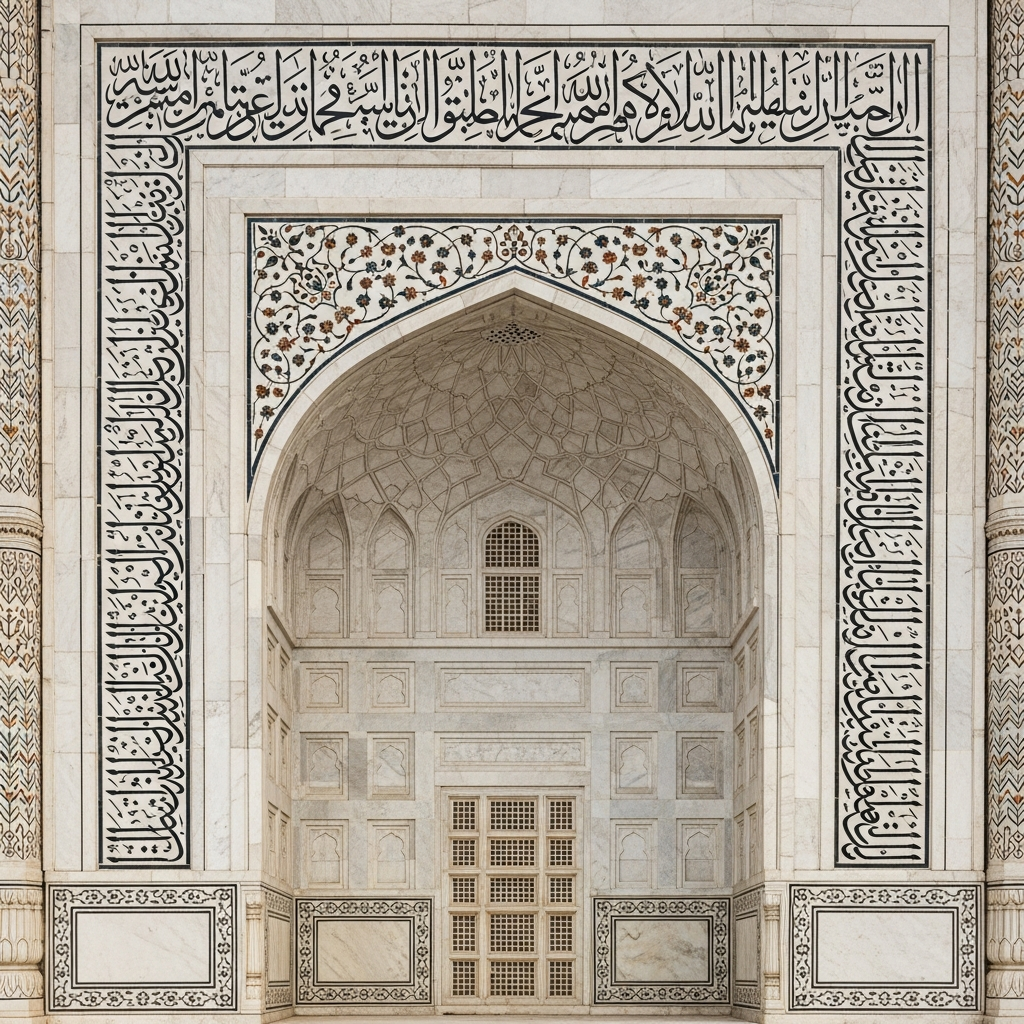
When you walk through the main gateway (Darwaza-i-rauza), the transition from the bustling world outside to the serene garden inside symbolizes the passage from the earthly realm to the spiritual one. The gateway itself is inscribed with verses from the Quran, inviting the “pure of heart” to enter the gardens of Eden.
The Power of Perfect Symmetry and Divine Order
One of the most striking features of the Taj Mahal is its absolute bilateral symmetry. To the Mughal mind, symmetry was not just an aesthetic choice but a representation of divine order and balance. It reflects the belief that God’s creation is perfect and harmonious.
- The Central Axis: The entire complex is organized around a central north-south axis.
- Mirroring Elements: The mosque on the west is mirrored by the Jawab (assembly hall) on the east, ensuring visual equilibrium.
- The Exception: Interestingly, the only break in this perfect symmetry is the cenotaph of Shah Jahan himself, which was placed next to Mumtaz Mahal’s after his death, suggesting that human life is the only element that can disrupt the divine plan.
By maintaining this rigid geometry, the architects created a sense of timelessness and stability. For you as a visitor, this symmetry creates a feeling of overwhelming calm, as the brain naturally finds peace in perfectly balanced proportions.
The Symbolism of the White Marble and Materials
The choice of materials in the Taj Mahal was deeply symbolic and followed strict Mughal social and spiritual hierarchies. While many Mughal buildings used red sandstone, the Taj Mahal’s primary mausoleum is constructed of Makrana white marble.
In the Persian and Indian traditions of the time, white was often associated with purity, spirituality, and the Brahmin caste (the priestly class). By choosing white for the tomb, Shah Jahan elevated the status of the building to a sacred level. The red sandstone used for the surrounding buildings provides a stark contrast, highlighting the tomb as the “soul” of the complex.
Furthermore, the marble has a translucent quality. It changes color depending on the time of day—appearing pinkish in the morning, milky white during the day, and golden under the moon. This shifting light symbolizes the presence of the divine and the fleeting nature of earthly life.
Calligraphy: The Voice of the Divine
The calligraphy found on the Taj Mahal is not merely decorative; it is a carefully curated selection of Quranic verses designed to guide the soul. Created by the master calligrapher Amanat Khan, the script grows larger as it moves higher up the walls to ensure it remains legible from the ground—a feat of optical engineering.
The inscriptions focus heavily on themes of judgment, mercy, and the rewards of the faithful. For example, the verses on the main gateway explicitly mention the “Day of Reckoning.” This serves as a reminder to the visitor of the spiritual weight of the site.
By wrapping the building in the “Word of God,” the architects transformed the stone structure into a living prayer. The calligraphy acts as a bridge between the physical world and the metaphysical concepts of Islam.
Pietra Dura: The Eternal Flowers of Paradise
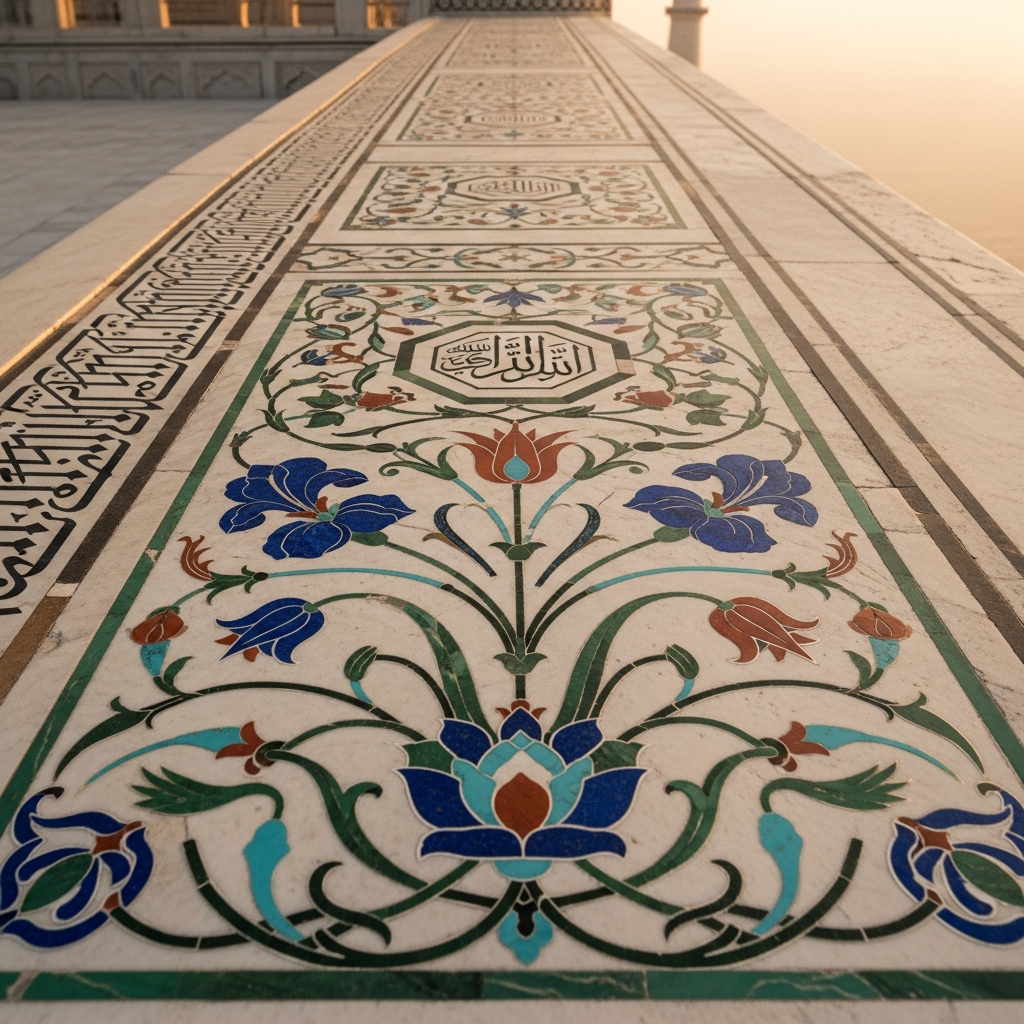
If you look closely at the walls, you will see intricate floral patterns made of semi-precious stones. This technique is known as Pietra Dura (or Parchin Kari). These flowers are not just ornaments; they represent the ever-blooming flora of heaven.
In Islamic tradition, the “Garden of Paradise” is filled with flowers that never wither. By inlaying stones like lapis lazuli, jade, crystal, and turquoise into the marble, the craftsmen created “eternal” blossoms. These flowers symbolise immortality and the beauty of the soul.
The specific types of flowers depicted often include lilies, tulips, and poppies. These were chosen for their elegance and their association with the lush landscapes of the Mughal ancestral lands in Central Asia, bridging the gap between the Emperor’s heritage and his spiritual aspirations.
The Charbagh: The Four Rivers of the Afterlife
The garden, known as the Charbagh, is divided into four main quadrants by four intersecting water channels. This layout is a direct reference to the four rivers of Paradise mentioned in the Quran: water, milk, wine, and honey.
The number four is sacred in Islamic architecture, representing the four corners of the earth and the four elements. The central reflecting pool (Al Hawd al-Kawthar) is placed at the intersection, symbolizing the “Tank of Abundance” where the faithful quench their thirst upon entering heaven.
- The Reflection: The water acts as a mirror, doubling the beauty of the tomb and emphasizing the concept of “As above, so below.”
- The Sound: The gentle flow of water was intended to provide a “soundscape” of tranquility, masking the noise of the outside world.
- The Vegetation: Originally, the garden was filled with fruit-bearing trees and fragrant flowers, further enhancing the sensory experience of a “heaven on earth.”
The Dome and Minarets: Reaching for the Heavens
The massive central dome, often called the “onion dome,” is the most recognizable feature of the Taj Mahal. In architectural symbolism, the dome represents the vault of heaven. It sits atop a square base, which represents the earth. The transition from the square to the circle symbolizes the connection between man and God.
The four minarets that surround the tomb are slightly tilted outward. While this was a practical safety measure (to ensure they wouldn’t fall on the tomb during an earthquake), it also serves a symbolic purpose. They frame the mausoleum like a throne, asserting the sovereignty of the divine over the earthly realm.
The lotus motif at the top of the dome is a nod to Indian symbolism. The lotus, which grows in mud but remains pure, represents spiritual enlightenment and the resilience of the soul. This blend of Islamic and Indian motifs shows the inclusive nature of Mughal art.
Conclusion: A Legacy of Meaning
The Taj Mahal is far more than a beautiful building; it is a symbolic map of the cosmos as understood by the Mughal Empire. From the geometric precision that mirrors divine order to the floral inlays that represent eternal life, every detail was designed to tell a story of faith, love, and the afterlife.
When you visit or study the Taj Mahal, you are looking at a sermon in stone. It stands as a reminder that while human life is temporary, the pursuit of beauty, harmony, and spiritual truth can create something that lasts for centuries. Understanding these symbols allows us to appreciate the Taj Mahal not just as a wonder of the world, but as a masterpiece of human thought.
Frequently Asked Questions
Why is the Taj Mahal perfectly symmetrical?
The symmetry represents divine order and balance in the universe. It reflects the Islamic belief that God’s creation is perfect. The only intentional break in symmetry is the placement of Shah Jahan’s grave.
What do the flowers on the walls represent?
The floral inlays, or Pietra Dura, represent the eternal gardens of Paradise. Unlike real flowers that die, these stone flowers “bloom” forever, symbolizing immortality and the beauty of the soul in the afterlife.
What is the significance of the water channels?
The four water channels in the Charbagh garden symbolize the four rivers of Paradise (water, milk, wine, and honey) described in the Quran. They divide the garden into four parts, representing the four corners of the world.
Why was white marble used for the main building?
White marble was chosen to symbolize purity, peace, and divine light. It also distinguished the tomb from other administrative or residential buildings, which were typically made of red sandstone.
What does the dome symbolize?
The dome represents the vault of heaven or the celestial realm. Its position above a square base symbolizes the meeting point between the earthly world and the spiritual heavens.