What Are Pentacles? A Comprehensive Guide to Their History and Meaning
When you first encounter the term “pentacle,” your mind might immediately jump to images of ancient rituals, mystical jewelry, or perhaps even Hollywood’s often-misguided portrayals of occultism. However, the reality of the pentacle is far more nuanced, historically rich, and spiritually significant than popular media suggests. For practitioners of various spiritual paths, the pentacle is a sacred symbol of protection, the elements, and the interconnectedness of all life.
Defining the Pentacle: More Than Just a Star
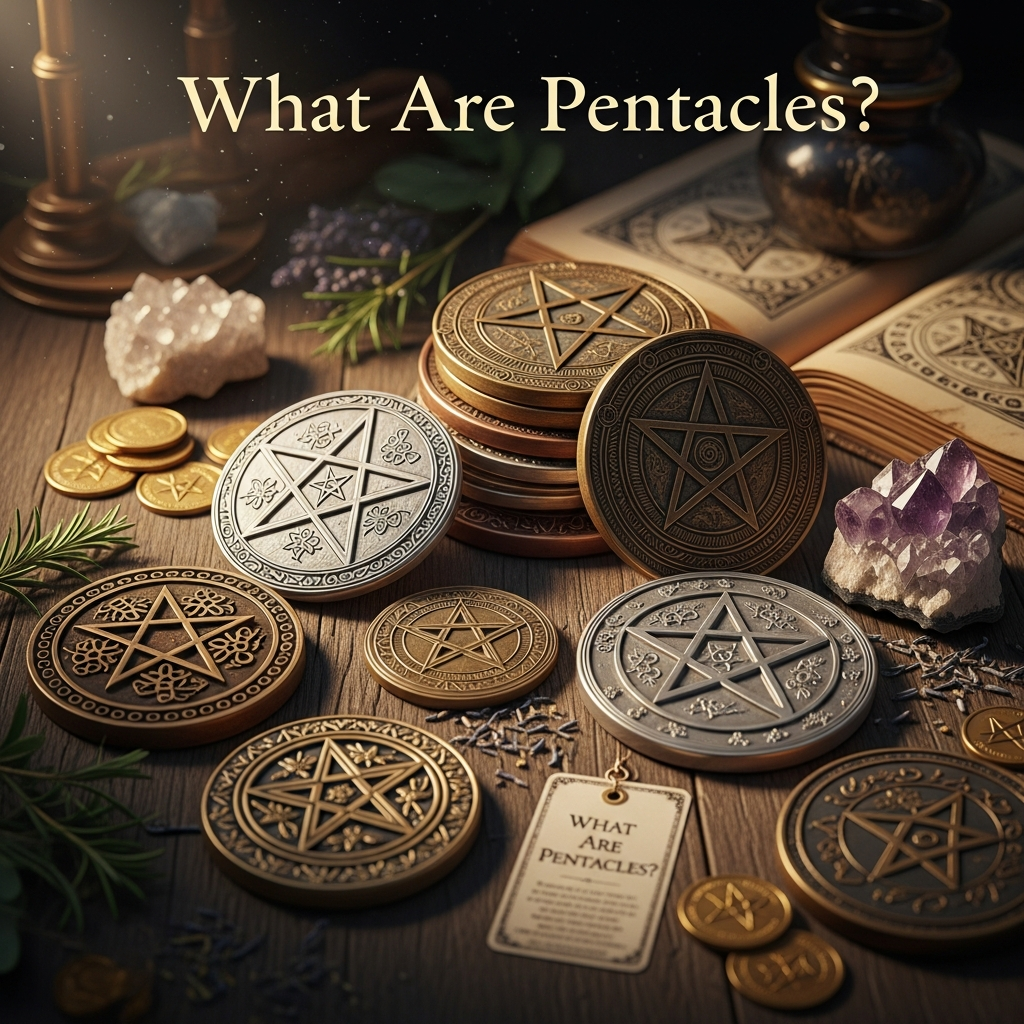
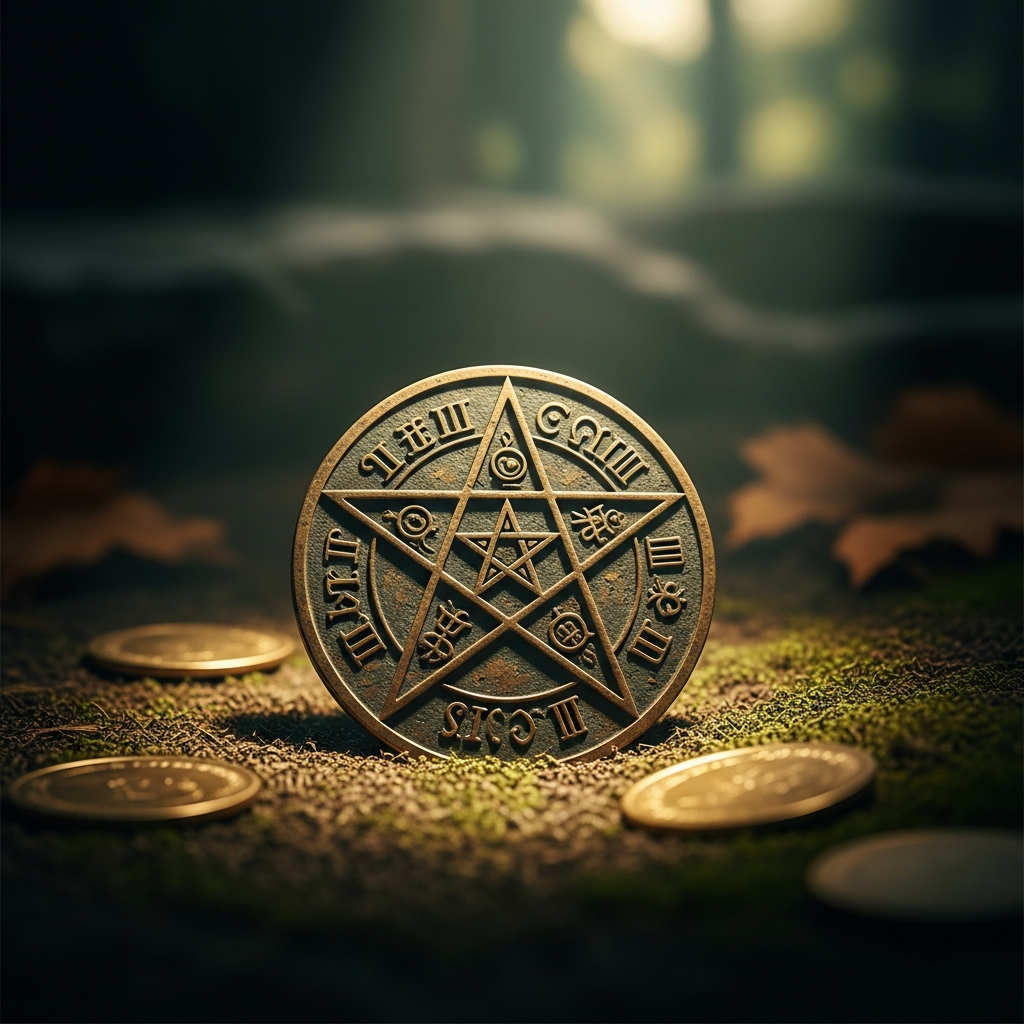
To understand what a pentacle is, you must first understand its physical form. In its most common modern iteration, a pentacle is a pentagram (a five-pointed star) enclosed within a circle. The circle is a crucial component, as it represents unity, wholeness, and the infinite nature of the universe. Without the circle, the five-pointed star is simply a pentagram; with the circle, it becomes a pentacle.
The term “pentacle” is derived from the Latin word pentaculum and the Greek word penta, meaning five. Historically, the word was used more broadly to describe any talisman or amulet used in magical practices, regardless of whether it contained a five-pointed star. However, in modern Western esotericism, the definition has narrowed specifically to the circled star symbol.
It is important for you to recognize that the pentacle is almost always positioned with a single point facing upward. In many spiritual traditions, this upward point represents the Spirit or the Divine, presiding over the four material elements of the world. This orientation symbolizes the triumph of mind and spirit over physical matter.
The Historical Evolution of the Pentacle
The history of the pentacle is not confined to a single culture or era. Instead, it is a symbol that has evolved across thousands of years, appearing in various forms across the globe. By tracing its history, you can see how its meaning has shifted from a mathematical curiosity to a powerful religious icon.
Ancient Mesopotamia and Greece
The earliest known use of the five-pointed star dates back to ancient Mesopotamia (modern-day Iraq) around 3500 BCE. It was used as a symbol of power and was often found on pottery and royal seals. For the ancient Sumerians, the symbol represented the “corners of the world” or celestial directions.
In Ancient Greece, the pentagram was a sacred symbol for the Pythagoreans. Pythagoras, the famous mathematician and philosopher, viewed the five-pointed star as a symbol of mathematical perfection and “Hygeia” (Health). They believed the star contained the “Golden Ratio,” representing the divine proportion found throughout nature.
The Middle Ages and the Renaissance
During the Middle Ages, the pentacle was surprisingly common in Christian iconography. It was often used to represent the five wounds of Christ (the hands, feet, and side). It was also considered a protective symbol against demons and evil spirits. In the famous poem Sir Gawain and the Green Knight, the protagonist carries a shield adorned with a pentangle, symbolizing his virtues and devotion.
As the Renaissance arrived, the pentacle became a staple in Grimoires (books of magic). Figures like Heinrich Cornelius Agrippa and the authors of the Key of Solomon used complex pentacles—often featuring various planetary symbols and Hebrew names of God—to command spirits and protect the magician during rituals.
The Five Elements: Symbolism of the Points
One of the reasons the pentacle remains so popular today is its deep elemental symbolism. Each of the five points of the star represents a specific element that constitutes the universe. When you look at a pentacle, you are looking at a map of existence. The elements are typically assigned as follows:
- Earth (Lower Right): Represents stability, grounding, fertility, money, and the physical body.
- Air (Upper Left): Represents the mind, intellect, communication, inspiration, and the breath of life.
- Fire (Lower Left): Represents passion, energy, willpower, transformation, and the spark of creation.
- Water (Upper Right): Represents emotions, intuition, healing, the subconscious, and the flow of life.
- Spirit (Top Point): Represents the Divine, the Soul, or the “Akasha” that connects and balances all other elements.
The enclosing circle represents the Universe or the Goddess, binding these elements together in perfect harmony. It serves as a reminder that everything in the cosmos is interconnected and that no element exists in isolation from the others.
Pentacles in Modern Paganism and Wicca
In the 20th century, the pentacle was adopted as the primary symbol of Wicca and many other Neo-Pagan paths. For a modern Wiccan, the pentacle is not just a piece of jewelry; it is a fundamental tool for worship and magic. It is often placed on an altar to represent the element of Earth.
Wiccans use the pentacle for several ritualistic purposes, including:
- Consecration: Placing items like crystals, herbs, or jewelry on a pentacle to “charge” them with energy.
- Protection: Wearing a pentacle necklace to ward off negative energies and provide spiritual shielding.
- Focus: Using the symbol as a focal point during meditation to achieve a state of balance.
- Evocation: Drawing the symbol in the air (invoking or banishing pentagrams) to call upon or release elemental energies.
It is important to note that for Wiccans, the pentacle is a symbol of peace and life. The common misconception that it is a “Satanic” symbol stems from a misunderstanding of the inverted pentagram, which was adopted by some occultists in the 19th century to represent the triumph of matter over spirit.
The Suit of Pentacles in Tarot
If you have ever had a Tarot reading, you likely encountered the Suit of Pentacles (sometimes called Coins or Disks). This suit is one of the four Minor Arcana and is deeply tied to the material world. When Pentacles appear in a reading, they usually refer to your finances, career, home life, and physical health.
The Meaning of the Suit
The Suit of Pentacles corresponds to the element of Earth. It deals with the “here and now”—the tangible things you can touch and see. While the Suit of Cups deals with emotions and the Suit of Swords deals with the mind, Pentacles deal with manifestation. They show how your ideas and feelings take shape in the physical world.
Key Cards in the Suit
- Ace of Pentacles: Represents a new financial opportunity, a promotion, or the beginning of a prosperous venture.
- Three of Pentacles: Symbolizes teamwork, craftsmanship, and the importance of building a solid foundation.
- Eight of Pentacles: Represents apprenticeship, hard work, and the mastery of a specific skill.
- Ten of Pentacles: Signifies long-term wealth, family legacy, and reaching a state of ultimate stability.
By studying the Suit of Pentacles, you can gain insight into how to better manage your resources and how to ground your spiritual energy into practical, real-world success.
Materials and Craftsmanship: What Are Pentacles Made Of?
Pentacles can be crafted from a wide variety of materials, and the choice of material often depends on the practitioner’s intention. If you are looking to acquire or create a pentacle, consider the energetic properties of these common materials:
Metals
Silver is a popular choice for pentacles because it is associated with the Moon and the Goddess. It is believed to enhance intuition and psychic abilities. Gold, associated with the Sun and the God, is often used for success, vitality, and solar energy. Copper is prized for its conductive properties, making it excellent for directing magical energy.
Wood
Many practitioners prefer wooden pentacles for their natural, earthy feel. Different types of wood carry different meanings. For example, Oak represents strength and protection, while Willow is tied to healing and lunar magic. A wooden pentacle is often hand-carved or wood-burned, adding a personal touch to the sacred tool.
Clay and Stone
Clay pentacles are easy to make and can be inscribed with personal symbols before being fired. Stone pentacles, such as those carved from Soapstone or Marble, are incredibly durable and carry the grounding energy of the earth itself.
How to Cleanse and Charge Your Pentacle
Once you have obtained a pentacle, whether it is a piece of jewelry or an altar tile, it is common practice to “cleanse” and “charge” it. Cleansing removes any lingering energies from the manufacturing or shipping process, while charging infuses the object with your personal intention.
Here are some simple ways you can cleanse your pentacle:
- Smudging: Pass the pentacle through the smoke of sage, palo santo, or incense.
- Moonlight: Leave the pentacle on a windowsill during a Full Moon to soak up lunar energy.
- Salt Burial: Place the pentacle in a bowl of sea salt overnight (ensure the material won’t be damaged by salt).
- Running Water: Briefly hold the pentacle under a natural stream or tap water (check for water-solubility first).
To charge the pentacle, hold it in your hands, close your eyes, and visualize a bright light surrounding the object. State your intention clearly, such as: “I charge this pentacle to protect me and keep me grounded.”
Common Misconceptions About Pentacles
Because of its history and its use in modern Paganism, the pentacle is often the subject of significant myths. It is important to clear these up so you can understand the symbol in its true context.
Is the Pentacle Satanic?
No. The pentacle is a symbol of the elements and protection. The association with Satanism generally applies to the inverted pentagram (two points up), which was adopted by the Church of Satan in the 1960s as the Sigil of Baphomet. The upright pentacle has been used by various religions for millennia as a symbol of good and divine order.
Is it Only for Witches?
While the pentacle is a central symbol in Wicca, it is not exclusive to “witches.” Many people wear pentacles as a general symbol of their connection to nature, their interest in sacred geometry, or as a protective amulet. Its history in Christianity and Pythagoreanism shows that it belongs to many different traditions.
The Cultural Impact of the Pentacle Today
In the modern world, the pentacle has moved beyond the shadows of secret societies and into the mainstream. You can find pentacles in fashion, art, and popular television shows like Supernatural or Charmed. While these portrayals aren’t always accurate, they have helped to destigmatize the symbol.
In the United States, the pentacle is officially recognized by the Department of Veterans Affairs. Since 2007, the pentacle has been an approved emblem for use on the headstones of fallen soldiers, acknowledging Wicca and Paganism as legitimate religious paths. This was a landmark moment for religious freedom and the public recognition of the pentacle’s sacred nature.
Conclusion: The Enduring Power of the Pentacle
Whether you view it as a mathematical wonder, a historical artifact, or a sacred religious icon, the pentacle remains one of the most powerful symbols in the human lexicon. It reminds you of your place in the universe—a delicate balance of earth, air, fire, water, and spirit.
By understanding what pentacles are, you move past the stereotypes and tap into a rich tradition of protection, harmony, and manifestation. Whether you wear one around your neck or place one on your desk, the pentacle serves as a constant reminder that you are part of a larger, interconnected cosmos.
Frequently Asked Questions
What is the difference between a pentacle and a pentagram?
A pentagram is a five-pointed star drawn with five straight lines. A pentacle is a pentagram that is enclosed within a circle. The circle adds the meaning of unity and protection to the star.
Can I wear a pentacle if I am not Wiccan?
Yes, you can. The pentacle is a universal symbol representing the five elements and the connection between spirit and matter. Many people wear it as a symbol of their love for nature or for personal protection.
What does an upside-down pentacle mean?
An inverted pentacle (two points up) is often used to represent the material world’s dominance over the spirit. In some traditions, it is used to signify a second-degree initiation, while in others, it is used as a symbol of Satanism. Context is always key.
Where should I place a pentacle in my home?
Many people place a pentacle near their front door for protection. Others place it on an altar or in a workspace to help with grounding and focus. There is no “wrong” place, as long as it is treated with respect.