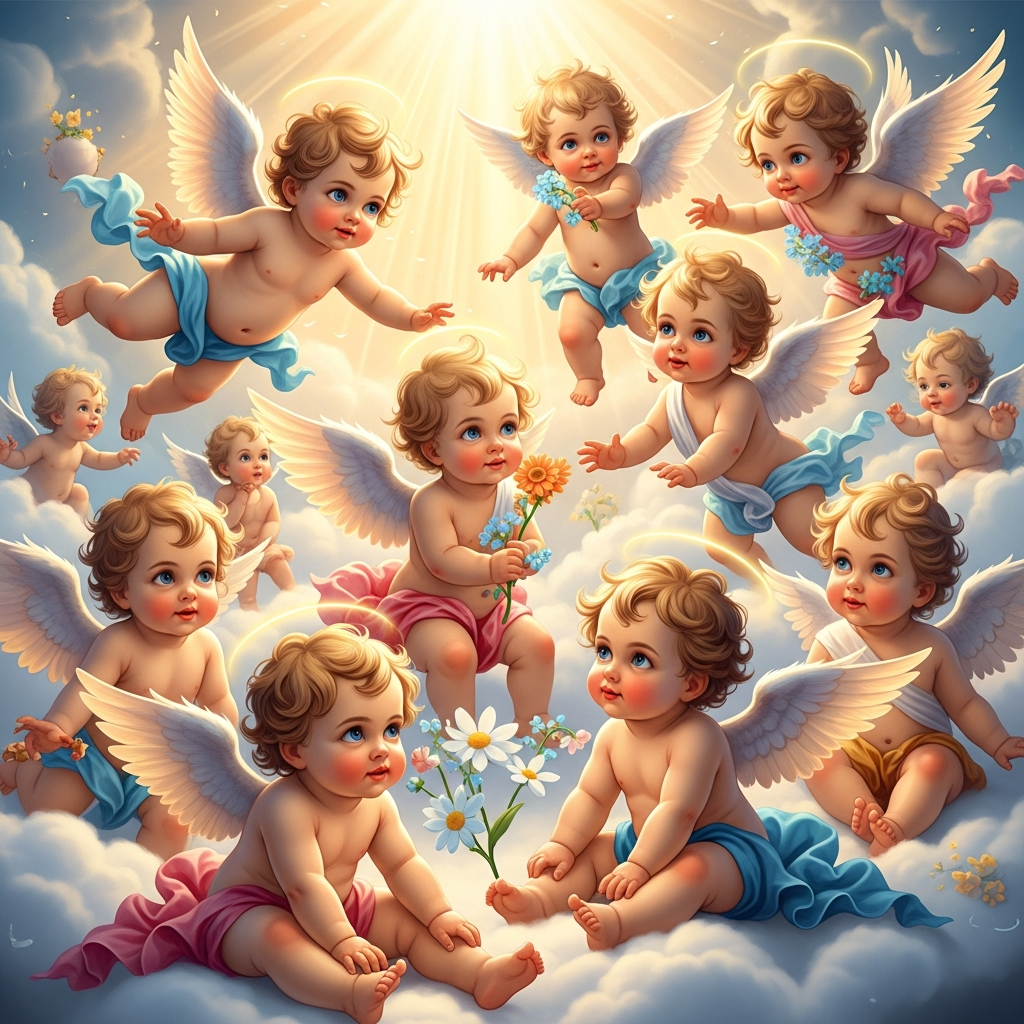
What Are Baby Winged Angels Called? The Definitive Guide to Cherubs and Putti
When you picture a “baby angel,” your mind likely drifts to a chubby, winged infant floating on a cloud or appearing on a Valentine’s Day card. However, if you were to ask an art historian or a theologian, “What are baby winged angels called?” you might receive a more complex answer than you expected.
In common parlance, these figures are almost universally referred to as Cherubs. Yet, in the realms of classical art and religious history, the answer involves a fascinating distinction between Cherubim, Putti, and even mythological figures like Cupid.
This comprehensive guide will explore the terminology, history, and cultural significance of these celestial infants, helping you distinguish between the different types of baby winged figures found in cathedrals, museums, and modern pop culture.
The Short Answer: It Depends on the Context
If you are looking for a quick name, the most accurate term used in art history for a winged baby is a Putto (plural: Putti). However, in a religious or casual context, people often call them Cherubs.
To understand why there is so much confusion, we must look at three distinct categories:
- Putti: Secular, decorative winged infants used in art.
- Cherubim (Cherubs): High-ranking celestial beings in the biblical hierarchy.
- Cupid/Eros: The mythological god of love, often depicted as a winged child.
1. The Artistic Term: Understanding the “Putto”
The word Putto comes from the Latin word putus, meaning “boy” or “child.” In the world of art history, a Putto is a figure depicted as a chubby male child, usually naked and sometimes possessing wings.
The Etymology and Origins
While the term specifically refers to a child, its application in art became prominent during the Italian Renaissance. These figures were not necessarily intended to be “angels” in the religious sense. Instead, they served as decorative motifs representing innocence, joy, or various human emotions.
How Putti Became Popular in the Renaissance
The revival of the Putto is largely credited to the sculptor Donatello in the 1420s. He drew inspiration from ancient Roman sarcophagi and Greek art, where winged infants known as erotes (the attendants of Aphrodite) were common.
Donatello infused these figures with a new sense of energy and Christian symbolism, leading to their widespread adoption in:
- Classical Architecture: Often found on friezes and columns.
- Religious Paintings: Acting as attendants to the Virgin Mary or Christ.
- Secular Art: Representing themes of love and abundance.
2. The Religious Term: What Are Cherubim?
In a strictly theological sense, the answer to “what are baby winged angels called” becomes much more intense. In the Bible, Cherubim (the plural of Cherub) are anything but “cute babies.”
The Biblical Reality vs. The Artistic Interpretation
If you read the Old Testament (specifically the Book of Ezekiel), Cherubim are described as fearsome, majestic beings. They are guardians of the divine realm. Ezekiel 10 describes them as having:
- Four faces (a man, a lion, an ox, and an eagle).
- Four wings covered with eyes.
- A straight, gleaming appearance.
They were the beings stationed at the entrance of the Garden of Eden with a flaming sword to prevent humanity from returning.
The Evolution of the “Baby Cherub”
So, how did a four-faced celestial guardian become a chubby infant? This shift occurred during the Renaissance. Artists found the literal biblical descriptions of Cherubim difficult to paint in a way that felt harmonious with the “human-centric” beauty of the era.
As a result, they began to substitute the terrifying Cherubim with the aesthetically pleasing Putti. Over centuries, the two concepts merged in the public consciousness. Today, when you ask what a baby winged angel is called, most people say “Cherub,” even though they are technically describing a “Putto.”
3. The Mythological Connection: Cupid and Eros
You cannot discuss baby winged angels without mentioning the most famous one of all: Cupid.
In Roman mythology, Cupid (Eros in Greek) is the god of desire, erotic love, and affection. While he was originally depicted as a slender youth in Greek art, the Romans—and later Renaissance artists—transformed him into a winged infant.
How to Identify Cupid
While a generic Putto might just be a decorative element, you can identify a figure as Cupid if he possesses specific “attributes” or tools:
- A Bow and Arrow: His primary tool for making people fall in love.
- A Quiver: To hold his golden and leaden arrows.
- Blindfold: Representing the idea that “love is blind.”
If you see a winged baby in a painting without these tools, it is likely a Putto or a Cherub. If he has the bow, he is Cupid.
4. Putto vs. Cherub: The Definitive Comparison
To help you navigate these terms, here is a breakdown of the key differences between the artistic “Putto” and the religious “Cherub.”
| Feature | Putto (Plural: Putti) | Cherub (Biblical Cherubim) |
|---|---|---|
| Origin | Classical Mythology / Italian Renaissance | Ancient Near Eastern / Hebrew Bible |
| Appearance | Chubby, winged infant | Majestic, multi-faced, multi-winged |
| Primary Role | Decorative, joyful, symbolic of love | Guardian of God’s throne, warrior |
| Context | Art, Architecture, Secular themes | Theology, Scripture, Sacred spaces |
| Nudity | Usually depicted naked | Often depicted in light or divine fire |
5. Why Do We Confuse Them? A Brief History of Iconography
The confusion between these terms isn’t a modern mistake; it was a deliberate choice by artists during the Baroque and Rococo periods.
During the 16th and 17th centuries, the Catholic Church used art as a way to inspire awe (the Counter-Reformation). They wanted heaven to look inviting and joyous. The “Spiritelli” (little spirits) or Putti were the perfect visual shorthand for the presence of the Holy Spirit or divine grace.
Because these figures were used to represent the lower tiers of the angelic hierarchy, the name “Cherub”—which is the second-highest rank of angels—was colloquially slapped onto them. By the time the Victorian era arrived, the “baby angel” was a staple of greeting cards and funeral art, cementing the term “Cherub” as the standard name for a winged infant.
6. Famous Examples of Baby Winged Angels in Art
To truly understand what these baby winged angels are called and how they look, you should look at these iconic masterpieces:
Raphael’s Sistine Madonna (The “Famous” Cherubs)
Perhaps the most famous “baby angels” in history are the two leaning on a ledge at the bottom of Raphael’s Sistine Madonna. Interestingly, these two figures are technically Putti, but they are known worldwide as the “Raphael Cherubs.” Their bored, contemplative expressions have made them a staple of modern merchandise.
Donatello’s Cantoria
In the Florence Cathedral, Donatello created a choir gallery (Cantoria) featuring a “frantic” dance of winged infants. These are classic Putti—full of life, movement, and mischief, representing the joy of divine music.
Caravaggio’s Rest on the Flight into Egypt
In this Baroque masterpiece, a beautiful winged youth (an angel) plays the violin. While not a “baby,” this work shows the transition between the infant Putto and the more adolescent depictions of angels that were popular during the period.
7. The Symbolic Meaning of Winged Infants
Beyond their names, why do we continue to use these figures in our culture? Their symbolism is profound and multi-layered:
- Innocence: Because they are infants, they represent a state of being before sin or earthly corruption.
- Divine Presence: Wings symbolize the ability to travel between the earthly and heavenly realms.
- Omnipresence of Love: In the form of Cupid or Putti, they suggest that love is a universal force that surrounds us.
- The Soul: In some ancient traditions, a winged child represented the human soul (Psyche) taking flight after death.
8. How to Use These Terms Correctly Today
If you want to sound like a pro, follow these simple rules for using the terminology:
- Use “Cherub” when you are talking about the religious rank of angels or when speaking casually about cute, angelic children.
- Use “Putto” when you are discussing art, architecture, or the history of the Renaissance.
- Use “Cupid” only when the figure is specifically related to romance, Valentine’s Day, or Roman mythology.
- Use “Angel” as a general umbrella term, though technically, angels are a different rank entirely from Cherubim.
9. Frequently Asked Questions (FAQ)
Are baby angels real according to the Bible?
Technically, no. The Bible describes angels as powerful, often terrifying spiritual beings. There is no mention of “baby” angels. The concept of angels as infants is an artistic invention from the Renaissance period.
What is a female baby angel called?
In traditional iconography, angels and putti are considered genderless, though they are almost always depicted with masculine physical traits (referred to as “boys”). There is no specific historical term for a female baby angel, though modern art may depict them as such.
Why do baby angels have wings?
Wings represent their celestial nature and their role as messengers. In art, wings distinguish a “Putto” (a winged spirit) from a “Bambino” (a regular human baby, like the Christ child).
What is the difference between a Seraph and a Cherub?
Seraphim are the highest rank of angels, often associated with fire and having six wings. Cherubim are the second rank. Neither was originally depicted as a baby; both were seen as massive, powerful entities.
Why are they always chubby?
During the Renaissance, chubbiness (or “plumpness”) was a sign of health, wealth, and vitality. A well-fed child was a symbol of a prosperous and blessed society.
10. Conclusion: The Beauty of the Winged Infant
Whether you call them Cherubs, Putti, or winged infants, these figures remain some of the most enduring symbols in human history. They bridge the gap between the fearsome divinity of ancient scripture and the relatable, human beauty of classical art.
The next time you see a tiny, winged figure carved into a marble fountain or printed on a romantic card, you will know the truth. You aren’t just looking at a “baby angel”—you are looking at a Putto, a legacy of the Renaissance that continues to capture our imagination and remind us of the lighter, more joyful side of the divine.
Key Takeaways to Remember:
- Putto is the technical art term.
- Cherub is the religious/popular term.
- Cupid is the mythological god of love.
- The “baby” look was popularized in the 15th century.
- Real biblical Cherubim are actually quite scary!