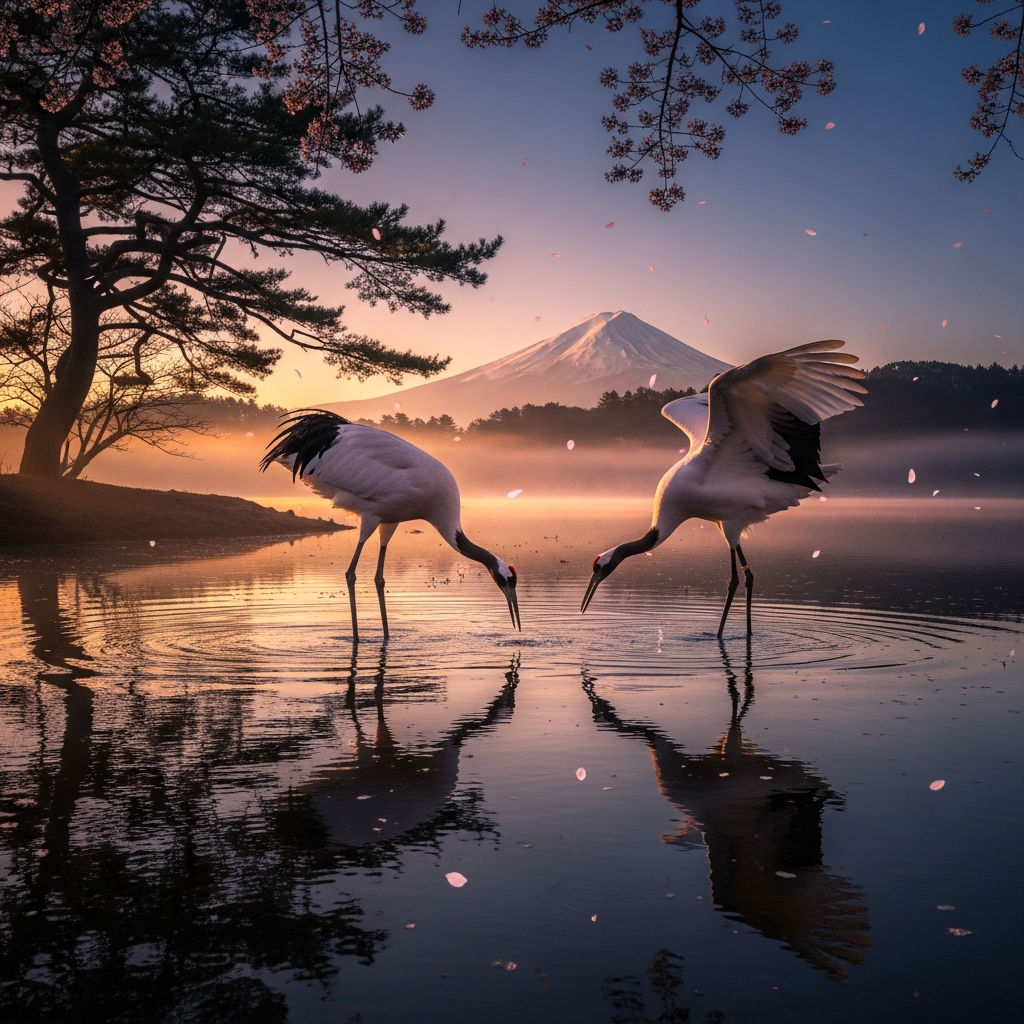
The Red Crowned Crane, known locally in Japan as the Tancho, is far more than just a beautiful bird; it is a profound cultural icon woven deeply into the nation’s history, art, and belief system. The enduring Red Crowned Crane Japan Symbolism represents a deep connection between the natural world and spiritual aspirations, making it one of the country’s most beloved motifs. This majestic creature, with its striking white plumage and vivid red crown, carries meanings that touch upon life’s greatest desires: longevity, fidelity, good fortune, and profound grace.
The cultural significance of the Red Crowned Crane Japan Symbolism is so pervasive that its image can be found everywhere, from delicate wedding kimonos and intricate origami to corporate logos and traditional works of art. Understanding this rich tapestry of meaning offers a vital window into the Japanese worldview.
The Majestic Tancho: An Overview of Its Deep Meaning
The Tancho, or Japanese Crane (Grus japonensis), is a globally recognized animal because of its association with Japan. It is the second rarest crane in the world. For centuries, the Red Crowned Crane Japan Symbolism has captivated artists, poets, and storytellers.
What exactly does the Red Crowned Crane Symbolize in Japan?
The symbolism associated with the crane is consistently positive, reflecting hope, permanence, and celebration.
- Longevity and Immortality: The belief that the crane lives for 1,000 years, making it a powerful charm for long life.
- Fidelity and Love: Cranes are monogamous birds, reinforcing the symbol of a long, committed, and harmonious marriage.
- Good Fortune and Peace: Its appearance is often taken as an auspicious sign, particularly at the New Year.
- Grace and Elegance: The bird’s majestic posture and famous courtship dance embody sophisticated beauty.
The Tancho is an endangered species globally, though its population in Japan has seen a successful stabilization in recent years thanks to committed conservation efforts, moving it from “endangered” to “vulnerable” on some lists. This modern conservation triumph only adds another layer to the Red Crowned Crane Japan Symbolism: a modern narrative of hope and recovery.
The scientific name, Grus japonensis, literally translates to “Japanese crane,” highlighting its long-standing identification with the country, even though its primary habitat also extends to parts of eastern Eurasia. The distinctive feature of the bird, its red patch of bare skin on the head, is what gives it the Japanese name Tancho, meaning “red-crest” or “red-head”. The elegance inherent in the bird’s movements and its striking visual contrast of black and white plumage against the red crown are central to its aesthetic importance in Japanese culture.
Longevity and Immortality: The Crane’s Enduring Gift
Perhaps the most recognized component of the Red Crowned Crane Japan Symbolism is its link to extreme longevity, even immortality. Ancient legends claimed that the crane could live for a thousand years, a belief that cemented its status as one of the four traditional sacred creatures in Japan, alongside the phoenix, the dragon, and the tortoise. The reverence for this longevity is directly tied to the aspirations for a long, healthy life, not just for oneself but for one’s family and the entire community.
This concept of enduring life is frequently visualized through the pairing of the crane (Tsuru) and the tortoise (Kame). Both creatures are revered as symbols of long life, but they represent different aspects of permanence. The tortoise represents the stability and grounding of the earth, suggesting a slow, deep, and steady existence. In contrast, the crane—always depicted soaring—represents the lightness of the spirit and the ability to transcend earthly limitations. When paired together, the Tsuru and Kame form a powerful duality, invoking a blessing for a life that is both long-lived and spiritually elevated. This dual Red Crowned Crane Japan Symbolism is an absolute staple in art, particularly on items given as gifts for milestones such as 60th (Kanreki) or 77th (Kiju) birthdays.
The enduring belief in the crane’s thousand-year lifespan is what gives rise to one of the most poignant traditions in Japan: Senbazuru, or the folding of a thousand paper cranes. The tradition states that anyone who folds one thousand origami cranes is granted a single wish, often focused on recovery from illness, or a wish for world peace. This tangible action—transforming a flat sheet of paper into a delicate, three-dimensional crane—is an act of deep meditation and commitment. It is a physical manifestation of the hope for prolonged life, a testament to the powerful Red Crowned Crane Japan Symbolism that motivates this painstaking work. The 1,000-crane tradition gained significant international recognition through the story of Sadako Sasaki, a girl who became a global icon for peace after she attempted to fold Senbazuru while suffering from radiation sickness following the Hiroshima bombing. Her story underscores how the crane symbol transcends simple good luck; it represents a deep, universal hope for life itself.
The remarkable real-world lifespan of the Tancho in the wild, which can reach 30 to 40 years, helps to solidify the myth. For a bird, this is an impressive duration. It gives a biological basis to the mythical longevity, making the Red Crowned Crane Japan Symbolism feel more grounded in reality. The bird’s stately, unhurried movements, its large size, and its ability to weather the harsh winters of Hokkaido further contribute to the image of an ancient, wise, and enduring being. The visual power of the crane standing tall against a snowy landscape is a timeless image that perfectly encapsulates persistence.
Fidelity and Marital Bliss: The Crane in Japanese Weddings
Beyond longevity, the Red Crowned Crane Japan Symbolism is arguably most prominent in its representation of love, loyalty, and lifelong marital commitment. This association stems from the real-life behavior of the cranes, which are famously monogamous. Once a pair bonds, they mate for life, demonstrating unparalleled loyalty and remaining devoted partners throughout their existence. This natural behavior makes the crane the ultimate symbol of fidelity and a harmonious, enduring marriage.
The prominence of the crane motif in traditional Japanese wedding attire is striking. The bride’s kimono, whether the pure white Shiromuku or the colorful Iro-uchikake, is nearly always adorned with elaborate embroidery featuring cranes. These hand-stitched birds are not merely decorative elements; they are powerful wishes and blessings woven into the fabric. A kimono featuring a pair of cranes soaring together is a direct, silent blessing that the couple will share the same long-life, enduring love, and faithfulness demonstrated by the Tancho. The pattern ensures that the couple is literally enveloped in the promise of the Red Crowned Crane Japan Symbolism as they take their vows.
The spectacular courtship dance of the Red Crowned Crane further reinforces this romantic symbolism. Known as the “dance of the heavens,” the pairs engage in a synchronized, elegant display of leaps, bows, and trumpet calls. This majestic, ballet-like performance is an expression of their bond, a beautiful and coordinated effort that requires perfect timing and mutual focus. In the context of marriage, this dance serves as a poignant analogy for a successful partnership: two distinct individuals moving together in perfect harmony, a powerful visualization of the ideal relationship. This visual analogy is why the crane is often embroidered onto items like wedding invitations, sake cups, and presentation boxes, continually invoking the promise of the Red Crowned Crane Japan Symbolism.
The concept of “Crane and Pine” (Tsuru-kame-matsu) is another common wedding motif that elevates the symbolism of commitment. The pine tree (Matsu) is an evergreen that symbolizes steadfastness and unwavering character, as it remains green even in winter. When the crane (fidelity and longevity) is paired with the pine (steadfastness), it forms a wish for a relationship that is not only long but also deeply resilient, capable of surviving all of life’s seasons. This trio of symbols—crane, tortoise, and pine—is considered the most auspicious combination for celebratory occasions, proving that the Red Crowned Crane Japan Symbolism works best when combined with other natural elements that speak to permanence. In modern trends, while Western-style weddings are popular, couples often choose to integrate subtle crane patterns into their accessories or venue décor as an homage to this deep-rooted cultural belief.
Grace, Hope, and Good Fortune: The Crane in Art and Design
The sheer aesthetic beauty of the Tancho has ensured its place as a perennial favorite in Japanese art and design for centuries. The creature is intrinsically linked to concepts of grace, hope, and good fortune, making it a powerful visual device across all mediums, from delicate ceramics to bold corporate branding.
The Crane in Traditional Art and Literature
The Red Crowned Crane Japan Symbolism is easily recognizable in the classic Japanese art form of Ukiyo-e, or “pictures of the floating world.” Masters like Hokusai and Hiroshige often depicted cranes, sometimes against the backdrop of Mount Fuji, the ultimate symbol of Japanese permanence and sacredness. When positioned near the iconic mountain, the crane is elevated from a symbol of personal good luck to a symbol of national hope and prosperity. Artists meticulously captured the bird’s elegant posture—whether standing silently in a marsh or taking flight—using the contrast between its white body and black wing tips to create dynamic, dramatic compositions. The simplicity of the color palette, punctuated only by the striking red crown, makes the crane a visually powerful subject, representing purity and distinction.
The theme of the crane is also central to Japanese folktales, the most famous of which is Tsuru no Ongaeshi (The Crane’s Return of a Favor).
The story centers on a poor man who rescues a wounded crane. Soon after, a beautiful, mysterious woman appears and marries him. She weaves exquisite cloth, but she insists that he must never look inside her weaving room. Driven by curiosity, he breaks his promise and peers inside, only to discover that his wife is the very crane he rescued, painfully plucking her own feathers to create the finest fabric. Realizing her identity is revealed, the crane-wife thanks him for his kindness and then flies away, unable to stay with a man who could not keep his faith. This poignant narrative powerfully reinforces the Red Crowned Crane Japan Symbolism of loyalty and gratitude, but also introduces a subtle moral lesson about the fragility of trust and the profound sacrifices made in true devotion. This story ensures that the symbolism remains nuanced, tying the crane to deep emotional and ethical lessons, not just simple luck.
Modern Trends and Corporate Integration
In the contemporary era, the Red Crowned Crane Japan Symbolism has seamlessly transitioned into the commercial and corporate world. Corporations utilize the crane’s image to convey messages of reliability, longevity, and high-quality service.
Aviation: The Japanese airline JAL (Japan Airlines) famously used a stylized crane logo (Tsurumaru*) for decades. The circle of the logo represented the sun and the crane in flight, symbolizing the high aspirations and safety of the nation’s flag carrier. This usage powerfully translates the traditional symbolism of soaring grace and good fortune into a modern brand promise of reliable, elevated travel.
- Cultural Icons: The bird is also frequently used in graphic design for major events, particularly those with international reach, as it is immediately recognizable as an elegant icon representing Japan. Its image on postage stamps, commemorative coins, and official tourism logos serves as a visual shorthand for Japanese aesthetics.
Fashion and Textiles: Beyond wedding attire, the crane motif is continually reinterpreted in modern fashion. It is a favored pattern for Yukata* (casual kimono), scarves, and even contemporary street wear, reflecting a timeless appreciation for the bird’s aesthetic and the positive meaning of the Red Crowned Crane Japan Symbolism.
The flexibility and depth of the Red Crowned Crane Japan Symbolism allow it to function across these disparate spheres. In a world of fast-moving trends, the crane provides a steady link to enduring Japanese values: beauty, permanence, and fidelity.
The Modern Reality: Conservation and Current Red Crowned Crane Japan Symbolism
While the symbolic meaning of the Tancho is rooted in ancient myth and tradition, its modern significance is inextricably linked to its fragile existence in the natural world. The Red Crowned Crane Japan Symbolism today carries an important message of conservation, making the bird a potent symbol of environmental stewardship and successful rehabilitation.
Historically, the Japanese population of the Red Crowned Crane faced catastrophic decline. By the early 20th century, due to habitat loss and indiscriminate hunting, the population in Hokkaido was nearly wiped out, reduced to as few as a dozen individuals. This near-extinction provided a sobering counterpoint to the bird’s mythic status. It was a stark reminder that even a symbol of immortality could be lost if not actively protected. This crisis spurred massive, long-term conservation efforts, primarily centered around the Kushiro Marshland in Hokkaido, which remains the primary wintering and breeding ground.
Current data reflects a triumphant turnaround for the Red Crowned Crane Japan Symbolism. The efforts of local conservationists and farmers, who began supplemental winter feeding programs, proved highly successful. The population in Hokkaido has stabilized to the point where the crane’s global conservation status was recently downgraded from “endangered” to “vulnerable”. This is a monumental success story in wildlife conservation, and it reshapes the meaning of the crane for the current generation. The continued protection of its unique marshland habitat remains crucial, as the Tancho prefers deep-water marshes for nesting, a habitat preference that is somewhat rare among cranes.
The successful recovery of the Tancho introduces a new dimension to the Red Crowned Crane Japan Symbolism: the power of human dedication and the ability to restore balance to the natural world. The crane is now a symbol of national pride in conservation achievements. It serves as a living, breathing monument to the commitment of the Japanese people to protect their natural heritage.
The economic and cultural impact of the crane in Hokkaido is significant. It drives a major eco-tourism industry, with bird watchers and photographers flocking to sites like the Kushiro Marsh and the Tsurui-Ito Tancho Sanctuary, particularly in winter, to witness the magnificent sight of the cranes dancing and feeding. This tourism trend reinforces the cultural importance of the bird, ensuring that the Red Crowned Crane Japan Symbolism is financially and regionally sustainable. The bird’s image is used extensively by local businesses, connecting the region’s prosperity directly to the well-being of the crane population.
The crane’s journey from near-extinction to stability provides an analogy for resilience and hope in the face of adversity. This contemporary narrative ensures that the Red Crowned Crane Japan Symbolism remains dynamic and relevant, tying ancient myth to modern ecological responsibility. The fact that the population has grown large enough to utilize more diverse sites within Hokkaido indicates that the strict protection measures have yielded impressive results.
The Enduring Legacy of the Red Crowned Crane Japan Symbolism
From the rarefied air of mythic immortality to the grounded reality of environmental protection, the Red Crowned Crane Japan Symbolism maintains a central, cherished place in Japanese culture. Its visual elegance makes it an unparalleled artistic motif, while its behavioral characteristics of loyalty and permanence provide a moral compass for personal relationships. The enduring association with the desire for a thousand years of life ensures the crane’s perennial presence at life’s most significant events, from weddings to New Year celebrations.
The sheer volume of contexts in which this bird appears—be it in the precise fold of a paper crane, the grand sweep of a Ukiyo-e print, or the intricate stitching on a silk kimono—speaks volumes about its cultural weight. The Red Crowned Crane Japan Symbolism is a testament to the nation’s ability to find profound meaning in the natural world, transforming an elegant creature into a powerful vessel for their highest aspirations. Ultimately, the Tancho serves as a magnificent, living reminder that beauty, faithfulness, and hope are timeless values, deserving of both reverence and diligent protection.
*
Frequently Asked Questions
Is the Red Crowned Crane considered good luck in Japan?
Yes, absolutely. The Red Crowned Crane is a powerful symbol of good fortune, happiness, and peace in Japan. Because of its association with a lifespan of 1,000 years, seeing the bird or using its image is traditionally believed to attract longevity and general prosperity for the observer or recipient. The frequent use of the Red Crowned Crane Japan Symbolism on celebratory items and at the start of the New Year solidifies its status as a good luck charm.
What is the significance of 1,000 paper cranes (Senbazuru)?
The tradition of folding 1,000 paper cranes, known as Senbazuru, is directly tied to the ancient myth that the crane lives for 1,000 years. Folding this number of cranes is believed to grant the folder a single wish, most often related to a long life, recovery from serious illness, or global peace. It is a physical act of hope and commitment, demonstrating the powerful belief in the Red Crowned Crane Japan Symbolism of immortality and healing.
Where can the Red Crowned Crane be found in Japan?
The primary habitat and the largest population of the Red Crowned Crane in Japan are found in the eastern part of Hokkaido, particularly within the Kushiro Marshland. These cranes are non-migratory in Japan and are often seen at dedicated feeding stations, such as the Tsurui-Ito Tancho Sanctuary, especially during the cold winter months. Conservation efforts here have been key to the stabilization of the Red Crowned Crane population.
What is the Japanese name for the Red Crowned Crane?
The Japanese name for the Red Crowned Crane is Tancho (Tan-chō). The name literally means “red crest” or “red head,” referring to the distinctive patch of bare, red skin on the top of the bird’s head. The official scientific name, reflecting its deep association with the country, is Grus japonensis, meaning “Japanese crane”. The Red Crowned Crane Japan Symbolism is sometimes referred to simply as the Tsuru (crane).