Quilt Meaning: Understanding the Deep History, Artistry, and Significance of Quilting
When you hear the word “quilt,” what comes to mind? For many, it is the image of a cozy, multicolored blanket draped over a grandmother’s rocking chair or a heavy layer of warmth during a cold winter night. However, the true quilt meaning extends far beyond simple bedding. It is a complex textile art form, a historical record, and a labor of love that involves specific technical constructions.
In this comprehensive guide, we will explore the multifaceted world of quilting. Whether you are a beginner looking to start your first project or a curious reader wanting to understand the cultural weight of these textiles, you will find a deep dive into the anatomy, history, and symbolic importance of the quilt.
Defining the Quilt: What Does “Quilt” Really Mean?
At its most basic level, the word “quilt” refers to a decorative textile consisting of at least three layers of fabric. The term originates from the Latin word culcita, meaning a stuffed sack, mattress, or cushion. Over centuries, the word evolved through the Old French cuilte before entering the English language.
Technically, a quilt is defined by the process used to create it: quilting. This is the act of sewing the three layers together using a needle and thread. Without these stitches holding the layers in place, the item is technically just a stuffed blanket, not a quilt.
The Three Essential Layers of a Quilt
To understand the quilt meaning from a structural perspective, you must recognize its “sandwich” construction:
- The Quilt Top: This is the uppermost layer, where the artistry happens. It can be a single piece of fabric (whole-cloth quilt) or hundreds of small pieces sewn together (patchwork).
- The Batting (or Wadding): This is the middle layer that provides insulation and thickness. It can be made of cotton, wool, polyester, or bamboo.
- The Backing: This is the bottom layer that sits against the skin or the bed. It is usually a solid piece of fabric that complements the top design.
Quilt vs. Blanket vs. Comforter: Understanding the Differences
It is common for people to use these terms interchangeably, but in the world of textiles, they represent very different things.
- Blanket: Typically a single layer of woven material (like wool or fleece). It provides warmth but lacks the structural complexity of a quilt.
- Comforter: Like a quilt, it has layers and filling. However, comforters are usually mass-produced, loftier (puffy), and the “quilting” stitches are often minimal or purely functional to keep the synthetic fill from shifting.
- Quilt: Defined by intricate stitching patterns that cover the entire surface. Quilts are flatter than comforters and are often considered heirloom pieces due to the high level of craftsmanship involved.
A Journey Through Time: The Rich History of Quilting
The history of quilting is as old as civilization itself. While the exact origin is difficult to pinpoint because fabric decays over time, archaeological evidence suggests that quilted garments were worn in ancient Egypt and China for both warmth and protection in armor.
The Medieval and Renaissance Influence
In Europe, quilting was initially used for functional purposes. Knights wore quilted “gambesons” under their metal armor to prevent chafing and provide an extra layer of shock absorption. By the 17th century, quilting moved from the battlefield to the household, appearing in decorative silk petticoats and bed coverings for the wealthy.
The American Pioneer Spirit
The quilt meaning took on a new dimension in North America. During the colonial era and the westward expansion, fabric was a precious commodity. Settlers could not afford to throw away scraps of worn-out clothing. Instead, they saved every “patch” to create patchwork quilts.
This era gave birth to the “Quilting Bee”—a social gathering where women would meet to work on a quilt together. In a time of isolation on the frontier, these gatherings were vital for community building and sharing news.
The Cultural and Symbolic Significance of Quilts
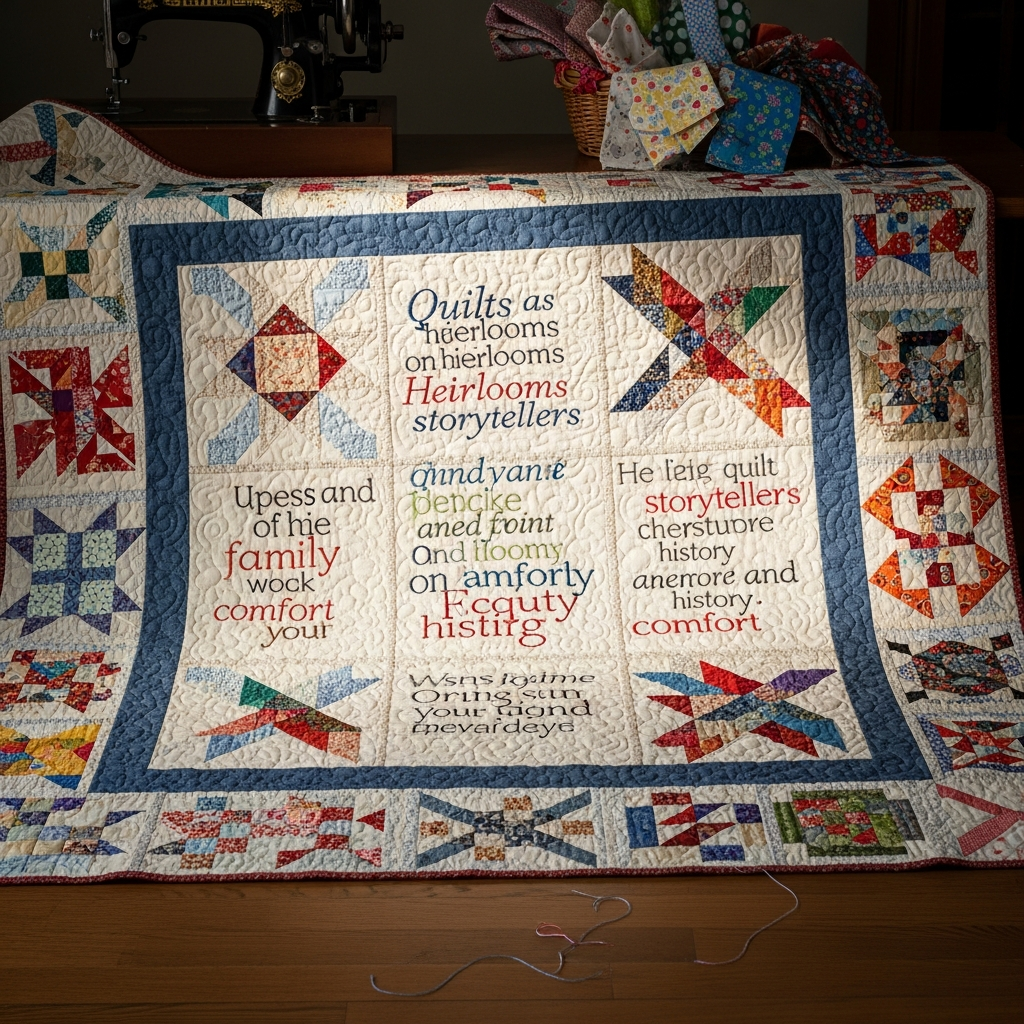
For many cultures, a quilt is a storyteller. It is a “textile diary” that captures the emotions, politics, and family lineages of the maker.
1. Memory and Heritage
Memory quilts are created using clothing from a loved one who has passed away or to commemorate a specific life event, such as a wedding or the birth of a child. In this context, the quilt meaning becomes a tangible connection to the past.
2. The Underground Railroad Myth
There is a long-standing oral tradition suggesting that specific quilt patterns were used as a “code” to help enslaved people escape to freedom via the Underground Railroad. Patterns like the “Log Cabin” (with a black center) or the “North Star” were said to signal safe houses or directions. While historians debate the physical evidence of this, the symbolism remains a powerful part of African American cultural history.
3. The Amish Tradition
Amish quilts are world-renowned for their bold colors and geometric simplicity. Because the Amish faith emphasizes humility, these quilts avoid “fancy” prints, focusing instead on exquisite hand-quilting stitches and solid-colored fabrics.
Popular Types of Quilts and Techniques
The beauty of quilting lies in its diversity. Depending on the technique used, a quilt can look like a traditional antique or a modern piece of abstract art.
Patchwork (Pieced) Quilts
This is the most common type of quilt. It involves sewing small pieces of fabric together to form a larger design. Popular patterns include:
- Log Cabin: Representing the hearth of the home.
- Nine-Patch: One of the simplest patterns for beginners.
- Flying Geese: Triangles that create a sense of movement.
Appliqué Quilts
Instead of sewing pieces edge-to-edge, appliqué involves sewing fabric shapes onto a larger base fabric. This technique allows for more fluid, curved designs like flowers, animals, and intricate scrolls.
Art Quilts
In the modern era, the quilt has moved from the bed to the gallery wall. Art quilts prioritize aesthetic expression over warmth. Artists use paint, digital printing, and unconventional materials to push the boundaries of what a quilt can be.
The Anatomy of a Quilt: A Detailed Breakdown
To truly appreciate the quilt meaning, one must understand the labor-intensive process of creating one.
1. Designing and Cutting
The process begins with a “pattern.” A quilter must mathematically calculate how many pieces of fabric are needed and cut them with precision using a rotary cutter and ruler. Even a 1/8-inch error can throw off the entire design.
2. Piecing the Top
The pieces are sewn together to form “blocks,” which are then joined to create the full quilt top. This stage requires “pressing” seams with an iron to ensure the quilt lies flat.
3. Basting the “Sandwich”
Once the top is finished, it is layered with the batting and backing. These layers must be “basted” (temporarily held together) with pins or spray adhesive to prevent shifting during the final sewing.
4. The Quilting Stitch
This is where the magic happens. The quilter sews through all three layers. This can be done by hand (using a thimble and tiny running stitches) or by machine. The stitching can follow the seams (“stitching in the ditch”) or create elaborate decorative swirls (“free-motion quilting”).
5. Binding
The final step is the binding. A long strip of fabric is folded and sewn around the raw edges of the quilt to seal it and provide a clean, finished look.
How to Choose or Create Your First Quilt
If you are a beginner, the world of quilting might seem intimidating. However, the modern quilting community is incredibly welcoming.
- Start Small: Don’t begin with a King-sized bedspread. Start with a “lap quilt” or a “wall hanging.”
- Choose High-Quality Cotton: 100% “quilter’s weight” cotton is the gold standard. It is easy to sew, doesn’t stretch excessively, and lasts for decades.
- Invest in a Good Ruler: Precision is the secret to a professional-looking quilt.
- Join a Guild: Look for local quilting groups. The “quilt meaning” is best experienced through the shared knowledge of experienced makers.
Caring for Your Heirloom: Maintenance and Longevity
A well-made quilt can last for over a hundred years if treated correctly. Because of the delicate nature of the stitching, you should follow these care tips:
- Avoid Frequent Washing: Only wash a quilt when absolutely necessary.
- Use Cold Water: Use a gentle cycle and a mild, fragrance-free detergent.
- Air Dry if Possible: If you must use a dryer, use the lowest heat setting. High heat can damage the fibers and cause the batting to “beard” (poke through the fabric).
- Storage: Never store a quilt in a plastic bag, as this traps moisture. Instead, wrap it in a clean white cotton sheet and store it in a cool, dry place.
Why Quilting Still Matters in the Digital Age
In a world dominated by fast fashion and instant gratification, quilting offers a necessary “slow-down.” The quilt meaning today is often tied to mental health and mindfulness. The repetitive motion of sewing is known to reduce stress and anxiety.
Furthermore, a quilt represents a rejection of the “disposable” culture. When you make or buy a quilt, you are investing in something intended to be passed down through generations. It is a physical manifestation of patience, tradition, and human connection.
Frequently Asked Questions (FAQ)
What is the primary difference between quilting and sewing?
Sewing is the general term for joining fabric with stitches. Quilting is a specific type of sewing that joins three layers of fabric together to create a padded textile.
Why are quilts so expensive?
The price of a quilt reflects the dozens (sometimes hundreds) of hours of labor required to design, piece, quilt, and bind it. High-quality materials and the level of skill involved also contribute to the cost.
Can I make a quilt without a sewing machine?
Yes! Hand-quilting and hand-piecing are traditional methods that many enthusiasts still prefer today. It takes longer but offers a unique, soft texture that machines cannot replicate.
What does a “Log Cabin” quilt symbolize?
Historically, the Log Cabin pattern symbolized the home. A red center square represented the hearth (fire), while a yellow center represented a light in the window.
Is a quilt warmer than a comforter?
Not necessarily. The warmth of a quilt depends on the type of batting used. A wool-filled quilt can be incredibly warm, while a thin cotton-filled quilt is perfect for summer.
Conclusion
The quilt meaning is a tapestry of history, utility, and artistic expression. It is a bridge between the practical need for warmth and the human desire for beauty and storytelling. Whether you see a quilt as a simple piece of bedding or a complex work of art, there is no denying the profound impact this textile has had on human culture.
By understanding the layers, the history, and the effort required to create these masterpieces, we can better appreciate the “comfort” they provide—not just for our bodies, but for our souls.