Purple Tulips Meaning: The Ultimate Guide to Symbolism, History, and Gifting
Tulips are among the most beloved flowers in the world, heralded as the heralds of spring and symbols of enduring grace. While red tulips often steal the spotlight for romance and yellow ones for cheer, the purple tulip occupies a unique niche of sophistication and mystery.
In this comprehensive guide, you will discover the multifaceted purple tulips meaning, their rich historical background, and how you can use these regal blooms to communicate complex emotions that words often fail to capture.
The Historical Origins of Purple Tulips
To understand the modern significance of purple tulips, you must first look back at their journey through history. Tulips originally grew wild in the valleys of the Tian Shan Mountains and were later cultivated in Constantinople (modern-day Istanbul) by the Ottoman Empire.
The Ottoman Influence
In the 16th century, the Ottoman sultans were captivated by the tulip’s elegant shape. For them, the tulip was a symbol of paradise on earth. Purple, even then, was a color associated with the elite. Because purple dyes were notoriously difficult and expensive to produce—often derived from rare sea snails—the color became synonymous with the ruling class.
Tulip Mania in the Netherlands
When tulips reached the Netherlands in the 17th century, they sparked a speculative frenzy known as “Tulip Mania.” During this era, “broken” tulips—those with feathered patterns caused by a non-lethal virus—were the most prized. Many of these sought-after varieties featured deep shades of violet and plum, further cementing the purple tulip’s association with wealth and high social standing.
The Core Symbolism: What Do Purple Tulips Represent?
The meaning of a flower is often a blend of its botanical characteristics, the psychology of its color, and centuries of cultural tradition. Here is a detailed breakdown of what purple tulips signify today.
1. Royalty and Nobility
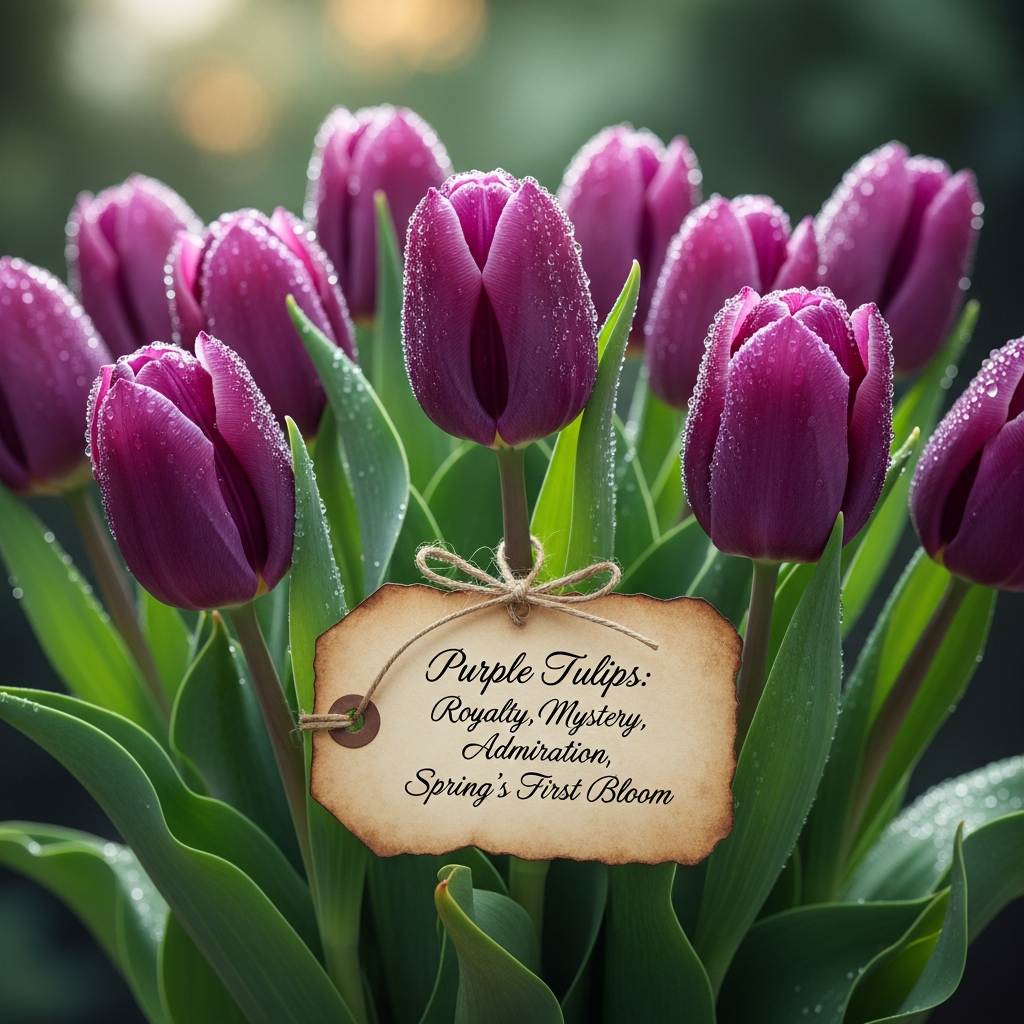
The most prominent purple tulips meaning is royalty. This stems from the historical “sumptuary laws” in various civilizations that forbade commoners from wearing purple clothing. When you gift someone purple tulips, you are subtly acknowledging their dignity, leadership, or “regal” presence in your life.
2. Rebirth and the Arrival of Spring
As perennials that bloom early in the season, all tulips symbolize rebirth. However, the purple variety specifically represents the “awakening” of the spirit. The deep, cool tones of purple suggest a transition from the darkness of winter into the vibrant possibilities of a new season.
3. Admiration and Respect
Unlike red tulips, which signify intense passion, purple tulips represent a more refined form of admiration. They are the perfect choice for showing respect to a mentor, a teacher, or a parent. They say, “I look up to you,” without the romantic connotations of other colors.
4. Elegance and Mystery
Purple is a combination of the stability of blue and the energy of red. This creates a sense of mystery and spiritual depth. Purple tulips are often associated with creativity and the “unconventional,” making them ideal for individuals who appreciate the finer, more mysterious aspects of life.
The Psychology of the Color Purple
To truly appreciate the purple tulips meaning, it is helpful to understand how the human brain perceives the color purple. In color psychology:
- Luxury: Purple is perceived as a “heavy” and rich color, often linked to luxury goods and premium experiences.
- Spirituality: It is the color of the “Crown Chakra” in various Eastern philosophies, representing a connection to the divine and higher consciousness.
- Calmness: Because it contains blue undertones, purple has a soothing effect on the mind, reducing stress and promoting a sense of peace.
Popular Varieties of Purple Tulips
Not all purple tulips are created equal. Depending on the cultivar, the shade can range from a light lavender to a deep, almost black burgundy. Understanding these varieties will help you choose the right flower for your specific needs.
- Purple Prince: A classic, mid-toned purple tulip with a slightly metallic sheen. These are sturdy and bloom early in the season.
- Negrita: Known for its deep beet-purple petals with subtle blue veins. It is a favorite for floral arrangements due to its strong stems.
- Queen of Night: While technically a “black” tulip, it is actually a very deep maroon-purple. It symbolizes power and supreme elegance.
- Passionale: A delicate, lilac-purple variety that leans more toward the romantic and soft side of the spectrum.
- Blue Aimable: Despite the name, this is a stunning lavender-blue tulip that offers a cool, ethereal aesthetic.
When Should You Give Purple Tulips? (Gifting Etiquette)
Choosing the right occasion for purple tulips ensures your gesture is understood perfectly. Here are the best times to utilize the purple tulips meaning in your personal life.
1. Graduations and Career Milestones
Since purple represents success and nobility, these flowers are excellent for celebrating a significant achievement. Whether someone is graduating from university or receiving a major promotion, purple tulips acknowledge their hard work and “royal” success.
2. Apologies (Seeking Forgiveness)
In some cultures, purple tulips are used to express sincere regret. The color is seen as humble yet dignified, making it a thoughtful choice when you want to say “I’m sorry” and restore peace to a relationship.
3. Weddings and Anniversaries
While white is traditional for weddings, purple tulips are increasingly popular for “Royal-themed” or “Bohemian” weddings. They add a touch of luxury and sophistication to bridal bouquets and table centerpieces.
4. “Just Because” for a Creative Friend
If you have a friend who is an artist, writer, or dreamer, purple tulips will resonate with their creative spirit. It shows that you recognize and appreciate their unique perspective on the world.
How to Grow and Care for Purple Tulips
If you wish to bring the meaning of purple tulips into your own garden, follow these professional tips to ensure a vibrant bloom.
Planting Guide
- Timing: Plant your tulip bulbs in the autumn, usually between September and November, before the ground freezes.
- Soil: Tulips require well-draining soil. They do not like “wet feet,” which can cause the bulbs to rot.
- Depth: Plant bulbs about 6 to 8 inches deep, with the pointed end facing upward.
- Sunlight: Choose a spot that receives full sun to partial shade.
Maintenance Tips
- Watering: Water the bulbs immediately after planting to help them settle. In the spring, water them only if the weather is exceptionally dry.
- Deadheading: Once the flowers fade, remove the flower head but leave the foliage. The leaves will continue to gather energy for the bulb for next year’s bloom.
- Protection: Squirrels and deer love tulip bulbs. Consider using a wire mesh over the planting site or using natural repellents.
Purple Tulips in Art and Literature
The purple tulips meaning has been captured by various artists throughout history. In still-life paintings of the Dutch Golden Age, purple tulips were often used to signify the fleeting nature of life and wealth (a concept known as Vanitas).
In modern literature, purple tulips often appear as symbols of hidden depth or unrequited, respectful love. Their presence in a scene usually indicates that a character possesses a quiet strength or a secret nobility.
Comparing Purple Tulips to Other Colors
To provide context, let’s look at how purple tulips differ from their colorful cousins:
| Color | Primary Meaning | Best Occasion |
|---|---|---|
| Red | Deep Love & Passion | Valentine’s Day, Anniversaries |
| Yellow | Cheerful Thoughts & Sunshine | Get Well Soon, Friendship |
| White | Purity & Forgiveness | Funerals, Weddings |
| Pink | Happiness & Confidence | Mother’s Day, New Beginnings |
| Purple | Royalty, Rebirth & Respect | Achievements, Formal Gifts |
Expert Tips for Floral Arrangements
If you are a DIY enthusiast or professional florist, here is how to make purple tulips stand out:
- Complementary Colors: Pair purple tulips with yellow flowers (like daffodils) for a high-contrast, energetic look. Yellow is the direct complement to purple on the color wheel.
- Monochromatic Palette: Use different shades of purple (lavender, violet, and deep plum) for a sophisticated, ombre effect.
- Texture: Mix tulips with greenery like Eucalyptus or ferns to give the arrangement a more natural, garden-fresh feel.
- The “Stretch”: Remember that tulips continue to grow in the vase! They will often grow an inch or more and lean toward the light. Use this “movement” to create a dynamic, living sculpture.
Frequently Asked Questions (FAQ)
Are purple tulips rare?
While not as rare as they were in the 17th century, certain deep purple and “black” varieties remain more specialized than the common red or yellow types. They are widely available through high-end florists and specialty bulb suppliers.
Do purple tulips mean “I love you”?
They represent a form of love, but it is typically a love based on deep respect and admiration rather than the “fiery” passion associated with red tulips.
How long do purple tulips last in a vase?
With proper care (changing the water daily and trimming the stems), purple tulips can last between 5 to 10 days. Keep them away from direct heat and ripening fruit, which releases ethylene gas that causes flowers to wilt.
What does a single purple tulip mean?
Giving a single purple tulip is a powerful gesture of singular devotion and respect. It says that the recipient is uniquely special and stands above the rest in your eyes.
Conclusion
The purple tulips meaning is a rich tapestry of history, psychology, and natural beauty. Whether you are planting them in your garden to symbolize a personal rebirth or gifting a bouquet to honor someone’s achievements, these flowers carry a message of dignity and elegance.
By choosing purple tulips, you are not just giving a flower; you are sharing a legacy of royalty and a profound sense of respect that has endured for centuries. Next time you see these violet blooms, remember the depth they hold and the silent, powerful stories they tell.