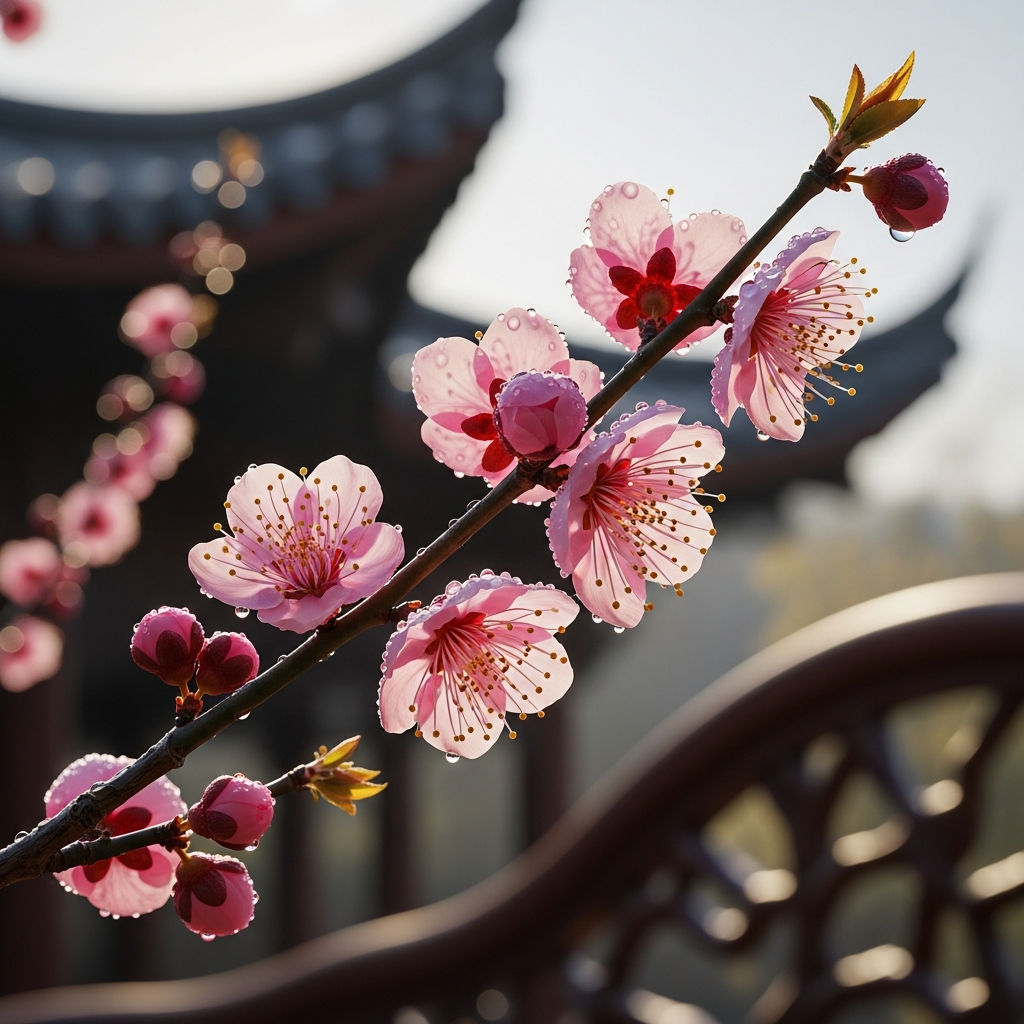
The Profound Meaning of Plum Blossom Chinese Symbolism: A Comprehensive Guide
In the heart of winter, when the earth is shrouded in frost and most flora lies dormant, a singular, delicate flower emerges to defy the elements. This is the Plum Blossom, known in Mandarin as Meihua (梅花). For centuries, it has stood as one of the most beloved symbols in Chinese culture, representing a complex tapestry of resilience, purity, and the promise of renewal.
If you have ever admired a traditional Chinese ink painting or observed decorations during the Lunar New Year, you have likely encountered this iconic bloom. However, its significance goes far beyond mere aesthetics. To understand Plum Blossom Chinese symbolism is to understand the soul of Chinese philosophy and the enduring spirit of its people.
In this comprehensive guide, we will explore the historical roots, philosophical underpinnings, and artistic expressions of the plum blossom, providing you with a deep appreciation for this “herald of spring.”
The Historical Context of Plum Blossoms in China
The relationship between the Chinese people and the plum tree (Prunus mume) dates back over 3,000 years. While the fruit was initially used for culinary and medicinal purposes, the aesthetic and symbolic value of its blossoms began to take center stage during the Han Dynasty.
Origins and Early Appreciation
Originally native to the Yangtze River basin, the plum tree was cultivated for its sour fruit. However, by the time of the Tang Dynasty (618–907 AD), poets and scholars began to romanticize the flower’s ability to bloom in the late winter. It was during this era that the “cult of the plum” truly began to flourish among the literati.
The Golden Age: Song Dynasty
The Song Dynasty (960–1279 AD) marked the peak of plum blossom appreciation. Philosophers of the Neo-Confucian school saw the flower as a physical manifestation of moral integrity. It was during this time that the plum blossom was officially categorized as one of the most significant botanical symbols in the Chinese canon.
Famous poets like Lin Bu lived as recluses, famously claiming the plum blossom as his “wife” and cranes as his “children.” This historical anecdote illustrates the deep, almost spiritual connection between the scholar-official class and this resilient flower.
Core Symbolic Meanings of the Plum Blossom (Meihua)
To the uninitiated, a flower is simply a flower. But in the context of Chinese culture, every petal of the Meihua carries a weight of meaning. Below are the core pillars of Plum Blossom Chinese symbolism.
1. Resilience and Perseverance in Adversity
The most prominent trait of the plum blossom is its winter resilience. Unlike the peony, which requires the warmth of spring, or the lotus, which thrives in summer heat, the plum blossom blooms during the harshest cold, often while snow still clings to its branches.
For the Chinese people, this represents the strength to endure hardship. It serves as a metaphor for a person who remains steadfast and virtuous even when faced with life’s greatest challenges. If you are going through a difficult period, the plum blossom is a reminder that beauty can emerge from the coldest winters.
2. Purity and Inner Strength
The blossoms are often white or pale pink, colors that symbolize purity and humility. Despite its strength, the plum blossom does not boast. It grows on gnarled, ancient-looking branches that appear dead, yet it produces delicate, fragrant flowers.
This contrast between the rugged “dragon-like” branches and the soft petals represents the balance of Yin and Yang—the fusion of external toughness and internal grace. It encourages you to maintain your inner purity regardless of the environment you find yourself in.
3. The Herald of Spring and Renewal
Because it is the first flower to bloom in the lunar calendar, the plum blossom is hailed as the “Messenger of Spring.” Its appearance signals that winter is coming to an end and that life is about to return to the land. Consequently, it is a potent symbol of hope, new beginnings, and the cyclical nature of time.
The “Five Blessings” of the Plum Blossom
In traditional Chinese folk belief, the morphology of the plum blossom is directly linked to auspiciousness. A standard plum blossom has five petals, which are said to represent the Five Blessings (Wufu). When you display plum blossom art in your home, you are symbolically inviting these five elements into your life:
- Longevity (Shou): A long and healthy life.
- Wealth (Fu): Financial prosperity and abundance.
- Health and Composure (Kangning): Physical well-being and peace of mind.
- Virtue (Yu Haode): A love of virtue and a good moral character.
- Peaceful Death (Kao Zhongming): Passing away naturally and peacefully at a ripe old age.
This numerical symbolism makes the plum blossom an essential motif during Chinese New Year celebrations, where it is used to wish friends and family a prosperous year ahead.
Plum Blossoms in Chinese Art and Literature
You cannot truly grasp Plum Blossom Chinese symbolism without examining its role in the “Four Gentlemen” and the “Three Friends of Winter.” These groupings are fundamental to Chinese art history.
The Four Gentlemen (Sì Jūnzǐ)
In Chinese art, the Four Gentlemen represent the four seasons and four noble human qualities. They are a staple of traditional ink wash painting:
- Plum Blossom (Winter): Resilience and Purity.
- Orchid (Spring): Elegance and Humility.
- Bamboo (Summer): Integrity and Flexibility.
- Chrysanthemum (Autumn): Longevity and Stoicism.
Artists spend decades mastering the “bone” structure of the plum branch, using vigorous brushstrokes to convey the strength of the wood, contrasted with light, ethereal touches for the petals.
The Three Friends of Winter (Suìhán Sānyǒu)
When the plum blossom is grouped with the Pine and the Bamboo, they are known as the Three Friends of Winter. Unlike other plants that wither, these three remain vibrant or bloom during the cold. This trio symbolizes a friendship that withstands the test of time and adversity.
Poetic Expressions of Meihua
Poetry regarding the plum blossom often focuses on its scent. The fragrance of the plum blossom is subtle, described as “an aroma that comes from the cold.” A famous Chinese proverb states: “The fragrance of plum blossoms comes from the bitterness of the cold.” This teaches us that human character is refined through suffering and hard work.
Plum Blossoms and Chinese New Year Traditions
As the “first flower of the year,” the plum blossom is ubiquitous during the Lunar New Year. You will often see:
- Paper Cuttings: Intricate red paper designs of plum blossoms pasted on windows to attract good luck.
- Flower Markets: Families buying branches of winter plum to decorate their homes, hoping the buds will open on New Year’s Day, which is considered an omen of extreme good fortune.
- Red Envelopes (Hongbao): Many envelopes are embossed with plum blossom motifs to symbolize the “Five Blessings” being passed to the younger generation.
The Symbolism of Colors in Plum Blossoms
While all plum blossoms share the general themes of resilience, different colors offer specific nuances in Plum Blossom Chinese symbolism:
1. White Plum Blossoms: These are the most traditional and represent purity, spiritual transcendence, and the scholar’s incorruptible nature. In the snow, they are almost invisible, symbolizing a beauty that doesn’t need to shout to be noticed.
2. Pink and Red Plum Blossoms: These are more festive and are closely associated with joy, celebration, and the warmth of the coming spring. Red plum blossoms are particularly popular during festivals because red is the color of luck in China.
3. Green/Yellow Plum Blossoms: Rarer in art, these often symbolize vitality and the unique, unconventional beauty of nature.
Philosophy: Confucianism and Taoism in the Meihua
The plum blossom serves as a bridge between the two major philosophical schools of China.
The Confucian Perspective
Confucianism emphasizes moral rectitude and social duty. The plum blossom is the “perfect gentleman” (Junzi). It does not compete with other flowers. It fulfills its duty to bloom even in the harshest conditions, representing the official who remains loyal to his principles even when the government is corrupt or the times are dark.
The Taoist Perspective
Taoism emphasizes harmony with nature and the flow of the Tao. To a Taoist, the plum blossom represents the spontaneous emergence of life. The gnarled, twisted trunk of the plum tree reflects the “natural way”—it is not straight or perfect, but it is authentic. It shows that there is life and “Qi” (energy) even in what appears to be old and dying.
How to Incorporate Plum Blossom Symbolism in Your Life
You don’t have to be an art historian to appreciate Plum Blossom Chinese symbolism. Here are a few ways you can bring this powerful symbol into your modern life:
- Home Decor: Place a painting or a vase of plum branches in your workspace. It serves as a visual reminder to stay resilient during stressful projects.
- Gardening: If your climate allows, planting a Prunus mume can be a meditative experience, watching it bloom while other plants are still dormant.
- Gift Giving: Giving a gift with a plum blossom motif is a sophisticated way to tell someone you admire their strength and character.
- Mindfulness: Use the image of the plum blossom during meditation to focus on the idea of “inner fragrance”—developing your character so that it radiates outward naturally.
Frequently Asked Questions (FAQ)
What is the difference between Cherry Blossoms and Plum Blossoms?
While they look similar, plum blossoms bloom much earlier (winter vs. spring). Plum petals are perfectly round, whereas cherry petals have a small notch at the tip. Symbolically, cherry blossoms often represent the transience of life, while plum blossoms represent endurance and longevity.
Is the Plum Blossom the national flower of China?
The plum blossom was designated as the national flower by the Republic of China in 1928. In the People’s Republic of China, there is an ongoing debate between the Peony (symbolizing prosperity) and the Plum Blossom (symbolizing spirit), with many people favoring both as co-national flowers.
Why is the plum blossom associated with scholars?
Ancient Chinese scholars often faced political exile or hardship. They identified with the plum blossom’s ability to thrive in the cold, seeing it as a reflection of their own intellectual and moral isolation from a “cold” or corrupt society.
What does it mean to dream of plum blossoms?
In Chinese dream interpretation, seeing plum blossoms signifies that your current hardships will soon pass and that success is on the horizon. It is an encouraging sign of upcoming promotion or personal growth.
Conclusion: The Timeless Appeal of the Meihua
The Plum Blossom Chinese symbolism is a testament to the values that have sustained Chinese civilization for millennia. It is a flower that does not fear the cold, does not seek the spotlight, and provides hope when it is needed most.
By understanding the Meihua, you gain more than just cultural knowledge; you gain a philosophy of life. It teaches us that adversity is not an obstacle to beauty, but a requirement for it. Just as the plum blossom needs the winter chill to release its most potent fragrance, we too can use our challenges to forge a character that is strong, pure, and unfailingly resilient.
Whether through art, literature, or the simple act of observing a winter garden, the plum blossom continues to inspire millions to stand tall, bloom bravely, and welcome the spring with open arms.