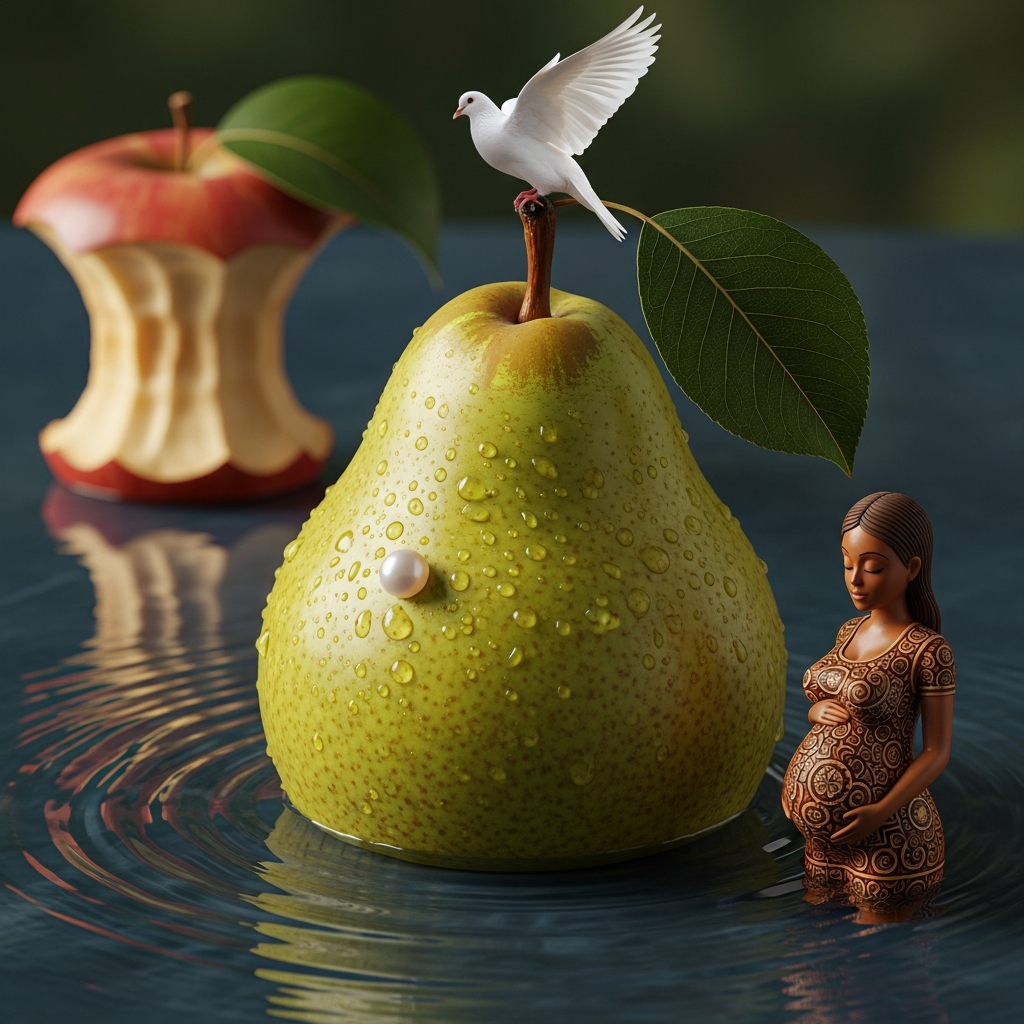
Pear symbolism is surprisingly rich, extending far beyond the simple, sweet taste of the fruit. Across millennia and continents, the pear has represented complex ideas ranging from profound spiritual concepts to intimate human relationships.

| Symbolism Category | Key Meanings | Cultural Context |
| :— | :— | :— |
| Longevity & Immortality | Long life, eternal health | Ancient Chinese culture, due to the tree’s long lifespan. |
| Love & Affection | Marital fidelity, divine love, affection | Greek/Roman, Christian Renaissance art. |
| Femininity & Fertility | Sensuality, the female form, abundant harvest | Art history, especially due to its distinctive shape. |
| Separation Warning | A cautionary symbol against parting | Chinese culture, based on a linguistic homophone. |
| Prosperity & Success | Wealth, divine abundance, good fortune | Ancient Chinese, Greek, and Roman civilizations. |
The history of pear symbolism weaves a fascinating tapestry, connecting mythology, fine art, and even modern design trends. It is a subtle but powerful motif that speaks to core human values of persistence, beauty, and emotional depth.
*
The Ancient Roots of Pear Symbolism in the East
The earliest and arguably the most profound expressions of pear symbolism originate from East Asia, particularly within ancient Chinese culture. Here, the fruit and its tree were elevated to a status associated with the highest ideals of human aspiration.
The most prominent aspect of pear symbolism in China is its connection to longevity and immortality. This powerful meaning stems from the pear tree’s remarkable resilience and its capacity to bear fruit for generations. The idea that a single tree could outlive multiple human lifetimes made it a potent stand-in for everlasting life.
This association with the eternal made the pear a popular motif in art, poetry, and religious offerings. When one offered a gift of pears, they were not just giving fruit; they were implicitly wishing the recipient a life that was both long and successful. Furthermore, ancient texts and practices often featured the pear as a component in remedies believed to extend life, cementing its status in the realm of perpetual well-being. This deep-seated pear symbolism continues to influence cultural practices today, where the gifting of pears often carries a subtext of deep respect for the recipient’s continued health.
Beyond longevity, the Chinese view of pear symbolism also encompasses wealth and prosperity. The successful cultivation of pear trees required skill and provided a bounty that was both physically nourishing and economically valuable. In agricultural societies, a flourishing pear orchard was a direct representation of success and a stable, affluent household. Therefore, the image of a ripe pear quickly became synonymous with good fortune and a fruitful life.
However, the layers of pear symbolism in China introduce a fascinating duality—the same fruit that signifies immortality also carries a strong warning against separation. This is due entirely to a linguistic quirk: the Mandarin phrase for “sharing a pear” (fēn lí) sounds exactly like the word for “separation” or “to part” (fēnlí).
I remember a moment when I was researching the nuances of Chinese cultural gifts. I had bought a beautiful box of Asian Pears for a friend’s housewarming, thinking the positive pear symbolism of prosperity was perfect. My friend, who had recently moved from Beijing, politely thanked me but, to my confusion, insisted on eating the entire pear himself rather than cutting it to share. He then laughed and explained the fēn lí homophone, making it clear that sharing a pear in front of others could be interpreted as wishing them a permanent split. This anecdotal moment brought the power of cultural pear symbolism alive for me; it taught me that symbols can hold deep, even contradictory, meanings rooted in language and tradition.
This unique facet of pear symbolism dictates social etiquette; while giving the whole fruit is a positive gesture of wishing health and fortune, the act of dividing it is rigorously avoided in the presence of loved ones or couples, lest it accidentally invoke a premature parting. This is a powerful reminder of how language and cultural belief intertwine to shape the meaning we assign to everyday objects.
Pear Symbolism in Classical Western Thought and Mythology
While the East emphasized longevity, the Western view of pear symbolism in the classical world of Greece and Rome focused intensely on themes of love, fertility, and divine abundance.
In ancient Greek and Roman traditions, the pear tree was often considered a sacred offering. It was closely associated with powerful female deities, particularly those governing agriculture, harvest, and the home. The pear’s presence was a signal of the gods’ favor, symbolizing a plentiful existence and the sheer joy of a successful harvest season.
The Roman goddess Pomona, the deity of fruit trees, gardens, and orchards, is perhaps the most direct link to Western pear symbolism. Pomona was often depicted holding a basket of fruit, with the pear frequently featured prominently among her bounty. She was the protector of the harvest and ensured the arboriculture was successful. Her association with the pear tree firmly rooted the fruit in concepts of cultivation, dedication, and the ultimate, sweet reward of one’s labors.
Furthermore, ancient Greeks saw pear symbolism linked to comfort, health, and harmony. The fruit’s soft texture when ripe and its sweet, delicate flavor offered a sensory experience that spoke of quiet domestic bliss and well-being. It was often consumed or used in remedies to promote inner balance and physical vitality. This made the pear an unstated but important part of a harmonious, healthy household.
The subtle link between the pear’s form and the female body also played a role in its significance in Greek and Roman society. The graceful, rounded bottom that tapers gently to the stem evoked a sense of natural femininity and sensuality. This physical connection made pear symbolism a natural fit for rites and celebrations associated with marriage and fertility.
The use of the pear as an emblem of marital fidelity and the promise of a fruitful union was common. The act of sharing a pear in this context was entirely positive, a stark contrast to the Chinese perspective. Here, it represented a mutual commitment to a life of abundance and the hope for many children. Thus, in the West, pear symbolism in marriage customs became an affirmation of love and a shared vision for a successful future.
This powerful dual-focus—divine abundance through Pomona and the promise of human fertility—made the pear a staple in celebratory feasting. The fruit was not merely dessert; it was a silent blessing, a tangible representation of all the good things the earth and the gods could bestow upon humanity. Understanding this context elevates our appreciation for how pervasive pear symbolism truly was in classical life.
The Pear in Art, Faith, and the Renaissance Canon
Moving into the Christian era, pear symbolism found a profound new home within religious paintings, particularly during the European Renaissance. The fruit transitioned from a pagan symbol of fertility and harvest to an emblem with deep theological and spiritual meaning.
In Renaissance religious paintings, the pear often appears in the hands of the Infant Christ or the Virgin Mary. In this context, the pear is understood to represent Christ’s love for humanity and, in some interpretations, the Tree of Life or the salvation offered through the sacrifice of Christ.
The subtle sweetness of the pear was an analogy for the gentle nature of divine love. Unlike the apple, which often carried the negative connotation of temptation and the Fall of Man, the pear retained a sense of purity and unblemished grace. For artists like Giovanni Bellini, who featured the pear in his 15th-century works, its inclusion was a deliberate choice to convey a message of hope and redemption. The depiction of the fruit was a tool for visual theology, a quiet way to communicate complex doctrinal truths.

Another significant facet of pear symbolism in Christian art is its subtle connection to the Virgin Mary. When depicted near the Mother and Child, the pear often stands for the kindness, virtue, and sweet nature of the Virgin. The mature, ripe fruit suggests the ultimate fruition of God’s plan through her—the birth of the Savior. This positioning cemented the pear as a symbol of maternal affection and divine grace.
The shape of the pear also contributed to its enduring status in art history, connecting it back to its ancient roots of fertility. Art historians have long noted how the voluptuous form of the pear was used to allude to sensuality and the female form. This subtle, non-explicit reference allowed artists to imbue their subjects with a sense of natural, earthy beauty without crossing the boundaries of decorum. It served as a respectful nod to the concept of fecundity, a key element of the broader pear symbolism.
This use of the pear in art also showcases the intellectual depth of the Renaissance. Artists were not just painting pretty pictures; they were engaged in a form of visual poetry, where every element—including the choice of fruit—carried a specific, decipherable meaning for the educated viewer. The recurring motif of the pear underscores the fruit’s established importance as an entity representing both the physical and the spiritual world. The richness of this pear symbolism in painting adds layers of interpretation that scholars continue to explore today.
The Feminine Shape: Sensuality, Fertility, and the Pear Symbolism
The unique, unmistakable contour of the pear—a full, rounded base that gracefully narrows to a slender neck—has made it a timeless emblem for the female figure and all the meanings associated with it: fertility, grace, and inherent sensuality. The visual power of pear symbolism is inextricably tied to this distinctive form.
This association has been a constant across various periods of art and culture. The pear shape is inherently organic and harmonious, reflecting the natural abundance and beauty of the earth. When applied to the human form, it represents a natural, healthy ideal of femininity—a celebration of the body’s capacity for creation and nourishment. This celebration of natural shape is a vital component of its broad appeal as pear symbolism.
In terms of fertility, the pear is one of the most resonant symbols available. Just as the tree is known for its prolific, lasting yield, the fruit itself stands for the promise of life and the continuity of the species. This aspect of pear symbolism is universal; it speaks to the fundamental human desire for a “fruitful” life, which encompasses both biological reproduction and metaphorical success.
- A Symbol of Abundance: A single pear tree can produce hundreds of pounds of fruit, making it a tangible sign of overwhelming abundance.
- The Mother Figure: The rounded, comforting shape subconsciously connects to the idea of a nurturing, well-fed mother figure.
- A Gentle Power: The pear’s texture—firm yet yielding—mirrors a gentle but persistent strength, a quality often attributed to feminine energy.
The aesthetic choice of including the pear in still life paintings or allegorical compositions was rarely accidental. It was a deliberate, sophisticated way to invoke the spirit of Aphrodite or Venus, the goddesses of love and beauty, without resorting to explicit nudity or grand mythological scenes. The fruit stood in as an elegant substitute, carrying the full weight of its associated sensuality and pear symbolism.
The enduring power of this shape is perfectly illustrated in the modern world by the pear-shaped diamond—a highly sought-after cut for engagement rings. In this context, the shape synthesizes all the ancient meanings into a single, sparkling declaration.
The modern pear symbolism of the diamond ring is highly nuanced. It is often cited as representing balance and harmony—the perfect fusion of the round (traditional, eternal) and the marquise (sharp, bold) cuts. It speaks to a relationship that is both classic and unique, steady yet passionate. Furthermore, choosing a pear shape diamond is frequently seen as a way to flaunt a unique, sophisticated personality. It signals that the wearer values tradition but also embraces a distinctive, non-conformist elegance. The modern jewelry industry successfully leverages centuries of positive pear symbolism—love, unique beauty, and the promise of growth—to market this distinctive shape.
Modern Interpretations of Pear Symbolism and Design Trends
In the contemporary world, pear symbolism continues to evolve, shedding some of its spiritual weight but retaining its core meaning of harmony, natural beauty, and distinctive elegance. We see its influence prominently in minimalist design, food branding, and even the world of digital interfaces.
The clean, simple, and elegant outline of the pear has made it a favorite motif in modern branding and logo design. Brands across various sectors—from healthy food and wellness products to stylish home goods and even dating apps—adopt the pear. The form lends itself perfectly to a minimalist aesthetic, often appearing as a simple outline or a clean vector graphic.
- Wellness and Natural Food: In food branding, the pear motif immediately suggests natural goodness, wholesome nutrition, and health, tapping into its ancient pear symbolism of health and well-being.
- Minimalist Home Decor: A stylized image of a pear, often cut in half to show its inner symmetry, is a popular choice for modern kitchen prints and accessories. This is because the design is simple yet sophisticated, embodying a clean and elegant domestic ideal.
- Digital and App Design: The pear shape, when used as an icon, is seen as friendly and welcoming, a balanced and easily recognizable geometric shape that suggests growth and positive connection.
This persistence in modern design showcases how the fundamental beauty of pear symbolism transcends time. The fruit is visually interesting—it is not perfectly round like an apple, nor is it overtly phallic like a banana. Its asymmetry is what makes it graceful and appealing, representing a natural perfection that is not strictly uniform. This resonates with a contemporary culture that values authenticity and an organic, slightly imperfect aesthetic.
The current interpretation of pear symbolism also strongly emphasizes balance and harmony. The way the broad bottom flows into the narrow top creates a visual equilibrium. In a fast-paced, often chaotic world, the pear offers a visual metaphor for finding peace and proportion. Whether it’s a pear-shaped engagement ring or a pear print on a designer scarf, the object communicates a desire for an elegant, grounded life. The underlying message is consistent: that true beauty and success come from a harmonious combination of strength (the robust base) and refinement (the delicate neck).
This continued reliance on pear symbolism in modern contexts proves its enduring relevance. It is a symbol that can carry the weight of ancient Chinese immortality and the sleek sophistication of a modern New York jewelry designer all at once. It remains a powerful, universally understood image that speaks to love, life, beauty, and prosperity.
*
Frequently Asked Questions (FAQ)
What does the pear symbolize in different cultures?
The core pear symbolism varies widely between cultures, often focusing on the idea of long life, love, or prosperity. In ancient China, it primarily represents longevity, immortality, and wealth. Conversely, in classical Western cultures like Greece and Rome, pear symbolism was closely tied to fertility, divine abundance, and the goddesses of the harvest. In Christian art, it became a symbol of Christ’s love and the virtue of the Virgin Mary.
Why is the pear a symbol of separation in Chinese culture?
The pear symbolism of separation in China stems from a linguistic homophone. The Mandarin phrase for “sharing a pear” (fēn lí) sounds exactly like the word for “separation” or “to part” (fēnlí). Consequently, sharing a pear is widely avoided in the presence of loved ones or romantic partners, as it is believed to tempt fate and invoke a premature separation.
What is the meaning behind pear-shaped diamonds or jewelry?
The pear symbolism of a pear-shaped diamond is highly positive and is one of the most prominent modern interpretations of the fruit’s form. The cut, which blends a round and a marquise shape, symbolizes balance, harmony, and growth in a relationship. It is also chosen by those who want to express a unique, sophisticated, and elegant personality, contrasting with more traditional cuts.
Does the pear shape have any connection to femininity?
Yes, the pear shape has a strong and ancient connection to femininity, sensuality, and fertility. Its form, with the full, rounded base gently tapering to the top, has been historically interpreted in art and literature as an allegory for the graceful female figure. This robust and nurturing shape lends powerful weight to the pear symbolism of maternal affection and abundant life.
*