The Ultimate Guide to the Manger Scene: History, Symbolism, and Traditions
The manger scene, often referred to as the Nativity scene or “crèche,” stands as one of the most recognizable and beloved symbols of the Christmas season globally. For centuries, this physical representation of the birth of Jesus Christ has graced town squares, cathedrals, and living rooms, serving as a visual focal point for reflection and celebration.
While many view the manger scene as a standard holiday decoration, its origins are deeply rooted in history, theology, and artistic expression. In this comprehensive guide, you will discover the historical evolution of the manger scene, the profound symbolism behind each figure, and practical advice on how to incorporate this tradition into your own home.
The Historical Origins of the Manger Scene
To understand the modern manger scene, you must look back nearly 800 years to the hills of Italy. The tradition as we know it today was pioneered by St. Francis of Assisi in the year 1223.
The First Live Nativity in Greccio
St. Francis was concerned that the true meaning of Christmas—the humble birth of Christ—was being overshadowed by material concerns. He sought permission from Pope Honorius III to create a visual aid that would help people visualize the poverty and simplicity into which Jesus was born.
In a cave in the small town of Greccio, St. Francis set up a manger filled with hay and brought in a live ox and a donkey. He did not initially use statues or actors for Mary and Joseph; instead, the focus was on the environment of the stable itself. This “living nativity” was designed to evoke a sense of awe and devotion among the local villagers who attended the Christmas Eve Mass there.
The Evolution into Art and Statuary
Following the success of St. Francis’s live display, the concept quickly spread throughout Europe. By the late 13th century, permanent sculpted manger scenes began to appear in churches. One of the earliest known stone-carved Nativities was commissioned by Pope Nicholas IV and created by Arnolfo di Cambio in 1291, which can still be seen in the Basilica of Santa Maria Maggiore in Rome.
During the Renaissance and Baroque periods, the production of manger scenes became an intricate art form. In Naples, Italy, the “Presepio” reached its peak, featuring hundreds of detailed figures representing not just the holy family, but also daily life in 18th-century Naples.
Essential Components of a Manger Scene
A traditional manger scene is composed of several key figures and elements, each derived from the biblical accounts found in the Gospels of Matthew and Luke. Understanding these components will help you appreciate the narrative being told.
1. The Holy Family
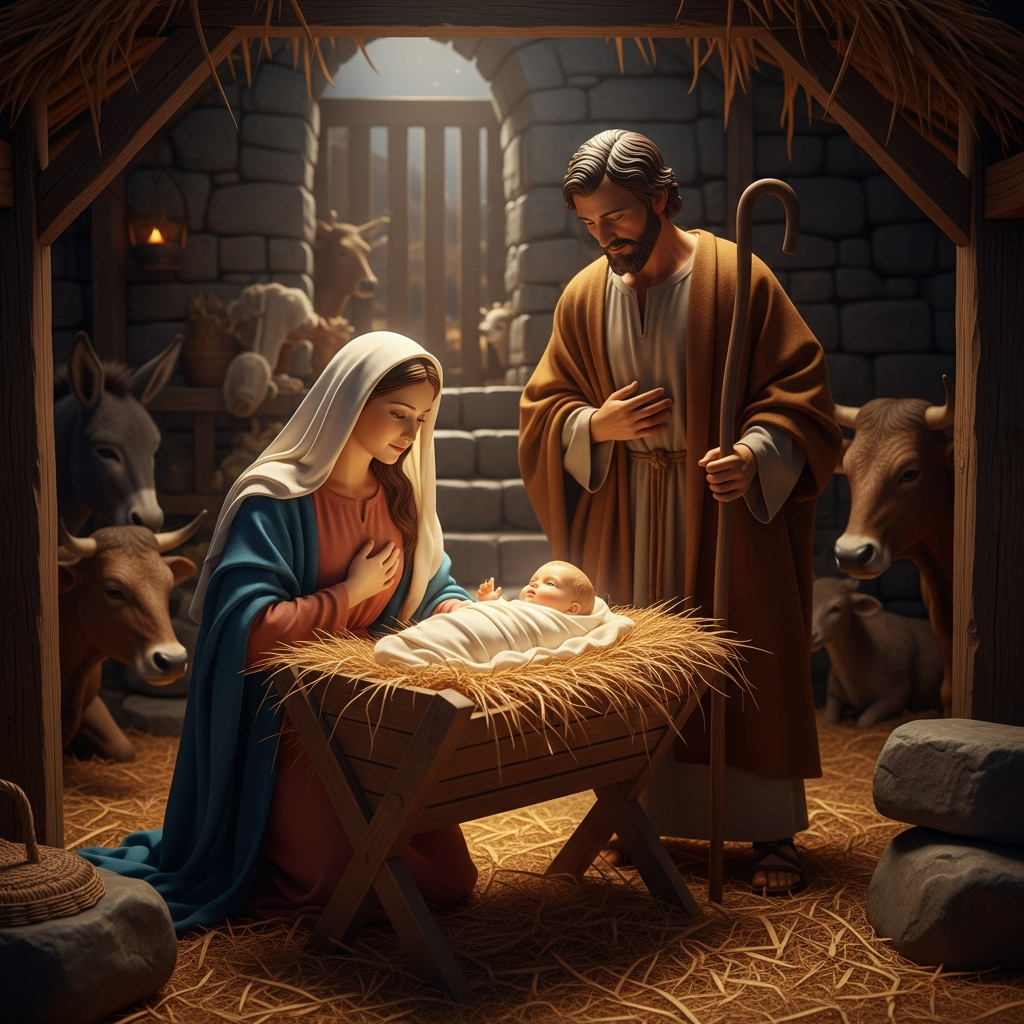
At the center of every display are the three central figures:
- Baby Jesus: Usually placed in a manger (a feeding trough for animals) filled with straw. In many traditions, the figure of the infant is not placed in the scene until Christmas Eve.
- The Virgin Mary: Often depicted in a posture of adoration or kneeling beside the manger, symbolizing her role as the Mother of God.
- Saint Joseph: Typically shown standing with a staff or holding a lantern, representing his role as the protector and guardian of the Holy Family.
2. The Heavenly Host and Shepherds
The Gospel of Luke emphasizes the announcement of the birth to the lowly.
- The Angel: Often placed above the stable or held by a wire, representing the Angel Gabriel or the multitude of angels who announced “Gloria in Excelsis Deo.”
- The Shepherds: These figures represent the first people to receive the news of the Messiah’s birth. They are usually accompanied by sheep, symbolizing humility and the “Good Shepherd.”
3. The Magi (Three Wise Men)
The Gospel of Matthew describes the journey of the Magi from the East.
- Melchior, Caspar, and Balthazar: These figures are often depicted with camels and carrying gifts of gold, frankincense, and myrrh.
- The Star of Bethlehem: A prominent star is usually placed atop the stable to represent the celestial guide that led the Magi to the location of the birth.
4. The Animals and the Setting
The setting is traditionally a humble stable, cave, or lean-to.
- The Ox and the Donkey: While not explicitly mentioned in the Gospels, they are traditional fixtures based on Old Testament prophecies (Isaiah 1:3). They symbolize the recognition of God by the animal kingdom.
- The Manger: The word “manger” itself refers to the feeding trough. It serves as a powerful symbol of Christ’s humility—the King of Kings resting in a place meant for animal fodder.
Deep Symbolism: What the Manger Scene Teaches Us
The manger scene is more than a historical reenactment; it is a “visual sermon.” As you observe a well-crafted display, you can identify several theological and philosophical themes.
Humility and Poverty
The choice of a stable over a palace is a central theme. The manger scene reminds viewers that spiritual greatness is not tied to material wealth. The presence of hay, rough wood, and animals emphasizes the “Incarnation”—God becoming human in the most vulnerable and modest circumstances.
Universal Inclusion
The manger scene brings together diverse groups of people. You see the shepherds (the poor and marginalized) and the Magi (the wealthy and scholarly). This signifies that the message of Christmas is intended for all of humanity, regardless of social status or nationality.
Light in the Darkness
Many manger scenes are designed to be lit from within or placed under a bright star. This symbolizes the concept of Christ as the “Light of the World” entering into the spiritual darkness of the human condition.
Cultural Variations of the Manger Scene Around the World
While the core elements remain the same, different cultures have added their own unique flair to the manger scene, reflecting local traditions and artistry.
The Neapolitan Presepio (Italy)
In Naples, the manger scene is a sprawling miniature city. Beyond the stable, you will find intricate scenes of marketplaces, taverns, and people engaged in everyday chores. It represents the idea that Jesus is born into the middle of our daily lives.
The Santons of Provence (France)
In the French tradition, small hand-painted terracotta figures called “Santons” (little saints) are used. These include local characters like the baker, the fisherman, and the mayor, all walking toward the stable to pay their respects.
The Pesebre (Spain and Latin America)
In Spanish-speaking countries, the “Pesebre” is often a large-scale landscape involving real moss, sand, and even running water. In countries like Peru, the figures may be dressed in traditional Andean clothing, and the animals might include llamas instead of camels.
The Putz (Moravian Tradition)
In the United States, particularly among Moravian communities in Pennsylvania, a “Putz” is a large, elaborate Nativity display that often fills an entire room. It uses natural materials like stumps, moss, and rocks to create a realistic landscape.
How to Set Up Your Own Manger Scene: A Step-by-Step Guide
Setting up a manger scene can be a meaningful family tradition. If you are looking to create your first display, follow these steps to ensure a beautiful and reverent result.
Step 1: Choose Your Style and Scale
Before purchasing figures, decide where the scene will be placed.
- Tabletop Sets: Ideal for mantels or side tables. Usually made of resin, porcelain, or wood.
- Outdoor Sets: Large-scale figures made of durable plastic or plywood, designed to be seen from the street.
- Minimalist Sets: Modern designs that use simple silhouettes to convey the story.
Step 2: Prepare the Foundation
Use a stable or a simple wooden structure as the backdrop. You can enhance the realism by:
- Adding real straw or dried grass to the floor.
- Placing a dark blue or black cloth behind the stable to represent the night sky.
- Using “fairy lights” or a small spotlight to highlight the interior of the stable.
Step 3: Strategic Placement of Figures
Placement is key to storytelling.
- Center: Place the manger in the middle, with Mary and Joseph flanking it.
- The Periphery: Place the shepherds and their sheep on one side, perhaps slightly further away to show they are approaching.
- The Magi: Traditionally, the Wise Men are placed at a distance or even in a different part of the room, moved closer to the stable each day until the Epiphany (January 6th).
Step 4: The Timing of the Baby Jesus
A common tradition in many households is to keep the manger empty throughout the Advent season. On Christmas Eve or Christmas morning, the youngest member of the family places the figure of Baby Jesus into the straw, signaling that “He has arrived.”
Maintaining and Preserving Your Manger Scene
Because many manger scenes are made of delicate materials like ceramic or hand-painted wood, proper care is essential for them to last for generations.
- Cleaning: Use a soft, dry makeup brush to dust intricate crevices. Avoid using water or cleaning chemicals on hand-painted figures.
- Storage: Wrap each figure individually in acid-free tissue paper or bubble wrap. Store them in a sturdy box with dividers to prevent the figures from knocking against each other.
- Environment: Keep the set in a climate-controlled area. Extreme heat or humidity in attics and garages can cause paint to peel or wood to warp.
The Educational Value of the Manger Scene for Children
If you have children or grandchildren, the manger scene is an unparalleled educational tool. It allows you to:
- Tell the Story: Move the figures as you read the biblical narrative, making the story tangible.
- Teach Values: Discuss the concepts of hospitality (the innkeeper), obedience (Mary), and generosity (the Magi).
- Encourage Creativity: Allow children to add their own natural elements like stones or pinecones to the scene, making them feel part of the tradition.
Frequently Asked Questions (FAQ)
When should I put up my manger scene?
Most people set up their manger scene at the beginning of Advent (four Sundays before Christmas). However, some wait until December 17th (the start of the “O Antiphons”) or even Christmas Eve.
When should I take the manger scene down?
Traditionalists keep the display up until the Feast of the Epiphany (January 6th) or even until the Feast of the Presentation of the Lord (Candlemas) on February 2nd.
Why are there animals in the manger scene?
While the Bible doesn’t explicitly name the animals, the presence of a manger (feeding trough) implies their presence. Traditionally, the ox and donkey symbolize the fulfillment of prophecy and the idea that all of creation recognizes its Creator.
Is it “Creche” or “Manger Scene”?
Both are correct. “Crèche” is the French word for “crib” or “manger.” In English-speaking countries, “Nativity scene” and “manger scene” are the most common terms.
Can I add non-biblical figures to my scene?
Yes. Many cultures add local figures to represent their own community. The goal is to show that Jesus is part of your world today, not just a historical figure from the past.
Conclusion: The Enduring Legacy of the Manger Scene
The manger scene remains a powerful testament to the enduring nature of the Christmas story. Whether it is a priceless antique set in a cathedral or a simple wooden display in a family home, it serves the same purpose that St. Francis of Assisi intended eight centuries ago: to pause, reflect, and find joy in the humble birth of a child in Bethlehem.
By understanding the history, embracing the symbolism, and participating in the tradition, you are connecting with millions of people across history who have found hope in this simple, profound scene. As you set up your own display this year, may it serve as a reminder of the peace and goodwill that the season represents.