I remember the first time I truly noticed the Maltese Cross. It wasn’t in a history book or on a flag; it was etched onto a small, silver pendant my grandfather wore, a quiet emblem he rarely spoke about. As a child, its unique shape, with those distinctive V-shaped arms, simply looked elegant and a little mysterious. It was only much later, as I delved into history and symbols, that I began to uncover the profound stories, resilience, and unwavering spirit embedded within the very essence of the Maltese Cross. This ancient design is far more than just a decorative motif; it represents centuries of courage, service, and a timeless set of values that continue to inspire people worldwide. The Maltese Cross carries a legacy that traverses battlefields, hospitals, and modern-day service, making its history and symbolism incredibly rich and relevant.

What is the Maltese Cross? Unpacking its Core Identity
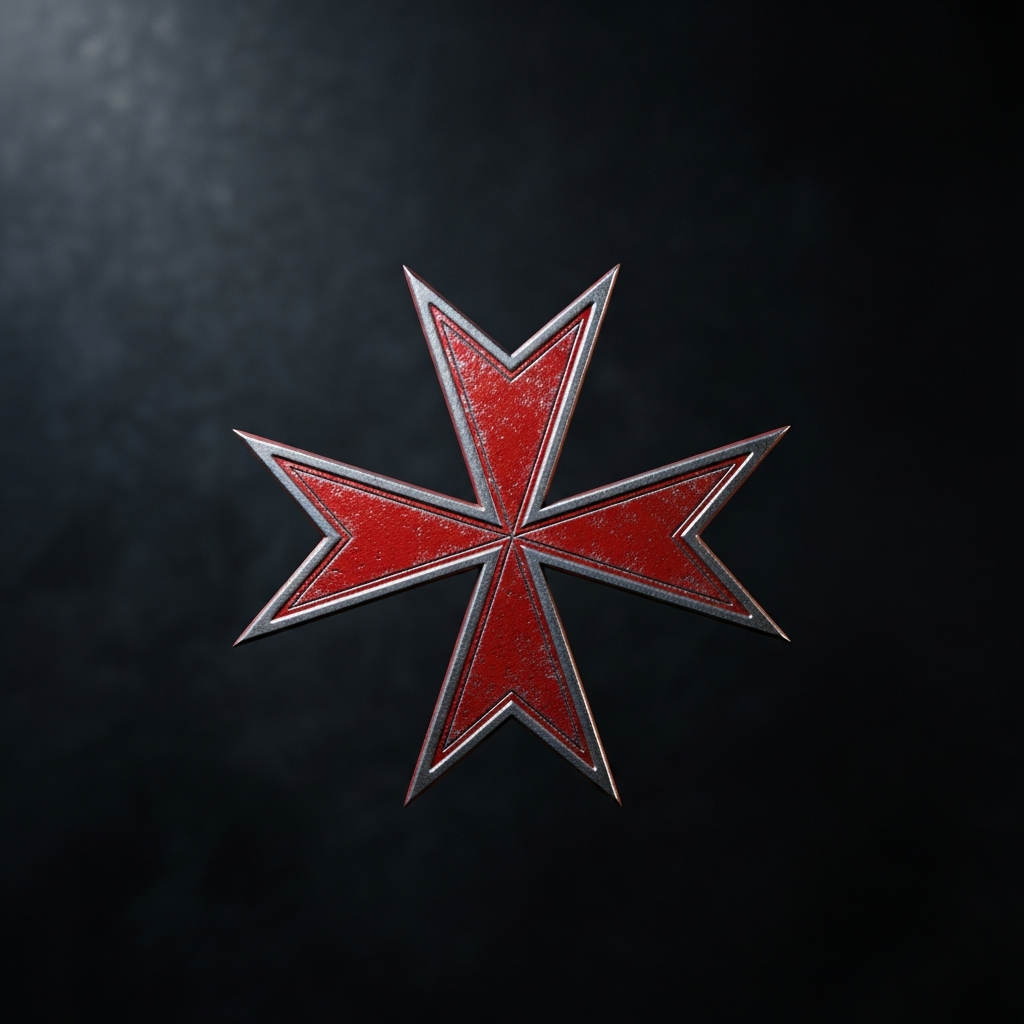
The Maltese Cross is a heraldic symbol characterized by its distinctive eight-pointed design, formed by four V-shaped arms that converge at a central point. Each arm is arrowhead-shaped, featuring indented tips that create two symmetrical outward-pointing tips per arm, totaling eight points. This unique configuration gives the Maltese Cross its geometric precision and widely recognized heraldic elegance. Historically, it is most famously associated with the Knights Hospitaller, also known as the Order of St. John, and subsequently with the island nation of Malta, where it became an inseparable national emblem.
This striking cross is formally known as an eight-pointed cross and developed from earlier forms of similar crosses during the 16th century. While its modern name solidified with the Knights’ move to Malta in 1530, it was previously referred to as the “Amalfi cross,” tracing its origins back to the Republic of Amalfi in Italy during the 11th century. The design’s symmetrical form likely drew inspiration from Byzantine crosses and Islamic geometric motifs, reflecting the diverse cultural influences present in the Crusader states where it first gained prominence. Its distinctive appearance sets it apart from other crosses, making the Maltese Cross a highly recognizable and revered symbol across various applications.
The Maltese Cross has transcended its religious and military beginnings to become a universal emblem. Today, it frequently appears on various insignias, representing organizations dedicated to humanitarian aid, emergency services, and military distinctions. Its clean lines and balanced symmetry have allowed it to be easily integrated into diverse visual identities, from national flags to corporate logos. The consistent use of the Maltese Cross reinforces its association with honor, protection, and a deep sense of heritage, making it an enduring visual testament to steadfast values.
Tracing the Roots: The Rich History of the Maltese Cross
The deep roots of the Maltese Cross extend back to the 11th century, initially appearing on coins minted in the Duchy of Amalfi, an ancient maritime republic in southern Italy. However, its widespread recognition and enduring association truly began with the Knights Hospitaller. This Catholic military order, founded around 1099 in Jerusalem, initially focused on caring for sick and poor pilgrims in the Holy Land. As the Crusader states became more militarized, the order’s role expanded, and by the early 12th century, the eight-pointed cross became their adopted emblem. It was first seen on their black robes and carved on tombs, symbolizing both their commitment to service and their military allegiance.
The journey of the Maltese Cross is intrinsically linked to the Knights Hospitaller’s movements across the Mediterranean. After the fall of Acre in 1291, the Order relocated to Cyprus, then to Rhodes in 1309, where they established an independent state. It was during their time on Rhodes that the cross began to solidify into a more refined, eight-pointed form, sometimes referred to as the “Rhodian cross”. The fully modern design, characterized by its sharp, arrowhead-like arms, began appearing on coinage as early as 1567, under Grand Master Jean Parisot de Valette. This development showcased a gradual stylistic evolution that cemented the Maltese Cross as a distinct heraldic variant.
The pivotal moment for the symbol, leading to its definitive name, occurred in 1530 when the Holy Roman Emperor Charles V granted the island of Malta to the Knights after their expulsion from Rhodes. Upon their arrival, the cross was already their established symbol, and as the Knights dramatically shaped Malta’s landscape with their architectural prowess and patronage, the Maltese Cross became profoundly intertwined with the island’s identity. It adorned their fortifications, palaces, hospitals, and coins, embedding itself into the very fabric of Malta and becoming the island’s national symbol, a proud testament to its storied past and a reminder of their significant role in European history. The Maltese Cross truly became a signature to their enduring legacy.
Beyond the Battlefield: The Deep Symbolism of the Maltese Cross
The Maltese Cross is profoundly rich in symbolism, with its eight points carrying multiple layers of meaning that have resonated through centuries. The most widely recognized interpretation links these eight points to the eight virtues of knightly honor that the Knights Hospitaller vowed to uphold. These virtues served as a moral guide for their daily lives and missions, both on and off the battlefield.
Traditionally, these virtues include:
- Loyalty: Upholding allegiance and steadfastness.
- Piety: Demonstrating deep religious devotion and reverence.
- Generosity: Exhibiting a charitable and giving spirit.
- Bravery: Showing courage and valor in the face of danger.
- Glory and Honor: Striving for renown and integrity.
- Contempt of Death: Facing mortality with unwavering resolution.
- Helpfulness towards the Poor and Sick: Dedicating oneself to aid the vulnerable.
- Respect for the Church: Adhering to spiritual authority and principles.
Beyond these specific knightly virtues, the eight points of the Maltese Cross are also widely interpreted as symbolizing the Eight Beatitudes from the Sermon on the Mount in the Gospel of Matthew. This connection highlights the spiritual foundation of the Knights and their mission, rooting their chivalric code in Christian teachings. The Beatitudes represent a path to spiritual perfection, emphasizing qualities like humility, justice, mercy, and endurance, which align perfectly with the Order’s charitable and military responsibilities. The Maltese Cross, therefore, served not only as a military emblem but also as a powerful spiritual compass for its wearers.
Another significant interpretation for the eight points of the Maltese Cross relates to the eight “Langues” or regional divisions from which the Knights of the Order of St. John originated. These Langues represented the various European nationalities and linguistic groups that comprised the international Order, fostering a sense of unity and shared purpose among knights from diverse backgrounds. This unifying aspect underscored the international spirit that Malta continues to embrace, reflecting its historical role as a crossroads of civilizations. The Maltese Cross, through this lens, became a symbol of global fraternity and cooperation under a common noble cause.
The four main arms of the Maltese Cross also carry symbolic weight, representing the four cardinal virtues: prudence, justice, temperance, and fortitude. These fundamental values formed the structural backbone of the Knights’ moral and ethical framework, guiding their approach to challenges and adversities. The geometric precision of the Maltese Cross, with its rotational balance, further symbolizes divine order and a deep concern for mathematical symmetry, reflecting a harmonious blend of spiritual ideals and practical design.
The Maltese Cross in Heraldry and Nobility
Throughout history, the Maltese Cross has held a prominent place in heraldry, serving as a distinguished emblem for various orders of chivalry, nobility, and governmental entities. Its elegant and instantly recognizable form made it an ideal choice for conveying prestige, honor, and a legacy of service. The cross became a powerful visual statement on coats of arms, seals, and flags, signifying a rich tapestry of historical and contemporary significance.
The most notable association of the Maltese Cross in heraldry is, of course, with the Sovereign Military Order of Malta (SMOM) itself. Even today, the Maltese Cross remains the official symbol of this Catholic lay religious order, which continues its mission of medical and humanitarian aid in over 120 countries. The cross is prominently displayed on their official flag, the habits of Professed Members, and the ceremonial robes of the Order’s Knights and Dames. This enduring use underscores the unbroken link between the historic Knights Hospitaller and their modern successors, with the Maltese Cross serving as a constant reminder of their charitable charism.
Beyond the Knights of Malta, numerous other military and civil orders of merit across Europe and the world have adopted the eight-pointed cross, often in modified forms, as part of their insignia. For instance, the Order of Saint Stephen, founded in Tuscany in 1561, and the Order of Saints Maurice and Lazarus in Italy, both feature the Maltese Cross in their designs. Historically significant awards like the Prussian Pour le Mérite (founded 1740) and the Bavarian Military Merit Order (founded 1866) also incorporated variants of the Maltese Cross, signifying exceptional valor and service. In Australia, the Distinguished Service Cross and Conspicuous Service Cross, both introduced in 1991 for distinguished command and leadership in warlike operations, are modified versions of the Maltese Cross. Other nations, including Poland (Order of the White Eagle, Virtuti Militari, Order of Polonia Restituta), Bulgaria (Order of Bravery), and the Philippines (Quezon Service Cross, Order of the Golden Heart), also feature the Maltese Cross in their highest national honors and military decorations, solidifying its status as a symbol of immense prestige.
The Maltese Cross has also found its way into regional and municipal heraldry, further demonstrating its widespread acceptance and symbolic power. The city of Amalfi, recognizing its historical connection as the cross’s namesake, prominently features it. The British colony of Queensland, Australia, adopted the Maltese Cross as its state badge and on its flag in 1876, a usage that continues to this day. In modern Malta, the cross is not merely a historical artifact; it is a living symbol appearing everywhere from coins and government seals to the national airline’s logo, serving as a proud reminder of Malta’s heritage and identity. The Maltese Cross, therefore, functions as a powerful emblem of authority and heritage, easily recognized and deeply embedded in a diverse range of institutional identities. Its presence in such contexts underscores its timeless appeal and its ability to represent universal values that transcend specific eras or locations.
Modern Manifestations: Where You See the Maltese Cross Today
The journey of the Maltese Cross has continued far beyond its medieval origins, evolving into a universally recognized symbol in numerous contemporary contexts. Its association with courage, protection, and service has made it particularly significant in fields dedicated to public safety and humanitarian efforts. The Maltese Cross is truly a symbol that connects past valor with present-day heroism.
One of the most widespread and recognized modern uses of the Maltese Cross is its adoption by fire departments worldwide. This tradition dates back to the heroic actions of the Knights Hospitaller during the Siege of Malta in 1565. During this brutal siege, incendiary weapons were frequently used, causing devastating fires. Knights reportedly risked their lives to extinguish these fires, displaying immense bravery and self-sacrifice in the face of extreme danger. This historical narrative cemented the Maltese Cross as an emblem of valor and dedication in service to others. Today, over 30,000 fire departments in the United States alone proudly display the Maltese Cross on uniforms, trucks, and station signage. It symbolizes the core values of firefighters: courage, honor, protection, and sacrifice, reminding them of the noble legacy they carry forward. The Maltese Cross serves as a visual reminder of their unyielding courage as they confront flames and danger to save lives and protect property.
Beyond firefighting, the Maltese Cross also maintains a strong presence in medical and humanitarian organizations. Descendants of the original Order of St. John, such as St. John Ambulance and the Order of Malta Ambulance Corps, extensively use the Maltese Cross in their logos and emblems. These organizations provide first aid, ambulance services, and medical relief across numerous countries, directly continuing the Hospitallers’ original mission of caring for the sick and poor. In Germany, both the Protestant Johanniter-Unfall-Hilfe and the Catholic Malteser Hilfsdienst, major ambulance services, prominently feature the eight-pointed cross. The Maltese Cross in these contexts signifies compassion, readiness to serve, and the vital role of these services in ensuring public safety and well-being. For emergency medical service personnel, this symbol means a great deal; it represents belonging to an important, life-changing service that people trust and rely on.
The appeal of the Maltese Cross extends into jewelry, fashion, and design, where its striking geometric form makes it a popular motif. Its symmetrical elegance and historical gravitas make it a desirable element in pendants, rings, and other adornments. In Malta itself, the Maltese Cross is woven into intricate lace patterns and featured in various local crafts, serving as a continuous link between its rich past and vibrant present. Designers appreciate its strong angles and bold presence, recognizing its ability to evoke strength, tradition, and timeless beauty.
Furthermore, the Maltese Cross appears in diverse applications ranging from sports and club logos to more technical fields. For instance, the French football club AJ Auxerre, founded by a priest, incorporates an eight-pointed cross, adapted from the Catholic Association of French Youth, into its emblem. In a surprising twist, the Maltese Cross even appears in the Geneva drive mechanism in engineering, a device that translates continuous rotational motion into intermittent rotary motion, highlighting its influence beyond heraldry into practical mechanical applications. While sometimes mistakenly called a Maltese Cross mechanism, the Geneva drive uses a similar cross-like component. This widespread modern adoption, from the critical work of emergency responders to the subtle artistry of jewelry, demonstrates the enduring power and versatility of the Maltese Cross as a symbol.
Distinguishing the Maltese Cross: Common Misconceptions
Despite its distinctive design, the Maltese Cross is sometimes confused with other heraldic crosses, leading to common misconceptions about its true form and history. Understanding these distinctions is crucial for appreciating the unique identity of the Maltese Cross. Its specific V-shaped arms and eight points are key identifiers that set it apart.

One of the most frequent confusions arises with the Cross Pattée (or Cross Formée). While visually similar, especially to an untrained eye, there’s a critical difference. The Cross Pattée typically features arms that broaden towards the ends, but these ends are usually straight or slightly curved, not indented into distinct points like the Maltese Cross. The true Maltese Cross has four V-shaped arms, each terminating in two points, creating a total of eight. The Cross Pattée, on the other hand, often has non-indented ends, and while its broadness and narrowness can vary, it lacks the signature eight sharp points of the Maltese Cross. Many fire service emblems, which are commonly referred to as the Maltese Cross, are actually closer in design to a Cross Pattée or a hybrid, with curved arches between the points rather than the crisp V-shape. This subtle yet significant difference is often overlooked in popular usage.
Another occasional misidentification links the Maltese Cross to the Iron Cross, a prominent military decoration of the Kingdom of Prussia and later Germany. While both are steeped in military history, their designs are markedly different. The Iron Cross typically features four flared arms that expand outwards from the center but have straight ends, not the inward-pointing V-shapes that define the Maltese Cross. The Iron Cross’s simplicity and bold, linear structure contrast with the intricate, multi-pointed geometry of the Maltese Cross, which conveys a different historical and cultural narrative. These crosses originated in entirely different contexts and represented distinct military traditions.
The “Maltese Cross” is also occasionally misidentified in broad terms with any “eight-pointed cross.” While it is indeed an eight-pointed cross, not all eight-pointed crosses are the Maltese Cross. The Maltese Cross is a specific variant characterized by its four V-shaped arms converging at right angles, with two tips pointing symmetrically outward from each arm. Other eight-pointed crosses might have different arm shapes or arrangements. For example, some early forms of eight-pointed crosses existed before the standardized Maltese Cross design fully emerged in the 16th century.
Addressing these misconceptions is vital for maintaining the historical and heraldic integrity of the Maltese Cross. Its unique design is not merely aesthetic; it embodies specific historical connections and symbolic meanings tied to the Knights Hospitaller and the island of Malta. When referring to the distinct symbol associated with these entities and the virtues it represents, it is important to accurately identify it as the Maltese Cross, appreciating its specific form and rich background. The Maltese Cross stands as a testament to precision in symbolism, a characteristic that has ensured its enduring recognition and reverence across diverse cultures and applications.
The Maltese Cross: A Global Icon with Local Roots
The journey of the Maltese Cross from a localized emblem to a global icon is a compelling story of resilience, adaptation, and universal appeal. Although its deepest roots are firmly planted in the soil of Malta and the legacy of the Knights Hospitaller, the Maltese Cross has transcended its geographical origins to become a symbol recognized and revered across continents. This global reach speaks volumes about the timeless values it embodies and the powerful design it presents.
The transformation began with the Knights themselves, an international order composed of “Langues” from various European regions, including Auvergne, Provence, France, Aragon, Castille and Portugal, Italy, Germany, and the British Isles. As these knights traveled and served, they carried the Maltese Cross with them, embedding its image in diverse cultures from the Crusader states to Western Europe. This early dissemination established the cross as an emblem of a pan-European brotherhood dedicated to specific ideals of chivalry and service. The Maltese Cross, therefore, was international from its very inception, reflecting a collaborative spirit that transcended national borders in its mission.
Over centuries, the Maltese Cross has been adopted or adapted by numerous entities far removed from its original context. Its use by fire departments around the world, from the United States to Canada and Australia, is a prime example of its universal appeal as a symbol of courage and selflessness. Similarly, medical and humanitarian organizations like St. John Ambulance, with operations in over 40 countries, continue to utilize the Maltese Cross, linking their modern efforts to the ancient Hospitaller tradition of care for the sick and poor. The ability of the Maltese Cross to represent core values like bravery, mercy, and honor has allowed it to resonate deeply with service-oriented professions globally, regardless of their direct historical link to Malta.
Even in seemingly disparate fields, the influence of the Maltese Cross is evident. Its presence in military decorations, royal orders, and even regional heraldry across various nations demonstrates its enduring significance as an emblem of distinction. The elegant geometric design of the Maltese Cross also contributes to its timeless appeal, allowing it to be integrated into diverse artistic and cultural expressions, from intricate jewelry to architectural motifs. Its sharp angles and balanced symmetry lend themselves well to both grandeur and subtle detail, making it a versatile symbol for artists and designers alike.
The enduring appeal of the Maltese Cross lies in its capacity to symbolize universal human values that transcend time and place. It embodies resilience, unity, and a commitment to noble principles in the face of challenges. While it remains a central cultural symbol for Malta, deeply embedded in its national identity and heritage, the Maltese Cross has undeniably become a global icon. Its story is a powerful illustration of how a symbol, born from specific local roots and historical events, can evolve to represent shared aspirations and inspire people across the world.
Preserving the Heritage: Challenges and Future of the Maltese Cross
The Maltese Cross, with its profound history and pervasive modern presence, faces unique challenges in the 21st century. Preserving its historical integrity while allowing for contemporary relevance is a delicate balance that impacts its future as a global symbol. The continued respect and understanding of the Maltese Cross depend on addressing these aspects thoughtfully.
One significant challenge involves maintaining its historical integrity and combating misrepresentation. As the Maltese Cross is widely adopted, particularly by various firefighter and emergency services, its exact historical form can sometimes be altered or simplified, leading to variations that diverge from the original design. While adaptation can foster broader recognition, it also risks diluting the specific heraldic and symbolic nuances that define the true Maltese Cross. Educating the public about the precise features and historical significance of the Maltese Cross is essential to prevent its mistaken identity with other cross forms, such as the Cross Pattée, and to ensure that its deep meanings are not lost in generic usage. The enduring message of the Maltese Cross rests on an accurate understanding of its origins and the virtues it embodies.
Another aspect relates to the balance between tradition and modern adaptation. The Maltese Cross is a symbol of great tradition, inextricably linked to the medieval Knights Hospitaller and the island of Malta. However, for it to remain relevant, it must continue to connect with contemporary values and causes. Organizations like the Sovereign Military Order of Malta continue their humanitarian work globally, ensuring the Maltese Cross remains a living symbol of service. This ongoing charitable and medical mission keeps the symbol actively associated with positive, current endeavors, rather than solely being a relic of the past. The Maltese Cross must strike a chord with new generations, conveying its timeless values in a way that feels current and impactful.
The globalization and commercialization of symbols also present a challenge. While the widespread recognition of the Maltese Cross is a testament to its powerful design, its appearance on various commercial products without connection to its underlying values can sometimes diminish its profound meaning. Ensuring that the Maltese Cross is used respectfully and in contexts that honor its heritage is crucial for its continued resonance as a symbol of dignity and noble purpose. The distinctiveness of the Maltese Cross is a key factor in its memorability, and commercial overuse without consideration for its background could subtly erode its impact.
Despite these challenges, the future of the Maltese Cross appears robust, largely due to its inherent strength as a symbol. Its association with universally admired qualities like courage, faith, and service guarantees its continued relevance. Efforts to celebrate and educate about its history, particularly by institutions in Malta and the Orders that bear its name, are vital for preserving its rich heritage. The Maltese Cross stands as a timeless emblem, reminding us of human perseverance, unwavering faith, and a legacy that continues to inspire positive action in the modern world. The Maltese Cross persists not just as a historical artifact, but as a dynamic and potent symbol guiding collective aspirations.
Conclusion: The Unwavering Spirit of the Maltese Cross
The Maltese Cross is far more than an intricate geometric design; it is a profound testament to enduring values, a silent witness to centuries of history, and a potent symbol of courage, service, and unwavering dedication. From its early origins as the emblem of the Knights Hospitaller in the Holy Land to its current global presence across diverse fields, the Maltese Cross has consistently embodied ideals that transcend time and culture. It speaks of the eight virtues that guided medieval knights, the steadfast protection offered by modern firefighters, and the compassionate care provided by medical services worldwide.
This distinctive eight-pointed cross, with its V-shaped arms converging at a central point, has woven itself into the very fabric of Malta’s identity while simultaneously becoming a universal icon. Its rich symbolism, representing everything from the Beatitudes to international fraternity, continues to inspire and unite. Despite the passage of time and the challenges of modern interpretation, the Maltese Cross retains its powerful resonance, reminding us of the strength found in solidarity, the importance of upholding principles, and the timeless call to serve humanity with honor and integrity. The Maltese Cross stands as a beacon of an unwavering spirit, a legacy that continues to shine brightly, connecting past heroism with future aspirations.
—
FAQ (Pertanyaan yang Sering Diajukan)
What is the Maltese Cross?
The Maltese Cross is an eight-pointed heraldic symbol, famously associated with the Knights Hospitaller and the island of Malta. Its design features four V-shaped arms that meet at a central point, creating eight distinct tips, symbolizing virtues like loyalty, courage, and service.
What do the eight points of the Maltese Cross represent?
The eight points of the Maltese Cross traditionally symbolize several concepts:
- Eight Knightly Virtues: Such as loyalty, piety, generosity, bravery, glory and honor, contempt of death, helpfulness towards the poor and sick, and respect for the Church.
- Eight Beatitudes: From the Sermon on the Mount in the Gospel of Matthew.
- Eight Langues (Nationalities): Representing the original national-linguistic divisions of the Knights Hospitaller.
Why do firefighters use the Maltese Cross?
Firefighters adopted the Maltese Cross as a symbol of bravery, honor, and sacrifice, drawing inspiration from the Knights Hospitaller. During the Siege of Malta in 1565, Knights risked their lives to extinguish fires caused by incendiary weapons, embodying selflessness and courage in the face of danger.
Is the Maltese Cross the same as the Iron Cross or Cross Pattée?
No, while they share some visual similarities, the Maltese Cross is distinct. It is characterized by four V-shaped arms with indented tips forming eight specific points. The Iron Cross has flared arms with straight ends, and the Cross Pattée typically has arms that broaden towards the ends but without the distinct indented tips of the Maltese Cross.
Where else is the Maltese Cross used today?
Beyond firefighters, the Maltese Cross is used by:
- Medical and Humanitarian Organizations: Such as St. John Ambulance and the Sovereign Military Order of Malta, continuing the Hospitallers’ mission of care.
- Military and Civil Orders: Appearing in various national honors and awards worldwide.
- Maltese National Identity: Featured on coins, government seals, and the national airline’s logo.
- Jewelry and Design: Due to its aesthetic appeal.