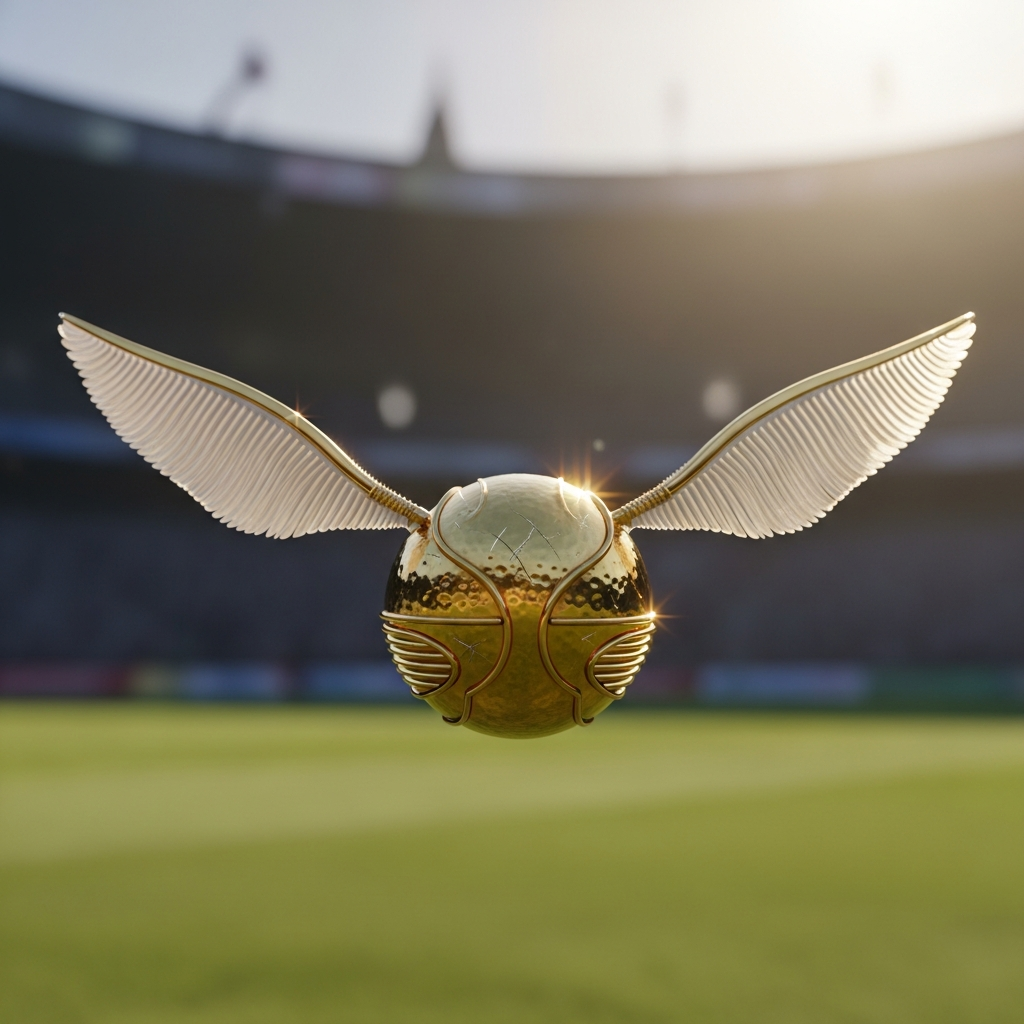
The Golden Snitch is, without a doubt, the most important and enigmatic object in the high-stakes world of Quidditch, a sport played on flying broomsticks. This tiny, winged, golden ball has the power to instantly end a match and secure a massive 150 points for the team whose Seeker manages to catch it, making it the ultimate game-changer and the focus of the entire sport. A single, swift capture of the Golden Snitch is usually enough to guarantee victory, which is why Seekers are often the most crucial players on the pitch.

*
What Exactly is the Golden Snitch? Unpacking Its Core Role and Design
The Golden Snitch is one of the four balls used in a traditional Quidditch match, though its role is vastly different from the other three. Unlike the Quaffle, which is used for scoring goals, or the Bludgers, which are designed to knock players off their brooms, the Golden Snitch is an independent entity, flying freely and autonomously around the stadium. Its diminutive size and incredible speed make it incredibly difficult to spot, let alone catch, cementing its legendary status.
The Physics and Physiology of the Golden Snitch
Physically, the Golden Snitch is described as being roughly the size of a walnut. It is metallic and gold-coloured, featuring two tiny, fluttering silver wings that allow it to dart, hover, and change direction with impossible agility. Its appearance is intentionally deceptive; it looks delicate, but its movements are lightning-fast.
- Size: Approximately the size of a standard walnut.
- Colour: Bright gold, ensuring it catches the light but remains elusive.
- Wings: Two delicate, rapidly beating silver wings.
- Speed: Extremely swift, able to reach incredible speeds and heights.
The inherent magic imbued in the Snitch is what gives it its speed and its near-sentient awareness. It is not simply a remote-controlled object; it is magically enchanted to evade capture for as long as possible. Furthermore, and perhaps most famously, every Golden Snitch has a unique memory enchantment. This fascinating magical protection ensures that the Snitch remembers the first human who touches it, enabling a fair and verifiable catch.
The Original Snitch: A Tale of the Golden Snidget
The history of the Golden Snitch is steeped in a dark and fascinating past that involves a now-endangered magical creature. Originally, the object chased by Seekers was not a ball at all, but a real bird known as the Golden Snidget. This tiny, rounded, golden bird was fast and agile, prized for its rarity and its gem-like eyes.
However, the practice of hunting the Snidget during Quidditch matches—initially worth 150 Galleons, leading to the eventual 150-point score—nearly drove the species to extinction. Consequently, the use of the live bird was banned. The Snitch was created as a humane replacement, replicating the Snidget’s size, speed, and golden hue. This historical context is vital, as it highlights how the rules and equipment of Quidditch have evolved to protect magical creatures, even while maintaining the spirit of the game.
*
The Rules of the Chase: How the Golden Snitch Dictates Quidditch
The presence of the Golden Snitch fundamentally shapes the entire strategic dynamic of a Quidditch match. While the Chasers and Beaters are engaged in a mid-air battle of skill, teamwork, and brute force, the Seekers are playing an entirely different, highly individualised game of patience, sharp eyesight, and precise timing.
The Seeker’s Burden
The role of the Seeker is arguably the most pressurised position on the pitch. They are essentially detached from the scoring action of the Quaffle, flying high above the fray, constantly scanning the vast playing field for a fleeting flash of gold. They must maintain extreme focus, enduring the constant threat of Bludgers, without ever taking their eyes off the potential path of the Golden Snitch.
- Patience is Key: Seekers may spend hours waiting for a glimpse of the Golden Snitch. Matches have been known to last for days or even months, purely because the Snitch remained uncaught.
- The 150-Point Incentive: The massive point tally associated with the Snitch (150 points) means that a team that is losing by up to 140 points can still win instantly upon capture.
- Strategic Capture: A truly masterful Seeker does not simply catch the Snitch the moment they see it. They must constantly assess the current score. A strategic Seeker might hold off on the capture to allow their team to build a better lead, ensuring that the 150 points they add will definitively secure the victory, rather than resulting in a hollow win where they are still behind. This is the complex calculus of chasing the Golden Snitch.
The Exception to the Rule
While the capture of the Golden Snitch usually ends the game and leads to victory, there are famous, high-profile instances where a team catches the Snitch and still loses. This is the strategic gamble inherent in the Snitch’s scoring system.
A prime example involves the 1994 Quidditch World Cup final. During this momentous match, the Bulgarian Seeker, Viktor Krum, caught the Golden Snitch. However, he knew his team was far behind in points, so he caught it simply to end the game on his own terms, preventing a worse loss for Bulgaria. Krum’s catch awarded his team 150 points, but Ireland’s lead was substantial enough that they won the match regardless. This event serves as a crucial case study, proving that the Golden Snitch is the ender of the game, but not always the guarantor of success.
*
The Golden Snitch in the Real World: A Modern Adaptation
The immense popularity of the magical sport has led to the development of ‘Muggle Quidditch’—now officially known as Quadball—a real-life, full-contact sport played by non-magical people around the globe. The necessity of adapting a magical flying object into a playable physical equivalent presented a unique challenge, and the solution offers a fascinating insight into game design.
The Muggle Snitch Runner
In the real-world version of the sport, the Golden Snitch is not a tiny flying ball, but a human athlete known as the Snitch Runner. This person is dressed in all yellow or gold and has the Snitch—a tennis ball tucked into a sock—attached to their waist or back.
The Snitch Runner’s job is not just to run; they are a neutral player with the objective of avoiding capture. They are allowed to interfere with the Seekers, and their movements are not restricted to the field of play, often leading to exciting chases outside the boundaries of the main game.
- Human Factor: The Snitch Runner’s physical stamina and quick thinking replace the magic of the original Golden Snitch.
- The Catch: Instead of grabbing a flying ball, the Seeker must physically remove the sock/ball from the Snitch Runner’s person.
- Point Difference: In modern Quadball, catching the Snitch awards 40 points, not 150, reflecting an intentional shift to make the point differential less dominating, thus giving more weight to the Chasers’ efforts. This change addresses common criticisms that the Golden Snitch made the rest of the game almost irrelevant.
This adaptation shows the enduring power of the concept behind the Golden Snitch, demonstrating how a compelling fictional game element can be successfully translated into a competitive athletic endeavor. The sheer spectacle of the Snitch Runner being chased is often cited as the most exciting part of a real-world Quadball match.
Global Presence and Trends
The real-world version of the sport featuring the human Golden Snitch has seen remarkable growth. Major tournaments, including the Quadball World Cup, draw thousands of fans and media attention. This continued relevance ensures that the Golden Snitch remains a topic of current interest, not just a relic of literature.
Teams and Seekers gain notoriety based on their ability to manage the Golden Snitch phase of the game. Coaches develop specific strategies for handling the Snitch Runner, making the capture of the Golden Snitch a multi-layered strategic challenge rather than a simple lucky grab. This continuous refinement of the game’s mechanics keeps the narrative around the Golden Snitch fresh and globally trending.
*
The Deeper Meaning of the Golden Snitch
Beyond its function as a game-ending mechanic, the Golden Snitch holds significant symbolic and emotional weight within the narrative world. It represents destiny, the pursuit of the impossible, and the finality of closure. Its elusive nature makes the pursuit a metaphor for chasing one’s goals against insurmountable odds.

A Tiny Ball of Immense Destiny
One specific Golden Snitch transcends all others in terms of emotional impact: the one caught by Harry Potter in his very first Quidditch match. This particular Snitch becomes an integral plot device, revealing a hidden message left by Albus Dumbledore.
This plot element elevates the Golden Snitch from a simple sporting accessory to an object of immense destiny. The memory charm associated with the Snitch (the fact that it remembers the first person who touched it) ensures that it holds a profound, singular connection with the Seeker who captures it. This deepens the relationship between the player and the ball, creating a powerful, lasting bond far beyond the 150 points awarded.
Analogies in Game Design and Life
The mechanism of the Golden Snitch—a sudden, high-value, game-ending objective—is a concept that has been widely studied and even replicated in other fictional works and real-world game design. It serves as a narrative device that prevents a prolonged, tedious stalemate, forcing a decisive conclusion.
Consider any competition where a tie is possible or where one team runs away with the score. The Golden Snitch serves as a mechanism of high variance, meaning that even a dramatically losing team maintains a shred of hope until the very last second.
- Narrative Tension: The constant, silent threat of the Golden Snitch being caught keeps the audience and the players on the edge of their seats.
- Balancing Factor: It forces leading teams to commit resources to protecting their Seeker or trying to catch the Snitch quickly, preventing them from focusing solely on goal scoring.
- The Power of the Few: The Snitch places the outcome of the entire team’s effort onto the shoulders of one player, emphasising the value of a highly specialized role.
This concept of a high-stakes, time-sensitive object proves why the design of the Golden Snitch is considered a brilliant piece of fictional sport-crafting.
*
Collecting and Commemorating the Golden Snitch
Due to its iconic status, the Golden Snitch is one of the most popular items in the entire world of magical fandom. Its sleek, recognisable design and powerful symbolism make it a highly desirable piece of merchandise, from affordable keychains to high-end collectibles.
Merchandise and Collectibles Trends
The demand for Golden Snitch merchandise has been consistently high, transcending typical collectible cycles. Its shape makes it perfect for various applications, appealing to a wide demographic, from jewelry enthusiasts to prop collectors.
Recent market trends show that the Golden Snitch is particularly popular in the following categories:
- Jewelry and Accessories: Items like necklaces, earrings, and bracelet charms are consistently strong sellers. The design of the Snitch, especially the winged component, lends itself perfectly to elegant, subtle jewelry.
- Prop Replicas: High-detail, life-size replicas of the Golden Snitch are a staple for collectors. These often come with stands or glass display cases, commemorating a famous fictional catch.
- Functional Gifts: Practical items that incorporate the design, such as lamps, clip lights, and desk accessories, are popular for integrating a touch of magic into everyday life.
- Engagement and Wedding Memorabilia: The symbolism of ‘catching’ your perfect match has made Golden Snitch boxes and themed proposals a popular, romantic trend.
The continuous release of new products featuring the Golden Snitch shows that its appeal remains evergreen. This constant stream of merchandise ensures that the object remains visible and relevant in the current consumer market.
The Lasting Legacy
In the end, the Golden Snitch is much more than a ball worth 150 points; it is a cultural touchstone. It represents the adrenaline rush of the chase, the tension of the unknown, and the sweet finality of victory. Whether you are a Seeker chasing the small golden speck high above a stadium or a spectator watching the human Snitch Runner dart across a field, the capture of the Golden Snitch is the moment that defines the game. It is a perfect emblem of a sport built on speed, strategy, and the unpredictable power of a tiny, winged, golden object. The Golden Snitch truly encapsulates the excitement and the magical complexity that draws millions to this fantastical sport.
*
FAQ (Frequently Asked Questions)
How many points is the Golden Snitch worth?
The Golden Snitch is worth exactly 150 points when caught by the Seeker. This immense point value is designed to ensure that the team who catches the Snitch usually wins the match, making the Seeker’s role paramount in determining the outcome of the game.
Does the Golden Snitch always end the match?
Yes, catching the Golden Snitch instantly terminates the Quidditch match, regardless of the current score or how long the game has been running. However, it does not guarantee a victory. If the opposing team has a point lead of 160 points or more at the time of the catch, the team that caught the Snitch will still lose the game, even with the 150 points added to their score.
What is the magical secret of the Golden Snitch?
The primary magical secret of the Golden Snitch is its unique memory charm. The Snitch is enchanted to remember the touch of the first person who ever held it. This spell ensures that if a Seeker catches the Snitch, it can be handled by the referee without compromising the magical memory, which serves as a security measure to confirm a fair catch.
Was the Golden Snitch originally a ball?
No, the Golden Snitch was originally a small, highly prized magical bird known as the Golden Snidget. Due to the near-extinction of the bird from being hunted during matches, the Ministry of Magic banned the use of the Snidget. The modern ball version was created as a magical replacement to preserve the spirit and high-stakes nature of the game.
Is the Golden Snitch used in real-life Quidditch (Quadball)?
Yes, the concept of the Golden Snitch is adapted for the real-life sport, Quadball. In this version, the Snitch is a tennis ball in a sock attached to the back of a neutral, all-yellow athlete called the Snitch Runner. The Seeker must physically remove the Snitch from the runner, and this capture is worth 40 points in modern rules, rather than 150, to better balance the game.
*