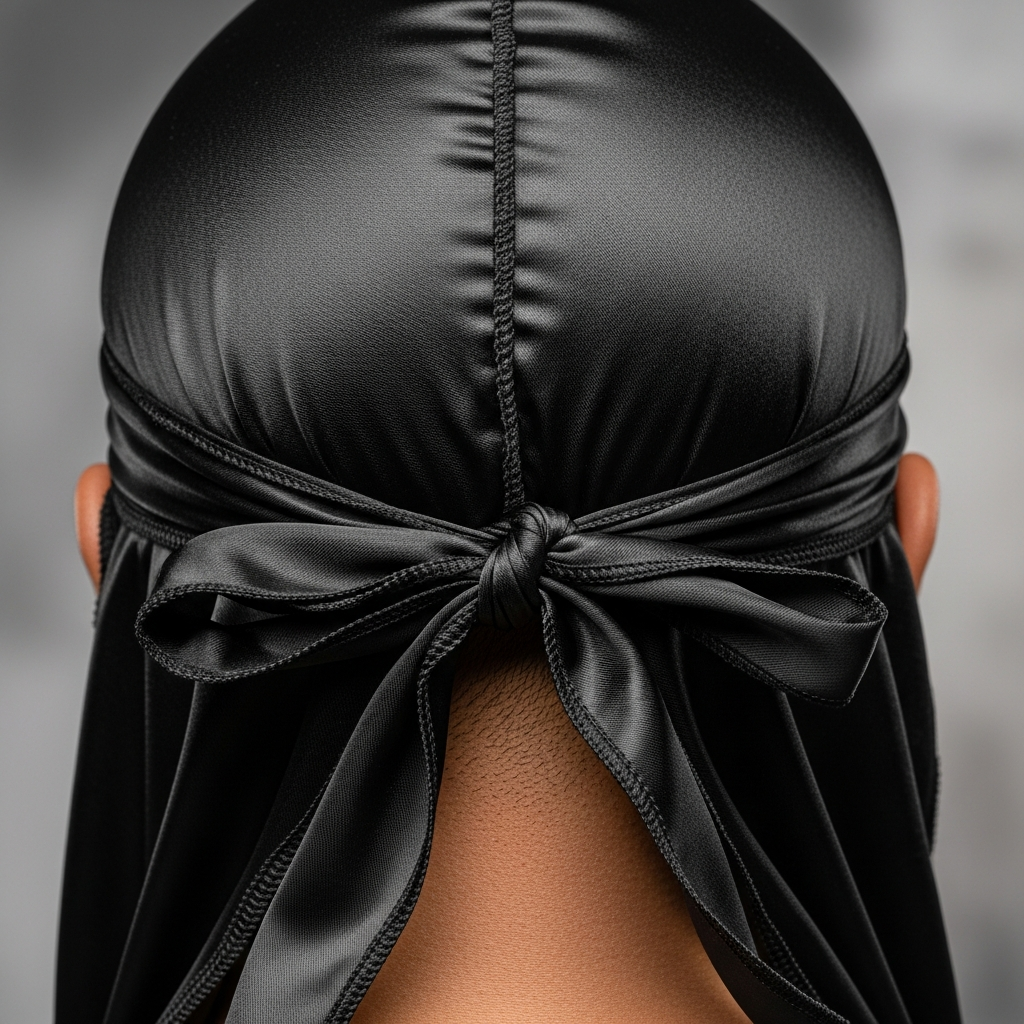
The Durag is a versatile head covering, typically made from silk, satin, or velvet, which serves both a profound cultural function and a practical haircare role. Originating as a functional garment to protect and maintain hairstyles, particularly within the Black community, the Durag has evolved into a powerful symbol of identity, style, and urban fashion. Its primary function in hair maintenance is to compress the hair evenly, which is essential for training the hair to form and preserve intricate patterns like the popular 360 waves, while also retaining moisture and preventing frizz throughout the night or day.

—
The Origin and Cultural Significance of the Durag
The story of the Durag is not just about a piece of cloth; it is a rich narrative interwoven with African-American history, resilience, and style. Its journey from a simple functional garment to a globally recognized cultural icon is a testament to its enduring power and significance. Understanding the Durag requires looking beyond its utility to the socio-cultural landscape from which it emerged.
From Functional Wrap to Fashion Icon
The origins of the Durag can be traced back to the late 19th and early 20th centuries, a period following the Civil War and the Great Migration. Initially, these wraps were primarily used by women to protect their hairstyles, especially during sleep or while working, echoing the headwraps worn by many women of color for generations. This early iteration of the Durag was simply a means of preserving the time-intensive work of styling textured hair.
During the Great Depression in the 1930s, the item found a more widespread, commercially available form, often marketed as a “tie-down” or “tie-over” to help preserve conked or chemically straightened hair, which required constant compression and protection. The name “Durag” itself is believed to be a phonetic evolution, perhaps stemming from “do-rag,” a rag worn to protect one’s “do” (hairstyle). This functional piece of fabric quietly performed its duty in the background of everyday life, an essential tool for maintaining dignity and appearance in a challenging world.
The true cultural explosion of the Durag occurred in the late 1960s and 1970s with the Black Power movement. Although not directly a political symbol, the Durag was already cemented as a fixture in Black communities. As a functional item, the Durag remained essential, but its visibility began to change in the 1990s. This decade marked the Durag‘s definitive transition. It moved from being an exclusively at-home hair protector to an accessory worn prominently in public, specifically becoming a symbol of inner-city Black culture and the burgeoning Hip-Hop movement.
This was the era when the Durag truly took on its cultural weight. Rappers, athletes, and artists adopted the Durag as part of their on-stage and street persona, lending it a cool, defiant, and undeniably authentic edge. The sheer utility of the Durag combined with its presence in popular culture transformed it into a visual statement. The material of the Durag also began to change, moving from simple cotton to more luxurious satin and silk to enhance its aesthetic appeal while still providing optimal hair compression.
The Durag and Black Identity
The cultural significance of the Durag is complex and multifaceted, acting as a sartorial shorthand for identity, heritage, and sometimes, misunderstood rebellion. For many, wearing a Durag in public is an act of reclaiming and celebrating Black aesthetics, a visible assertion of one’s cultural lineage.
The symbolism of the Durag has often been subject to misrepresentation and controversy, particularly when it was banned in certain schools and sporting leagues. These bans, often rooted in misinformed stereotypes, inadvertently highlighted the Durag‘s power as a cultural marker. The garment was not just seen as a fashion accessory; in the eyes of some institutions, it was perceived as inherently disruptive or associated with negative stereotypes.
However, within the community, the Durag tells a different story. It often represents:
- Self-Care and Pride: The care and commitment required to maintain hairstyles like 360 waves, which are achieved through consistent brushing and the use of a high-quality Durag, is an expression of self-respect and pride in one’s appearance.
- Authenticity and Roots: The Durag serves as a link to urban heritage and a visual proclamation of where one comes from, especially in the context of streetwear.
- Fashionable Defiance: Wearing a luxurious Durag on a red carpet or fashion runway is a subtle, yet powerful, act of bringing marginalized culture to the forefront, challenging Eurocentric fashion norms, and asserting a presence.
Analogy: Consider the humble handkerchief or scarf. It is purely functional—to wipe sweat or cover the neck. Yet, in many cultures, the scarf has transcended this to become a symbol of wealth, piety, or political affiliation. Similarly, the Durag transcended its primary function as a hair maintenance item. It now acts as a crown for many, signifying a deep connection to a cultural history of style and struggle. When an artist wears a diamond-studded Durag, it’s a statement that marries luxury with a cultural staple, turning the utilitarian Durag into a piece of haute couture. The rich fabric of a premium Durag reflects the self-worth and inherent style of the wearer.
The Essential Role of the Durag in Haircare
While its cultural status garners the most attention, the enduring popularity of the Durag is firmly rooted in its practical, unmatched function in hair maintenance, particularly for those with textured, coiled, and kinky hair. The unique structure and material properties of the Durag make it an indispensable tool for achieving specific hairstyles and maintaining overall hair health.
Mastering the 360 Waves: The Durag’s Primary Function
The Durag is perhaps most famous for its role in creating and maintaining 360 Waves—a hairstyle characterized by a ripple effect across the entire scalp. This style requires significant dedication, often involving a rigorous process called “wolfing” and consistent, daily compression, which is where the Durag shines.
The process of achieving 360 waves involves training the hair to lie down flat in a circular pattern, radiating outward from the crown. This training is accomplished through dedicated brushing, often with specific wave brushes. The crucial step that follows is the compression provided by the Durag.
- Consistent Pressure: A properly tied Durag applies even, consistent pressure across the entire scalp, forcing the hair cuticles to lie flat. This pressure is necessary to “train” the hair’s growth pattern. Without this constant compression, the hair would naturally spring back up. A Durag with wide, long straps is ideal for achieving maximum, even compression.
- Preventing Frizz and Flyaways: The smooth, internal fabric of a quality Durag (typically silk or satin) minimizes friction between the hair and an external surface, like a pillowcase. Friction leads to breakage and frizz. By creating a smooth barrier, the Durag ensures the hair remains sleek and undisturbed, which is critical for wave formation.
- Locking in Moisture and Oils: Unlike cotton, which absorbs moisture, a silk or satin Durag helps to lock in the natural oils (sebum) and applied moisturizers or pomades (often referred to as ‘wave grease’). This internal moisture retention keeps the hair healthy, minimizes dryness, and enhances the hair’s natural shine, giving the waves that distinct, glossy look. This ability to retain moisture is arguably the single most important haircare function of the Durag.
For example, a dedicated waver might spend an hour brushing their hair, applying a light moisturizer and a wave pomade. If they were to sleep without a Durag, all that hard work would be undone; the pillow would absorb the products, and the friction would create frizz. Wearing a silk Durag ensures that the products stay in the hair, and the compression maintains the wave pattern. This dedication is why the Durag is an indispensable piece of grooming equipment for the style.
A case study on achieving premium waves often reveals that the quality of the Durag is just as important as the frequency of brushing. A thin, low-quality Durag will not provide sufficient compression, leading to inconsistent waves. Conversely, a thick velvet or high-thread-count silk Durag ensures superior lay-down and shine.
Beyond Waves: Protection for Braids, Twists, and Scalp Health
While the wave community has adopted the Durag as its primary tool, the utility of the item extends to protecting a wide range of textured and protective hairstyles.
- Maintaining Braids and Twists: Braids, cornrows, and twists require significant time and financial investment. A Durag protects these styles by keeping them neatly compressed, preventing them from loosening or fraying prematurely at the scalp or the ends. By wearing a Durag, the wearer can significantly extend the life of their protective style, saving time and hair manipulation.
- Preventing Hairline Damage: A common misconception is that a Durag can damage the hairline. However, when tied correctly, a Durag is a protective barrier. The key is to ensure the straps are tied firmly across the back of the head, avoiding excessive, tight pressure directly on the delicate baby hairs and edges. A well-fitted Durag actually helps to keep the edges laid and smooth, reducing the need for constant manipulation with gels or brushes.
- Scalp and Dandruff Control: By compressing the hair, the Durag also helps to keep the scalp clean and minimizes the shedding of loose hair and skin flakes onto bedding. Furthermore, by locking in natural oils, the Durag can indirectly help to alleviate dry scalp conditions, as the scalp’s sebum is distributed more effectively throughout the hair strands. The breathable nature of some mesh and modern Durag fabrics also prevents excessive sweat build-up, maintaining a healthy scalp environment.
The simple physics of the Durag—compression and reduced friction—yields impressive results. It is an extremely cost-effective way to preserve complex, high-maintenance hairstyles. Every time a person uses a Durag, they are actively investing in the longevity and health of their hair.
The Durag in Modern Fashion and Streetwear
The journey of the Durag from a private grooming aid to a public fashion statement is one of the most compelling stories in modern style. Today, the Durag is a dynamic piece of apparel, seen everywhere from high-fashion runways and celebrity red carpets to daily streetwear. This current phase of the Durag‘s evolution highlights its complete acceptance as a legitimate fashion accessory that carries powerful cultural weight.
Runways to Rapper: How the Durag Became a Global Style Statement
The late 20th and early 21st centuries saw the Durag emerge from its subcultural niche onto the global stage. This transition was largely catalyzed by influential figures in the Hip-Hop and R&B communities. Artists began showcasing customized, high-end Durags in music videos, on album covers, and at major award shows, effectively rebranding the functional item as a piece of aspirational fashion.
The move was a powerful statement of cultural pride, but it also offered designers a new canvas. No longer confined to the traditional black and navy satin, the modern Durag began to appear in:
- Vibrant Hues and Patterns: Neon colors, tie-dye, camouflage, and complex graphic prints made the Durag an attention-grabbing centerpiece.
- Luxury Materials: Designers started experimenting with genuine silk, plush velvet, and even leather, elevating the Durag into a luxury item.
- Jeweled and Embellished Styles: For major events, artists have been seen wearing custom Durags featuring intricate beadwork, precious stones, and metallic accents, truly turning the headwear into a statement piece equivalent to a crown or tiara.
In recent years, the fashion industry has officially embraced the Durag. It is no longer unusual to see models wearing Durags on major fashion runways, a distinct shift that acknowledges the garment’s significant cultural impact. This incorporation into mainstream high fashion is not simply about aesthetics; it is a recognition of the Durag‘s deep history and the powerful communities that champion it.
For instance, the appearance of the Durag at the Met Gala—one of fashion’s most exclusive events—solidified its status as a high-fashion accessory. When a public figure chooses to wear a Durag on such a platform, it is an explicit endorsement of urban culture and a celebration of Black style, demonstrating that the Durag is both functional and profoundly glamorous. This trend suggests that the Durag is enjoying renewed popularity across all demographics.
Exploring Durag Materials and Modern Style Trends
The material and style of the Durag are no longer arbitrary choices; they are deliberate fashion decisions that communicate style, status, and function. The material determines both the final look and the effectiveness of the haircare process.
| Durag Material | Primary Function / Benefit | Modern Style Trend |
| :— | :— | :— |
| Silk | Superior moisture retention, minimal friction, maximum shine. | Often used for luxury, high-gloss finishes. |
| Satin | Good moisture retention, affordable and durable alternative to silk. | Most common for daily use and solid, vibrant colors. |
| Velvet | Provides maximum compression for deeper waves, soft exterior texture. | Ombre Velvet Durags are a key recent trend, blending two shades for dramatic visual effect. |
| Mesh | High breathability for workouts or hot climates, more relaxed compression. | Sporty and functional, popular in athletic streetwear. |
| Crochet | Artistic, textured, primarily a fashion statement rather than a compression tool. | Crochet Durags are a unique recent trend embraced by celebrities and influencers. |

The ongoing evolution of the Durag in fashion is characterized by the diversification of these materials and patterns.
The velvet Durag, for example, is particularly trendy. Its plush exterior provides a visually rich texture, which contrasts beautifully with its smooth, satin interior that still delivers on its promise of wave compression. The introduction of ombre velvet durags, which feature a subtle gradient of color, demonstrates how the simple piece of cloth has become a canvas for artistic expression.
Furthermore, the way one ties a Durag is a style statement in itself. While the traditional knot at the back of the neck is standard for compression, variations exist:
- The Classic Tail: Leaving the tails of the Durag hanging down the back.
- The Bow Tie: Tying a decorative bow with the tails for a softer, more elaborate look.
- The Side Knot: A fashion-forward tie where the knot is deliberately positioned above the ear.
The modern Durag wearer uses the item not only for functionality but as a core element of their outfit, carefully selecting the color, fabric, and knot style to complement their overall look. The Durag is no longer something to be hidden; it is a powerful accessory to be showcased.
Proper Durag Tying Techniques for Maximum Effect
Mastering the Durag is as much about the final style as it is about the correct application. Improperly tying a Durag can lead to discomfort, a damaged hairline, or, crucially, ineffective hair compression. The goal is to achieve an even, firm wrap that stays in place all night without restricting blood flow.
The fundamental technique for tying a Durag ensures maximum compression for waves while protecting the hairline. The best results require a Durag with wide, sufficiently long straps, typically found on premium silk or velvet models.
Step-by-Step Guide to the Perfect Durag Tie
- Placement of the Cap (The Dome): Position the dome of the Durag over your head. The central seam should run perfectly down the center of your face, from your forehead to the back of your head. This ensures even compression across the entire wave pattern. The flap (or cape) at the back of the Durag should be completely covering the back of your neck and hair.
- Bringing the Straps Forward: Take one strap of the Durag in each hand. Bring both straps back behind your ears and cross them at the base of your skull, near your neck. It is absolutely critical that you do not cross the straps at the center of your forehead, as this creates a pressure point that can damage your hairline.
- The Initial Cross and Wrap: After crossing the straps at the back of your head, bring them back around to the front of your forehead. You should now have the straps coming together in the center of your forehead, forming an ‘X’ shape. This is where the main compression is generated. Pull the straps taut, but not painfully tight.
- Tying the Knot: Wrap the straps back around the base of your skull, over the initial cross, and tie a firm, secure knot right where the straps crossed initially, at the back of your head (near the nape of the neck). The knot should be secure enough that the Durag will not slip off, but loose enough that it doesn’t cause a headache.
- Tucking the Flap (The Final Layer): The final step, often overlooked, is securing the flap. Take the long flap of the Durag and pull it up over the compressed area. You can either tuck the flap under the straps at the back of your head, or fold it neatly under the main body of the Durag to create a clean, finished look. The purpose of this flap is to provide an extra layer of compression and smoothness to the back of the neck and lower scalp.
This method creates two layers of pressure across the most critical areas for wave formation: the top of the head and the sides. When a Durag is tied this way, it maximizes the ‘lay’ of the hair and minimizes the dreaded ‘line’ that a poorly tied Durag can leave across the forehead.
Choosing the Right Durag for the Task
Not all Durags are created equal, and choosing the right one for the job is essential for maximizing its benefits.
For Deep Waves (Wolfing): A velvet Durag is the superior choice. The thick, non-slip exterior of a velvet Durag allows for maximum tension and compression, vital during the rigorous wolfing* phase where the hair is thicker and harder to lay down.
- For Sleeping and Shine: A silk or satin Durag is best. These materials glide over the pillow and keep the maximum amount of moisture in the hair, which is key for a natural, healthy shine. A dedicated silk Durag provides a low-friction environment, which prevents split ends and keeps hair moisturized overnight.
- For Everyday Fashion: This is where personal style dictates the choice. A mesh Durag or a stylish printed satin Durag might be chosen for casual wear. Here, the aesthetic appeal of the Durag takes precedence, although the protective benefits remain a bonus.
The deliberate choice of a high-quality, breathable Durag is an investment in hair quality. Unlike disposable alternatives, a well-maintained Durag can last for years, continuously providing the necessary compression and protection. It is a foundational tool in the grooming kit of anyone serious about their hair health.
The Future Trajectory of the Durag
The Durag is far from a stagnant relic of the past; it is a continuously evolving cultural and fashion item. Its journey from a functional item to a profound symbol of identity suggests that its influence will only grow. The future of the Durag is likely to be characterized by further integration into luxury markets, deeper specialization in haircare, and continued prominence as an unapologetic cultural signifier.
Durag Innovation and Specialization
In terms of haircare, manufacturers are constantly innovating the basic design of the Durag. We are already seeing:
- Compression Technology: Development of Durags with adjustable internal bands or seamless designs to eliminate the forehead line caused by a poorly tied or overly tight Durag.
- Climate-Specific Materials: Introduction of temperature-regulating fabrics, such as bamboo or specialized microfibers, which create a highly breathable Durag that is perfect for exercise or for use in very hot, humid environments, maintaining scalp comfort without compromising compression.
- Hybrid Designs: Combining the wave-laying compression of a traditional Durag with the easy slip-on convenience of a cap or beanie, offering a practical solution for quick hair protection.
The focus will shift even more toward the scientific benefits of the Durag. For instance, a Durag designed with anti-bacterial properties to prevent product build-up or a Durag infused with natural oils directly into the fabric could become standard.
The Durag as a Global Fashion Staple
Culturally, the Durag has broken down significant barriers. It has moved beyond being solely a Black cultural marker—although its roots will always lie there—to become a broader item of streetwear adopted by various communities globally. Its presence in international fashion capitals underscores its universal appeal as a bold, stylish head covering. The Durag is now firmly positioned alongside items like the bandana, the beanie, and the baseball cap as a universally recognized piece of headwear, but one that carries a uniquely powerful backstory.
The continued acceptance of the Durag in mainstream media and high fashion ensures its visibility remains high. Every time a celebrity wears a custom-made Durag on a red carpet, or a fashion magazine runs an editorial featuring a variety of Durag styles, the item’s legitimacy as a style choice is reinforced. The cultural conversation around the Durag has shifted from one of controversy to one of celebration and respect.
In conclusion, the Durag is an extraordinary item of apparel. It is a symbol of self-care and dedication to grooming, a powerful expression of cultural identity, and a dynamic piece of modern fashion. From its humble beginnings as a utilitarian head wrap to its current status as a fashion icon, the Durag continues to evolve, weaving itself deeper into the fabric of global culture while perpetually serving its core function: the protection and perfection of hair. The future of the Durag is bright, ensuring its legacy as an essential item for generations to come. The importance of the Durag in both style and function simply cannot be overstated.
—
FAQ (Frequently Asked Questions)
How do I stop my Durag from leaving a line on my forehead?
The line left by a Durag is typically a result of tying the straps too tightly across the forehead or crossing them directly over the sensitive brow area. To prevent this, ensure the following steps:
- Change the Crossing Point: Cross the straps only at the back of your head (the nape of your neck).
- Use the Flap: Pull the flap/tail of the Durag up over the forehead area before wrapping the straps back around; this adds a smooth layer of fabric that cushions the pressure from the straps.
- Check the Material: Use a velvet or thick, high-quality satin Durag as they tend to offer better, broader compression than thin materials.
- Adjust Tightness: The Durag should be firm enough not to slip, but not so tight that it causes pain or deep indentation.
What is the difference between a silk Durag and a velvet Durag?
The primary difference between a silk Durag and a velvet Durag is the material and the resulting function:
- Silk Durag: Best for maximum moisture retention and shine. Silk is a low-friction material that is less absorbent than other fabrics, making it perfect for locking in applied oils and natural moisture. A silk Durag is ideal for overnight wear.
Velvet Durag: Best for maximum compression and style. The exterior is plush velvet, offering a luxurious look and an anti-slip texture that grips the head better. The interior of a quality velvet Durag is usually satin to maintain the protective qualities, but the velvet shell provides the superior tension needed during the wolfing* stage of wave creation.
Can women wear a Durag?
Absolutely. The Durag has historically been a hair maintenance tool used by both men and women. Today, women wear the Durag for its original functional purposes—to preserve braids, twists, lays, and locs, and to maintain the integrity of their hairstyles while sleeping. Furthermore, women have fully embraced the Durag as a fashion accessory, incorporating stylish, custom-made Durags into their everyday looks, showcasing a rich variety of colors and fabrics.
How long should I wear a Durag to get waves?
The amount of time required to get waves with a Durag varies based on hair texture and consistency, but dedication is key. Most people commit to a process called “wolfing,” which involves growing their hair out for 4-12 weeks while brushing and wearing a Durag consistently. To see initial, recognizable 360 wave patterns, you should plan to wear your Durag for at least 6-8 weeks, sleeping in it every night and wearing it for several hours during the day, especially after brushing sessions. Consistent use of a premium Durag is essential for achieving the deepest, most defined waves.