The Cross Of Lorraine is a powerful and globally recognized emblem, but its storied past is far more complex than its simple heraldic design suggests. This double-barred symbol represents centuries of religious veneration, regional identity, and most famously, a resolute defiance against tyranny. Its journey spans the medieval crusades, the political map of Europe, and the most dramatic conflicts of the 20th century, making the Cross Of Lorraine a true testament to unyielding spirit.

In a casual glance, the Cross Of Lorraine appears to be a straightforward Christian symbol. However, it functions as a deep cultural marker, symbolizing resilience, hope, and the desire for freedom, especially in French history. Exploring the layers of its meaning and its frequent reappearances in times of crisis reveals why the Cross Of Lorraine continues to resonate across the world today.
What is the Cross Of Lorraine? Defining a Double-Barred Emblem
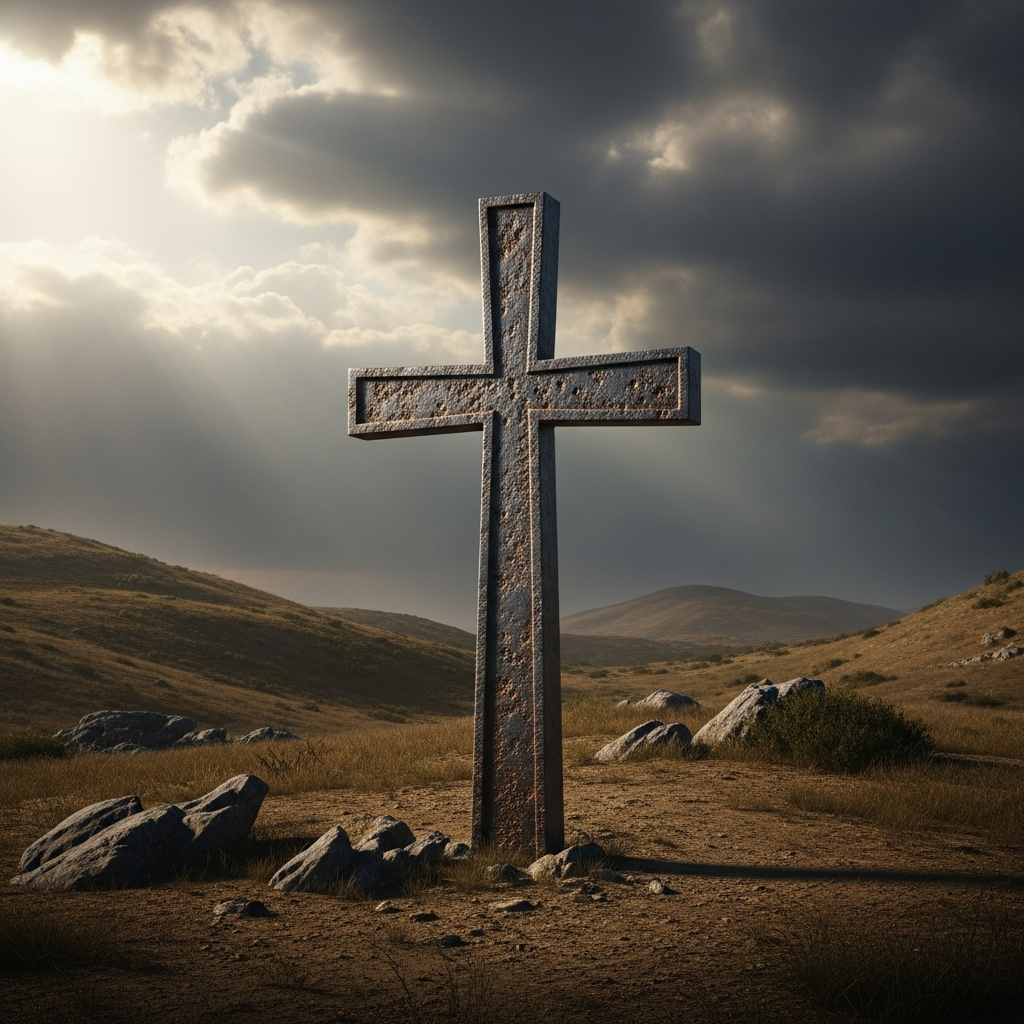
The Cross Of Lorraine is a heraldic Christian cross defined by a vertical bar intersected by two horizontal crosspieces. This symbol’s distinctive design usually features an upper bar that is notably shorter than the lower one, though variations with equal lengths also exist. Originating as a relic of the True Cross, its use later expanded to denote ecclesiastical authority, regional identity in northeastern France, and ultimately became the iconic standard of French resistance during the Second World War.
The Distinctive Design and Its Variations
The precise structure of the Cross Of Lorraine is what sets it apart from the more common single-barred Latin cross. While the Latin cross represents the crucifixion itself, the double-barred form adds an element of hierarchical or narrative meaning.
Historically, the design of the Cross Of Lorraine often follows a specific grading:
- The Main Bar: The vertical line forming the body of the cross.
The Lower Bar: The longer of the two horizontal bars, typically positioned where the patibulum* (the main beam) would be.
The Upper Bar: The shorter bar, often meant to represent the titulus*, the inscription plate that Pontius Pilate placed above Jesus—the famous I.N.R.I. (Iesus Nazarenus Rex Iudaeorum, or Jesus of Nazareth, King of the Jews).
This particular arrangement lends a subtle gravitas to the Cross Of Lorraine, elevating it beyond a simple religious icon. Because of this feature, the Cross Of Lorraine is often considered a variant of the Patriarchal Cross, a form traditionally used to indicate the jurisdiction of an archbishop or patriarch, thereby signifying high ecclesiastical authority. The symbol’s presence in various coats of arms across Eastern Europe further attests to this connection with elevated religious or royal power. The history of the Cross Of Lorraine is thus deeply tied to both sacred relics and powerful ruling houses.
The prevalence of the symbol in different regions means there is no single, universally standardized version of the Cross Of Lorraine. The versions found in Hungarian heraldry may have slightly different proportions than those adopted by the Dukes of Lorraine centuries later. However, the core identity of the Cross Of Lorraine as a vertical line with two horizontal cross-sections of unequal length remains consistent, serving as an instantly recognizable emblem of complex historical weight. This subtle design detail allows the Cross Of Lorraine to be easily distinguished from simpler cross designs, a necessary trait for a symbol intended to rally troops and unify political movements.
Ecclesiastical Roots: The Crozier of Archbishops
Before it became a national symbol of France, the early forms of the Cross Of Lorraine were intertwined with the Catholic Church’s hierarchy. Its fundamental design, featuring two horizontal bars, closely resembles the staff or crozier carried by archbishops and patriarchs, hence the alternative name, Patriarchal Cross.
This connection to high religious office dates back to the Byzantine Empire. Records indicate that as early as the 8th century, Byzantine coins featured this double-barred motif, with Emperor Justinian II using the symbol to signify his imperial authority. The adoption of this symbol by spiritual leaders was a visual statement: the extra bar denoted a rank above that of a bishop, whose staff typically ended in a single Latin cross. This makes the early history of the Cross Of Lorraine a story of status and jurisdiction within the Christian world.
The evolution of the cross’s form from a symbol of religious rank to a powerful political banner is a fascinating case study in symbology. The association of the Cross Of Lorraine with the relics of the True Cross further sanctified it in the medieval mind. It was often believed that fragments of the original cross were mounted in a double-barred shape, particularly those brought back from the East. This relic-based veneration provided the Cross Of Lorraine with immense spiritual credibility and significance, making it a profoundly meaningful choice for knights and noble houses seeking divine protection in their campaigns. Consequently, when the symbol was later adopted by the Dukes of Lorraine, it brought with it an immediate and understood heritage of sacred power and high authority.
The Medieval Journey of the Cross Of Lorraine: From Anjou to Hungary
The narrative of the Cross Of Lorraine is a grand European saga, tracing paths from the sacred sites of the Holy Land through the courts of Hungarian kings and into the heart of the French duchy that gave it its name. The double-barred symbol, known originally as the Cross of Anjou, owes its presence in Western Europe to the tumultuous era of the Crusades.
The True Cross Relic and the House of Anjou
The most direct lineage of the Cross Of Lorraine in France begins with the House of Anjou. Following the sack of Constantinople during the Fourth Crusade around 1204, numerous relics were dispersed across Europe. One of the most significant was a purported fragment of the True Cross, which found its way to Anjou around 1244. This sacred artifact was enshrined in a reliquary—a vessel to hold the relic—that was shaped like the double-barred cross, featuring the characteristic two horizontal arms of unequal length.
The Counts of Anjou, who later became Dukes, deeply venerated this relic and incorporated its symbolic form into their family’s heraldry and banners. For the House of Anjou, the Cross Of Lorraine—or the Cross of Anjou, as it was known then—was not merely a coat of arms but a spiritual claim to divine favor and protection. This profound connection meant the symbol was deployed with great pride and conviction in military campaigns, signifying that the Angevins fought under a standard blessed by one of Christianity’s most sacred objects. This heritage instilled in the Cross Of Lorraine an early and powerful association with victory and providential destiny.
The geographic and political reach of the Anjou family ensured the widespread dispersal of this form of the Cross Of Lorraine. As the family intermarried with other European royal lines and claimed various titles, the symbol traveled with them, weaving itself into the fabric of other nations’ histories. This movement explains why a cross so strongly identified with a French region has significant, centuries-old roots in Central Europe, an important piece of the puzzle of the Cross Of Lorraine‘s identity.
Royal Adoption in Central Europe: Hungary, Poland, and Lithuania
While the Anjou connection brought the symbol to France, its deepest and earliest European heraldic roots lie further east. The double-barred cross was already a well-established symbol of sovereignty in the Kingdom of Hungary, decades before the relic arrived in Anjou.
King Béla III, who reigned in the late 12th century, was the first Hungarian monarch to formally adopt the two-barred cross as a symbol of royal power. Historians suggest he likely adapted it from the Byzantine model, as he was raised in the Byzantine court. The adoption by Béla III cemented the double cross’s status as a fundamental national emblem.
- Hungary: The symbol has been featured in the coat of arms of Hungary since the late 12th century, representing its sovereignty and Christian identity.
- Slovakia: Due to its historical ties to the Kingdom of Hungary, the Cross Of Lorraine (or a very similar Patriarchal Cross) also features prominently in the coat of arms of Slovakia today.
- Lithuania and Poland: The Jagiellonian dynasty, particularly King Władysław Jagiełło, also adopted the patriarchal cross in their coat of arms, further propagating the symbol across the vast territories of the Polish–Lithuanian Commonwealth.
The enduring presence of the Cross Of Lorraine (or its related variants) in the national symbols of these Central and Eastern European nations underscores its ancient and widespread association with royalty, divine kingship, and national identity. When René I of Anjou, having inherited the Duchy of Lorraine, adapted the symbol in 1431, he was drawing not only on his immediate family history but also on a much grander, pan-European tradition of sacred and royal power represented by the double-barred cross. This rich background amplified the symbolic weight of the Cross Of Lorraine when it finally settled in its namesake region.
The Cross Of Lorraine and the Birth of a Regional Identity
The adoption of the double-barred cross by the Dukes of Anjou and its subsequent journey to the Duchy of Lorraine transformed the symbol from a generic royal or religious emblem into a deeply localized marker of defiance and regional pride. The moment the Cross Of Lorraine became the symbol of Lorraine was not merely an administrative choice but a matter cemented in battle and blood.
A Banner of Triumph at the Battle of Nancy
The pivotal moment in the history of the Cross Of Lorraine occurred in 1477 at the Battle of Nancy. René II, Duke of Lorraine, found himself locked in a fierce conflict with Charles the Bold, the powerful Duke of Burgundy. Charles the Bold represented an existential threat to the independence of Lorraine, seeking to annex the prosperous duchy into his growing domain. Facing overwhelming odds, René II rallied his forces under the banner of the double-barred cross, invoking it as a spiritual shield inherited from his Angevin ancestors.
The decisive victory of René II’s Lorrainian forces over the Burgundians on January 5, 1477, was a profound, life-altering moment for the region. The death of Charles the Bold in the battle cemented the independence of Lorraine and, critically, sacralized the symbol associated with the victory.
- Immediate Commemoration: To commemorate the victory, René II erected a monumental stone cross at the very spot where Charles the Bold fell.
- Symbolic Transformation: The Cross Of Lorraine immediately transitioned from a heraldic charge of the ruling house to the potent, unifying symbol of the entire region’s resilience.
- Legacy of Triumph: From that day onward, the Cross Of Lorraine stood for the Lorrainian people’s ability to resist external aggression and secure their freedom, an association that would be powerfully resurrected centuries later.
This powerful historical anecdote established the core meaning of the Cross Of Lorraine: a symbol of resistance and triumph over powerful oppressors. The centuries that followed reinforced this identity, embedding the cross into local architecture, art, and popular consciousness, ensuring that its meaning was universally understood by the people of Lorraine.
From Regional Emblem to National Grievance
The resilience symbolized by the 1477 victory was desperately needed again in the 19th century. Following the Franco-Prussian War of 1870–1871, France was forced to cede the region of Alsace-Lorraine to the newly unified German Empire. This annexation was a national trauma for France, and the loss of the provinces became a major political and patriotic grievance.
During the annexation period from 1871 to 1918, the Cross Of Lorraine found renewed purpose as a quiet, yet potent, emblem of French patriotism. For the French population remaining in the annexed territories, displaying the Cross Of Lorraine was an act of subtle, non-violent defiance. It was a clear statement that despite the foreign occupation, the region’s heart remained French, and the hope for eventual reclamation—la revanche—was alive.
- Propaganda and Patriotism: French patriots across the remainder of France used the image of the Cross Of Lorraine on posters, medals, and in literature to advocate for the return of the lost provinces. It became the visual shorthand for the desire to rebuild a divided and humiliated nation.
- Trauma and Memory: The symbol served as a constant reminder of the 1477 victory—a historical precedent that proved the people of Lorraine could and would eventually overcome powerful German control.
The period between 1871 and 1918 was critical in evolving the Cross Of Lorraine from a purely regional emblem into a symbol of nationwide patriotic ambition. By the time World War I concluded and the provinces were returned to France, the cross had earned a revered status in the national pantheon of French symbols, setting the stage for its most globally significant role in the next great conflict.

World War II: The Enduring Symbol of Resistance (Cross Of Lorraine)
The Second World War provided the Cross Of Lorraine with its most famous and definitive association: the emblem of the Free French Forces. In a time of national collapse and occupation, this centuries-old symbol was strategically chosen to rally a fractured people and serve as an unmistakable counterpoint to the enemy’s iconography.
General de Gaulle and the Free French Forces
When France fell to Germany in 1940 and the collaborationist Vichy regime was established, a young Brigadier General named Charles de Gaulle fled to London to organize a continuing resistance. He needed a powerful, unifying, and instantly recognizable symbol for his nascent movement, the France Libre (Free France).
The suggestion for the Cross Of Lorraine came from Vice-Admiral Émile Muselier, the commander of the Free French Naval Forces. The choice was ingenious and deeply strategic:
- Direct Opposition: The double-barred design provided a direct and visible geometric opposition to the Nazi swastika, which had crossed arms. The Cross Of Lorraine thus served as a symbol of Christian civilization and French patriotism against the perceived paganism of National Socialism.
- Historical Echo: It instantly recalled the indomitable French patriotism of the 1871 trauma and the legacy of the Battle of Nancy, reminding all French people that resistance was historically intrinsic to the region and its people.
- Official Emblem: Adopted on July 1, 1940, the Cross Of Lorraine was integrated into all aspects of the Free French movement. It was displayed on the flags and ensigns of Free French warships and the fuselages of Free French aircraft to distinguish them clearly from the ships and planes of collaborating Vichy France.
The adoption of the Cross Of Lorraine was a masterstroke of political branding. It was broadcast on BBC French-language programs and scattered across occupied France via parachute leaflets, becoming an identifying mark for all who opposed the occupation. The Cross Of Lorraine quickly unified resistance fighters of varied political creeds across the interior of the country, becoming the common, powerful sign of a united, resistant France by 1943.
The Cinematic and Cultural Impact of Wartime
The global recognition of the Cross Of Lorraine during this period was dramatically amplified by popular culture, helping to solidify its meaning for an international audience. The symbol became a visual shorthand for the clandestine struggle for freedom.
The 1942 American feature film Casablanca, for example, prominently featured the symbol. In the movie, the resistance fighters utilized the Cross Of Lorraine as a secret token, allowing them to recognize and trust one another in a treacherous, occupied territory. This popular cinematic depiction instantaneously communicated the symbol’s meaning—courage, honor, and secret resistance—to millions worldwide.
The significance of the Cross Of Lorraine extended far beyond military insignia and film sets; it penetrated the daily life and communication of the French people:
- Propaganda Material: The cross was displayed on all official Free France publications, leaflets, and posters.
- Unifying Marker: It provided a visible, tangible sign of a resistance movement that, while small at first, represented the true, unbowed spirit of the nation.
National Prestige: By the end of the war, the Cross Of Lorraine stood alongside the Marianne* and the Tricolor as one of the most powerful and popular national symbols of France, embodying the nation’s victory over foreign control.
The immense success and powerful imagery associated with its wartime use ensure that, even today, the Cross Of Lorraine is immediately understood as a universal symbol of anti-tyranny and steadfast national pride. This emotional resonance is a permanent legacy of the Cross Of Lorraine.
The Legacy of the Cross Of Lorraine in the Modern Era
The cessation of hostilities in 1945 did not mark the end of the Cross Of Lorraine’s active role in public life; rather, it cemented its place as a lasting emblem of French identity and historical memory. The symbol moved from the battlefields and propaganda posters to monuments, political platforms, and even global public health initiatives.
The Gaullist Political Movement
Following the war, General Charles de Gaulle returned to political life, and the Cross Of Lorraine naturally became the defining emblem of his political movement, known as Gaullism. For decades, the cross served as the unmistakable logo for a succession of political parties that traced their ideological lineage back to the wartime leader and his vision for France.
- Successive Parties: Starting with the Rally of the French People (RPF) in 1947, and continuing through the Union for the New Republic (UNR), the Union of Democrats for the Republic (UDR), and the Rally for the Republic (RPR), the Cross Of Lorraine was the consistent visual identity.
- Ideological Statement: Its use signified a commitment to a strong, independent, and sovereign France, reflecting de Gaulle’s core principles. Even after the political party landscape shifted, and a major union of the right and center (like the UMP) opted for a different symbol, the Cross Of Lorraine remains intrinsically linked to the concept of Gaullist national pride and leadership.
This enduring political use means that for many French citizens, the sight of the Cross Of Lorraine evokes powerful memories of national dignity, the restoration of the Republic, and the foundational role of General de Gaulle in modern French history. The Cross Of Lorraine is more than just a party logo; it is a historical seal of approval.
A Symbol of Global Health and Military Honors
One of the most surprising and globally significant uses of the double-barred cross came long before the war, demonstrating the symbol’s powerful ability to inspire action. In 1902, at the International Tuberculosis Congress in Berlin, delegates were discussing the rampant spread of the disease and decided to symbolically “declare war” on it.
The French representative from Lorraine suggested that they adopt a battle standard, specifically The Red Cross Of Lorraine, based on the historical precedent of the symbol being carried to war and associated with past victories.
- The Red Cross Of Lorraine: This specific variant—often rendered in red—was formally adopted as the international symbol for the fight against tuberculosis.
- Global Reach: Today, the Cross Of Lorraine is the identifying emblem of the International Union Against Tuberculosis and Lung Disease, with national associations in over 100 countries globally. This application proves the versatility of the Cross Of Lorraine to represent not just national resistance but a unified, global effort against a common enemy.
Furthermore, the cross retains a strong presence in military insignia outside of France. The American 79th Infantry Division, for instance, was nicknamed the “Cross Of Lorraine Division” for its defense of France in World War I, and the symbol remains part of the insignia for several US Army units. This cross-border military adoption highlights the shared values of courage and honor the Cross Of Lorraine represents.
Monuments and Modern Artistry
The most visible legacy of the Cross Of Lorraine can be found in the many commemorative monuments that dot the French landscape. These structures serve as powerful, permanent reminders of the symbol’s significance to national memory.
The most famous of these is the massive, forty-four-meter-high Cross Of Lorraine erected in 1972 at Colombey-les-Deux-Églises, the village where Charles de Gaulle lived and was buried. Visible from miles away, this towering structure is a massive, concrete testament to the man and the movement he led, forever tying the Cross Of Lorraine to his memory. Another significant memorial is the eighteen-meter cross placed on one of the Normandy landing beaches, commemorating de Gaulle’s return to French soil in 1944.
In contemporary Lorraine, the symbol is far from a forgotten relic. It remains a vibrant part of the region’s cultural fabric:
- Regional Pride: The Cross Of Lorraine still adorns the jerseys of the local football club, FC Metz, reinforcing the link between the team and its historical roots.
- Craft and Art: Local artisans, particularly glassmakers (like the Art Nouveau masters Émile Gallé and the Daum brothers, and contemporary craftsmen like Michaël Vessière), often incorporate the Cross Of Lorraine into glassware, jewelry, and decorative objects, ensuring the tradition remains alive and accessible to all.
The journey of the Cross Of Lorraine—from a small reliquary cross of Anjou, to a banner of victory at Nancy, to the powerful symbol of Free France, and finally to a global emblem of health—is a remarkable narrative. This symbol of hope, defiance, and courage, the Cross Of Lorraine, continues to inspire as an enduring mark of human resilience.
*
FAQ (Frequently Asked Questions)
What is the primary difference between the Cross Of Lorraine and a standard Latin cross?
The fundamental difference lies in the number of horizontal crossbars. A standard Latin cross has a single horizontal bar, while the Cross Of Lorraine features two horizontal bars—a shorter upper bar and a longer lower bar. This double-barred structure, which is also sometimes called the Patriarchal Cross, historically signified a higher rank of ecclesiastical authority, such as an archbishop or patriarch.
Why did the Free French Forces choose the Cross Of Lorraine during World War II?
General Charles de Gaulle and the Free French Forces chose the Cross Of Lorraine in 1940 for several strategic and symbolic reasons:
- Symbolic Contrast: The design offered a powerful, non-secular visual contrast to the Nazi swastika, which had crossed arms.
- Patriotic History: It instantly recalled the deep patriotism and resistance of the Lorraine region, especially the struggle to reclaim the province after the Franco-Prussian War.
- Unifying Power: The Cross Of Lorraine was a pre-existing French symbol of historical defiance and victory, making it an ideal, instantly recognizable rallying point for all anti-occupation forces.
Does the Cross Of Lorraine have religious significance?
Yes, the Cross Of Lorraine has deep religious roots. Its design is based on the Patriarchal Cross, which was often used to represent the True Cross of Christ, especially in Eastern Christian traditions. Furthermore, its initial adoption by the House of Anjou in the 13th century was directly tied to the veneration of a relic believed to be a fragment of the True Cross, giving the Cross Of Lorraine a sacred origin that contributed to its powerful symbolic weight.
Is the Cross Of Lorraine still used today outside of France?
Absolutely. One of the most widespread contemporary uses of the Cross Of Lorraine is in the field of public health, where the Red Cross Of Lorraine has been the international emblem for the fight against tuberculosis since 1902. Additionally, variants of the cross are historically present in the heraldry of several Central and Eastern European nations (like Hungary, Slovakia, and Lithuania), and it continues to be used in the insignia of various international military units.