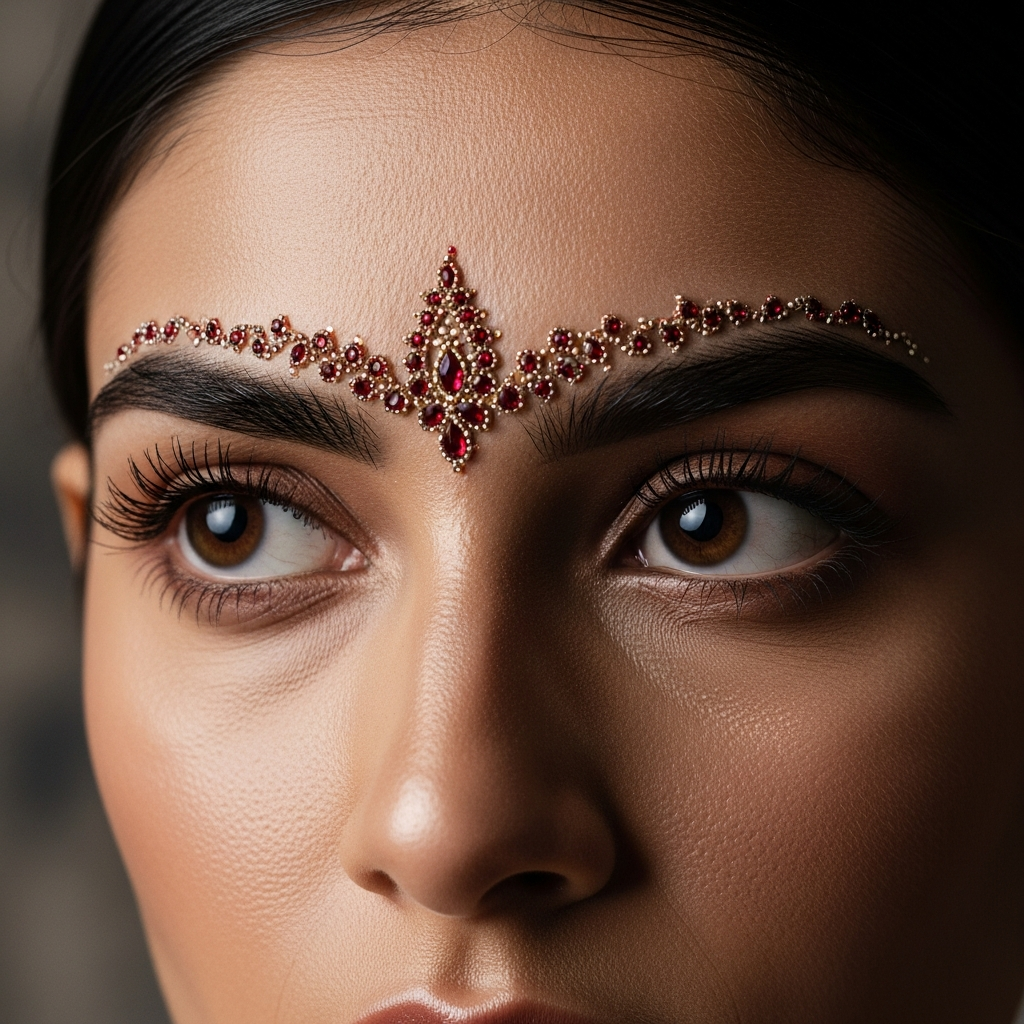
The Bindi is arguably one of the most instantly recognizable cultural markers from the Indian subcontinent, a striking mark worn on the center of the forehead, traditionally between the eyebrows. The word Bindi itself originates from the Sanskrit term bindu, which translates directly to ‘point’ or ‘drop.’ In a deeper, spiritual sense, the Bindi signifies the Ajna Chakra, often referred to as the ‘third eye,’ the very seat of concealed wisdom and profound intuition. Today, the Bindi seamlessly bridges centuries of tradition with modern global fashion, evolving from a simple red powder mark to ornate, adhesive jewels.

| Bindi: Quick Facts | |
| :— | :— |
| Origin | Indian Subcontinent (Hinduism, Jainism, Buddhism) |
| Sanskrit Meaning | Bindu (‘Point’ or ‘Drop’) |
| Spiritual Significance | The Ajna Chakra (Third Eye) |
| Traditional Color | Red or vermilion (sindoor) |
| Modern Form | Adhesive stickers, liquid paint, jewels |
*
The Profound Spiritual and Historical Roots of the Bindi
To understand the Bindi, one must first delve into the ancient philosophical landscape of the Indian subcontinent, where its history is deeply rooted in spiritual practice and symbolic language. The concept of the bindu is central to Hindu cosmology, representing the point at which creation begins, the singularity from which all existence expands. This microcosm of the universe is precisely what the forehead Bindi is meant to symbolize, anchoring the wearer to the cosmic whole.
The Bindi as the Ajna Chakra: The Third Eye
The traditional placement of the Bindi, right between the eyebrows, is not arbitrary; it marks the physical location of the Ajna Chakra, or the sixth Chakra, in the body’s subtle energy system. This is believed to be the passage to inner knowing and spiritual awakening. When a person wears a Bindi, they are, in essence, drawing attention to this critical energy point, which is said to control intuition and intellect. The simple act of applying the Bindi is viewed as an exercise in focusing and preserving mental energy, preventing its dispersal.
Historically, this tradition stems from a time when spiritual knowledge and energy conservation were paramount. The red color, which was the original shade of the Bindi, was thought to hold specific energetic properties that helped in channeling and stabilizing the mind during meditation and daily life. The spiritual meaning of the Bindi therefore goes far beyond mere ornamentation; it is a tool for spiritual focus.
The deep roots of the Bindi can be traced back over 5,000 years, making it one of the longest-running forms of body adornment in human history. In ancient times, the application was often part of a daily ritual or a rite of passage, not just a fashion choice. This tradition underscores the foundational belief that the space on the forehead, the location of the Bindi, is the most sensitive point on the body for receiving and transmitting energy. Thus, the protection offered by the Bindi was considered essential for the spiritual well-being of the individual.
From Ritual Mark to Social Signifier: The Historical Bindi
In its most traditional form, the Bindi was applied using sindoor (vermilion powder) or kumkum, a powder made from turmeric. The application was a meticulous ritual, often requiring a small coin or a hollowed-out disc to achieve the perfect, unbroken circle. This original Bindi held significant social and ritualistic meaning, particularly distinguishing married women in many Hindu communities.
The red Bindi became a powerful emblem of matrimonial commitment and prosperity. Traditionally, a woman would first wear the red Bindi on her wedding day, marking her transition into a married life—a life considered sacred and demanding a heightened spiritual awareness, which the Bindi was meant to aid. While modern practice has introduced many variations, the image of the married woman with a bright red Bindi remains a deeply entrenched cultural motif.
However, it is a common misconception that the Bindi is solely for married women; this is a regional and traditional nuance. Unmarried girls have historically worn the Bindi as well, though sometimes in a different color or a smaller size to denote their status. The Bindi‘s function as a clear social marker has evolved, but its role in connecting the wearer to their cultural heritage and providing spiritual focus remains constant for many who choose to wear a traditional Bindi.
*
Beyond the Dot: Cultural Significance and Traditional Forms
The appearance and meaning of the Bindi are incredibly diverse, shifting dramatically across different regions of India and Southeast Asia. The term Bindi is often used as an umbrella word for various forehead markings, each with its own unique name and cultural context. Exploring these different forms helps to appreciate the complexity and richness of this single dot.
The Palette of Purpose: Color and Shape Symbolism
While the red Bindi is the most recognized symbol of married life and energy, other colors and shapes of the Bindi carry distinct meanings. The evolution of the Bindi‘s color palette is an example of tradition adapting while retaining its core symbolism.
- Red (or Maroon) Bindi: The quintessential symbol of marriage, honor, and prosperity. It is associated with the goddess Shakti and is believed to bring good fortune and a prosperous future to the husband and family.
- Black Bindi: Often worn by young children and sometimes by unmarried women in certain regions. The primary function of a black Bindi is apotropaic—it is believed to ward off the ‘evil eye’ or negative energy.
White/Sandalwood Bindi: Usually applied as a tilak* (a vertical mark or other geometric shape) and is often associated with religious ceremonies, denoting purity or devotion to a specific deity.
- Designer Bindis (Adhesive): These can be any color (gold, silver, blue, green) and are primarily worn for fashion, coordinating the Bindi with the color of one’s attire. This modern Bindi form focuses on aesthetic harmony.
The shape is just as important as the color. While the classic circular Bindi is the default, the use of tear-drop, crescent, star, or elaborate decorative patterns known as a rangoli Bindi demonstrates regional artistry. For example, a Bindi shaped like a crescent moon is common in some devotional practices, connecting the wearer to the symbolism of Shiva. This diversity ensures that the Bindi remains a deeply personal and culturally resonant accessory.
Regional Variations: The Bindi and its Kin
The use of a forehead mark is not exclusive to the name Bindi; many regional names and styles exist, demonstrating the widespread acceptance of this practice across the Indian subcontinent. These regional variations offer a deeper understanding of the practical and aesthetic evolution of the Bindi.
Pottu (South India): The equivalent of the Bindi in the Dravidian-speaking South Indian states. It is often made of a paste of sandalwood or ash, or the traditional red and black kumkum. The pottu* is worn by both men and women and often adheres closely to religious and ceremonial purposes.
Tilak (General Term): This is a broader term for any mark on the forehead, typically worn by men and women for religious reasons. A tilak can be a single vertical line, multiple horizontal lines, or other complex patterns, often representing allegiance to a specific sect or deity. A Bindi can be considered a type of tilak, but not all tilaks* are a simple Bindi.
Gopi-dots* (Devotional): These are intricate decorative patterns made of multiple dots, often applied in devotional contexts. These elaborate designs show the immense skill required to apply a traditional paste Bindi.
The practical shift from a traditional paste Bindi to the modern, ready-to-wear adhesive Bindi has been a major cultural and commercial development. These sticker Bindis offer versatility, durability, and a clean application, making the practice accessible to a wider demographic who may not have the time for the traditional ritual. This innovation has been key to the Bindi‘s continued prominence in the global fashion landscape.
*
The Bindi in Modern Fashion and Global Trends
The modern journey of the Bindi has taken it from a strictly traditional marker to a coveted fashion accessory, appearing on runways, at music festivals, and in global media. This transition highlights the inherent beauty and aesthetic appeal of the Bindi, even when divorced from its original spiritual context. The rise of the adhesive, decorative Bindi has fueled this shift, offering an easy way to incorporate the mark into contemporary styling.
The Evolution of Bindi Design: From Dot to Jewel
Today’s Bindi market is characterized by incredible variety and innovation. The once simple, hand-applied dot has expanded into a myriad of shapes, materials, and sizes. This diversification allows the modern wearer to choose a Bindi that perfectly complements their outfit, mood, or specific occasion.
- Minimalist Bindi: A major trend involves a return to the single, small black or maroon dot. This minimalist Bindi style is elegant and understated, perfect for daily wear with both traditional and fusion casual clothing. It reclaims the original simplicity of the mark while offering a contemporary, chic look.
- Crystal and Jeweled Bindis: These intricate designs are highly popular for weddings, festive occasions, and celebrity appearances. Made with rhinestones, colored glass, or even semi-precious stones, these Bindis often take the form of teardrops, elaborate swirls, or multi-dot patterns that extend beyond the eyebrows. This glamorous Bindi is a statement piece.
- Fusion Bindi Art: An emerging trend involves combining the Bindi with temporary body art, such as Henna or glitter application. The Bindi acts as the central focal point, around which complex geometric or floral designs are painted, extending the aesthetic impact across the forehead and temples.
The use of the Bindi by Bollywood icons has a massive influence on trends. When prominent figures sport a new style of Bindi, it instantly becomes a sought-after look across the subcontinent and the diaspora. These cultural ambassadors have been pivotal in showcasing the versatility of the Bindi, pairing it with everything from high-end designer sarees to modern pantsuits, thereby cementing the Bindi‘s place as a versatile and enduring fashion statement.
The Bindi as Artistic Medium and Cultural Reclamation
Beyond personal fashion, the Bindi has also found its way into the world of high contemporary art. Indian artists have used the Bindi as a powerful motif to explore themes of identity, femininity, and cultural dualism. For instance, the internationally acclaimed artist Bharti Kher is known for using thousands of adhesive Bindis—often the intricate snake-like variety—to create massive, compelling artworks.
Kher’s work, which uses the Bindi to cover entire surfaces, takes the everyday mark and transforms it into a complex, almost scientific or mystical texture. This artistic usage demonstrates the power of the Bindi as a symbol that can transcend its traditional function to speak to universal experiences of selfhood and place.

Furthermore, the Bindi is being actively embraced and reclaimed by the Indian diaspora, particularly by younger generations in the West. For many Indian-American women, wearing the Bindi in a daily, casual context is an intentional act of celebrating their heritage and identity. This personal and public affirmation of the Bindi helps to maintain its cultural capital and authentic meaning in a diverse global landscape, ensuring the tradition continues to thrive.
*
Understanding the Bindi Market: Trends and Demand Drivers
The commercial aspect of the Bindi is a fascinating study in how tradition fuels a consumer market. The global demand for the Bindi is highly dynamic, driven almost entirely by religious calendars and festive cycles, which influence the entire supply chain, from manufacturing to retail. This unique market behavior demonstrates the enduring cultural necessity of the Bindi.
Seasonality and the Bindi Supply Chain
The Bindi market is intensely seasonal. Search trends and consumer purchases show a clear, cyclical peak in demand, correlating directly with the major Hindu and cultural festival seasons.
- Peak Demand Windows: The market experiences significant spikes leading up to and during festivals like Diwali (Deepavali), Durga Puja, Navratri, and wedding seasons. These are times when women require new, often more elaborate, Bindis to match their festive or ceremonial attire.
- Manufacturing Response: Manufacturers must anticipate this high seasonality. Production of specific, heavily embellished Bindis accelerates in the months preceding these peak periods. The design and style of the festive Bindi are often determined a year in advance based on forecasted fashion trends.
Retail Strategy: Retailers, both brick-and-mortar and online, heavily stock their inventory of sticker Bindis and kumkum* right before these major cultural events. The sale of Bindi packs, which contain a variety of shapes and sizes, sees a notable increase during these times.
This close link between cultural events and market performance is a crucial characteristic of the Bindi trade. It confirms that despite its modern aesthetic applications, the core driving force behind the market remains the adherence to and celebration of cultural tradition. The commercial success of the Bindi is rooted in its spiritual and social utility.
Growth Drivers: Versatility and Accessibility
The sustained growth and global reach of the Bindi market can be attributed to two main factors: the product’s remarkable versatility and its increasing accessibility. The shift from a messy paste to a peel-and-stick adhesive Bindi has been the most significant catalyst for market expansion.
- Versatility of the Adhesive Bindi: Modern Bindis are no longer limited to a single red dot. They come in waterproof, skin-safe, and reusable varieties. This versatility makes the Bindi suitable for diverse activities, from a long day of religious ceremonies to an evening of dancing at a festival. The ability to instantly transform one’s look with a gold, silver, or multicolored Bindi without permanent commitment has broadened its appeal considerably.
- Global E-commerce and Diaspora: The availability of the Bindi through global e-commerce platforms has made it accessible to the Indian diaspora and to individuals interested in global fashion trends worldwide. This has allowed the tradition of wearing a Bindi to persist even in countries without a readily available specialized Indian marketplace. This ease of access has cemented the Bindi as a truly global fashion entity.
Market analysis suggests that the Bindi market will continue to be driven by these factors, with future growth potentially fueled by further fusion with Western fashion accessories and an increasing demand for sustainable, ethically sourced Bindi products. The Bindi maintains its status as an enduring cultural item with a strong, predictable commercial presence.
*
Addressing the Discourse: The Bindi and Cultural Appreciation
As the Bindi has grown in global popularity, its adoption by individuals outside of the South Asian cultural background has sparked conversations about cultural appreciation versus appropriation. This discourse is important, as it speaks to the deep significance of the Bindi and the need to respect its roots.
Context and Respect: Wearing the Bindi
For billions of people, the Bindi is not merely jewelry; it is a sacred, spiritual, and marital signifier. The conversation often centers on the context in which the Bindi is worn.
- Appreciation: Wearing a Bindi in a context that shows respect for its cultural origin—such as at a traditional Indian wedding, a cultural festival, or as part of a traditional attire—is generally seen as a form of cultural appreciation.
- Appropriation: The issue arises when the Bindi is worn as a frivolous, disconnected prop—often paired with costumes, in a manner that disrespects the significance of the Ajna Chakra, or by those who trivialize the spiritual weight the Bindi holds for others. The temporary adoption of the Bindi as a ‘trendy’ accessory without any acknowledgment of its millennia-old history is where the line is often crossed.
This important dialogue helps to educate the global consumer about the profound meaning embedded within the Bindi. The spiritual connection, the history, and the communal identity it represents cannot be easily separated from the physical object.
The Bindi as a Symbol of Identity and Empowerment
Ultimately, for those who wear it by tradition, the Bindi remains a powerful symbol of identity, piety, and empowerment. It is a visible statement of one’s heritage and spiritual focus, worn with pride.
The modern woman who chooses to wear a Bindi, whether a traditional kumkum dot or a sparkling decorative jewel, is engaging in a continuous tradition of self-expression. The versatility of the modern Bindi allows her to seamlessly integrate her spiritual and cultural self into a dynamic, modern life. The Bindi today stands as a testament to the resilience of tradition, proving that ancient symbols can retain their meaning and beauty even as they adapt to the fast-paced currents of global fashion. The enduring appeal of the Bindi is a quiet, powerful statement of cultural continuity and feminine strength.
*
FAQ (Frequently Asked Questions)
Q: What is the spiritual meaning of the Bindi?
A: The Bindi is spiritually significant because it is placed directly over the Ajna Chakra, often called the third eye. This is the energy center associated with intuition, mental clarity, and spiritual enlightenment. The Bindi is believed to retain energy and concentration, acting as a focus point for the wearer’s inner vision. The term Bindi itself, deriving from bindu, signifies the cosmic point of creation and unity.
Q: Who traditionally wears the Bindi?
A: The Bindi is traditionally worn by women, and sometimes men (as a tilak or pottu), who practice Hinduism, Jainism, or Buddhism in the Indian subcontinent. Historically, a red Bindi was used to denote a married Hindu woman, symbolizing prosperity and honor. However, the custom has evolved significantly, and today, Bindis in various colors and styles are worn by women of all ages and marital statuses, often simply as a cultural expression or fashion accessory.
Q: Are all forehead dots called a Bindi?
A: While “Bindi” is the most common and globally recognized term for a colored dot on the forehead, other marks exist. The general religious forehead mark, often a line or a symbol representing devotion to a deity, is called a tilak. In South India, the mark is often referred to as a pottu. The term Bindi specifically refers to the simple dot or decorative sticker worn primarily by women.
Q: Can men wear a Bindi?
A: Men generally do not wear the decorative sticker or dot Bindi; however, they very commonly wear a forehead mark known as a tilak or pottu. The tilak is applied during religious ceremonies or daily rituals and often uses ash, sandalwood paste, or kumkum to form distinct vertical or horizontal patterns. This mark, much like the Bindi, is placed at the location of the Ajna Chakra and carries a deep spiritual meaning.
Q: What is the difference between a traditional Bindi and a modern Bindi?
A: The traditional Bindi was a simple, bright red or maroon dot, hand-applied using kumkum (vermilion) paste. This process was a daily ritual. The modern Bindi is typically an adhesive sticker, often highly decorative, jeweled, or patterned. The modern Bindi offers versatility and ease of use, allowing for a vast range of colors and designs that can be matched with contemporary fashion, extending the life and relevance of the Bindi in a modern context.