Big Ben Meaning: An In-depth Exploration of London’s Most Iconic Landmark
When you think of London, the first image that likely springs to mind is the majestic silhouette of a clock tower rising above the River Thames. However, there is a common misconception regarding its name. While millions of tourists refer to the entire structure as “Big Ben,” the Big Ben meaning actually refers specifically to the massive bell housed within the tower, not the tower itself.
In this comprehensive guide, we will delve into the historical origins, the architectural brilliance, and the profound cultural symbolism that makes this landmark a global icon of resilience and British identity.
Understanding the True Big Ben Meaning: Bell, Clock, or Tower?
To truly appreciate the significance of this site, one must first distinguish between its three distinct components. For decades, the name has been used colloquially to describe the whole ensemble, but for historians and locals, the distinction is vital.
1. The Great Bell (The Real Big Ben)
The name “Big Ben” originally and officially refers only to the Great Bell located inside the belfry. It is the largest of the five bells in the tower and is responsible for striking the hour. Weighing over 13 tons, its deep, resonant “E natural” note is recognized worldwide.
2. The Elizabeth Tower
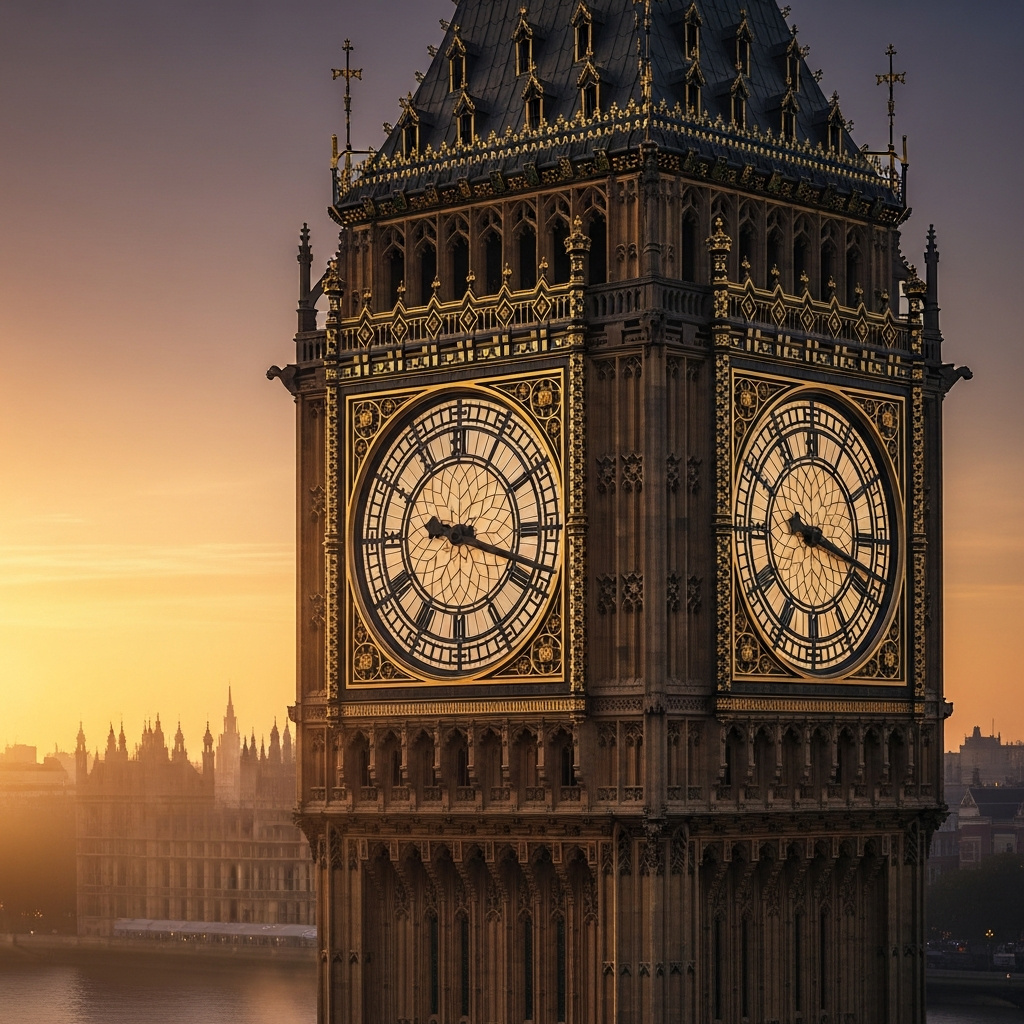
The structure that houses the bell was known simply as the “Clock Tower” for over 150 years. In 2012, to honor the Diamond Jubilee of Queen Elizabeth II, it was officially renamed the Elizabeth Tower. It stands as a masterpiece of Gothic Revival architecture.
3. The Great Clock of Westminster
Often cited as the most accurate four-faced striking and chiming clock in the world, the mechanism itself is a marvel of Victorian engineering. Despite extreme weather and historical events, it has rarely stopped ticking.
The Etymology: Why is it Called “Big Ben”?
The exact origin of the name remains a subject of historical debate, though two main theories dominate the narrative.
- Sir Benjamin Hall: Many historians believe the bell was named after Sir Benjamin Hall, the First Commissioner of Works, whose name was inscribed on the original bell. He was a man of large stature, affectionately known as “Big Ben.”
- Ben Caunt: Another popular theory suggests the name pays tribute to Ben Caunt, a famous heavyweight boxing champion of the Victorian era. At the time, “Big Ben” was a common nickname for anything that was the largest in its class.
Regardless of its namesake, the Big Ben meaning evolved from a nickname for a piece of industrial hardware into a symbol of a nation’s heartbeat.
A Masterpiece of Gothic Revival Architecture
The Elizabeth Tower and the Palace of Westminster are quintessential examples of the Gothic Revival style that dominated mid-19th century Britain.
The Vision of Charles Barry and Augustus Pugin
Following the disastrous fire of 1834 that destroyed much of the old Parliament, Sir Charles Barry was commissioned to design the new palace. However, the intricate details of the clock tower were the work of Augustus Pugin.
Pugin’s design is characterized by:
- Intricate Stonework: The tower is clad in Anston limestone and Caen stone.
- Ornate Finials: The spire is adorned with detailed carvings and gold leaf.
- Heraldic Symbols: The tower features the floral emblems of the four nations of the United Kingdom: the rose (England), thistle (Scotland), shamrock (Ireland), and leek (Wales).
The Technical Marvel of the Clock Faces
Each of the four clock faces is 23 feet (7 meters) in diameter. They are constructed from an iron frame supporting 312 separate pieces of opal glass. The hands are equally impressive: the minute hands are 14 feet long and made of copper sheet, while the hour hands are 9 feet long and made of heavy gunmetal.
The Engineering Genius: The Great Clock Mechanism
The Big Ben meaning extends beyond aesthetics into the realm of precision engineering. Designed by Edmund Beckett Denison and Edward Dent, the clock utilizes a “Double Three-Legged Gravity Escapement.”
The Penny Trick: Achieving Perfect Precision
One of the most fascinating aspects of the clock is how it is regulated. The pendulum carries a small stack of old British penny coins.
- Adding a single penny changes the clock’s speed by 0.4 seconds per day.
- This low-tech but highly effective method allows the “Keeper of the Great Clock” to maintain nearly perfect time.
Historical Timeline: From Construction to Restoration
To understand the Big Ben meaning today, we must look at the timeline of its existence:
- 1843: Construction of the tower begins.
- 1858: The current Great Bell is cast at the Whitechapel Bell Foundry after the first one cracked during testing.
- 1859: The clock begins ticking, and the Great Bell strikes for the first time.
- World War II (1939-1945): Despite the Palace of Westminster being hit by German bombs, the clock continued to chime, becoming a symbol of British defiance.
- 2012: The tower is renamed the Elizabeth Tower.
- 2017-2022: A massive restoration project takes place to repair the masonry, service the clock mechanism, and re-gild the exterior.
The Symbolic Meaning of Big Ben in British Culture
For many, the Big Ben meaning is deeply emotional and political. It is more than just a timekeeper; it is the “Voice of Britain.”
A Symbol of Resilience
During the Blitz in World War II, the sound of Big Ben’s chimes was broadcast by the BBC to occupied Europe. For those living under tyranny, the steady tolling of the bell was a signal that Britain was still standing and that freedom was still possible.
The Center of National Celebration
Big Ben plays a central role in British public life:
- New Year’s Eve: The chimes of Big Ben signal the start of the New Year for the entire country.
- Remembrance Sunday: The bell strikes at 11:00 AM to mark the beginning of the two-minute silence for fallen soldiers.
- General Elections: The image of the tower is often used in media to represent the seat of British democracy.
The 2017-2022 Restoration: Preserving a Legacy
In 2017, the bells fell silent for a four-year conservation program—the most extensive in the landmark’s history.
Key achievements of the restoration included:
- Returning to Original Colors: The clock hands and masonry were repainted in “Prussian Blue,” the original color chosen by Pugin, replacing the black paint used in the 1930s to hide pollution.
- Energy Efficiency: The clock faces are now illuminated by energy-efficient LED lights that can change color for special events.
- Structural Integrity: Thousands of pieces of stone were replaced, and the iron roof was repaired to prevent leaks.
This restoration ensured that the Big Ben meaning would continue to resonate for another 150 years.
Visiting Big Ben: What You Need to Know
While most people view the tower from Parliament Square or the Westminster Bridge, there are ways to experience it more closely.
- Tours: UK residents can request a tour of the Elizabeth Tower through their Member of Parliament (MP). International visitors have limited access, but tickets are occasionally made available to the general public.
- Best Photo Spots: For the iconic shot, head to the South Bank of the Thames or the middle of Westminster Bridge.
- The Chimes: The “Westminster Quarters” (the melody played by the four smaller bells) occur every 15 minutes, while Big Ben strikes on the hour.
Frequently Asked Questions (FAQ)
Is Big Ben the name of the tower?
No. The tower is officially named the Elizabeth Tower. “Big Ben” is the nickname for the Great Bell inside.
Can you go inside Big Ben?
Yes, tours are available, but they require climbing 334 stone steps as there is no public elevator. UK residents should contact their MP to arrange a visit.
Why is there a crack in Big Ben?
The bell cracked in 1859, just two months after it started striking. Instead of replacing it, engineers turned the bell slightly so the hammer would hit a different spot, and a small square was cut into the bell to stop the crack from spreading. This crack gives the bell its unique, slightly out-of-tune sound.
How big is the Great Bell?
The bell is 7 feet 6 inches tall and 9 feet wide. It weighs approximately 13.7 tonnes.
Does Big Ben ever stop?
The clock is incredibly reliable, but it is occasionally stopped for maintenance, cleaning, or during major restoration projects like the one from 2017 to 2022.
Conclusion: The Enduring Legacy of Big Ben
The Big Ben meaning encompasses history, engineering excellence, and national pride. It is a testament to Victorian ingenuity and a steadfast witness to the changing tides of global history. Whether you see it as a masterpiece of the Gothic Revival, a marvel of mechanical precision, or a symbol of democratic stability, Big Ben remains the undisputed heart of London.
As the Great Bell continues to toll across the Thames, it serves as a reminder that some things are timeless. It is not just a clock; it is the pulse of a nation.
This article was written to provide a deep understanding of the historical and cultural significance of Big Ben. For more information on visiting London’s landmarks, explore our other travel guides.