The Valley of Ashes: A Comprehensive Guide to Fitzgerald’s Industrial Wasteland
In the pantheon of American literature, few settings are as evocative or as haunting as the Valley of Ashes. Introduced in F. Scott Fitzgerald’s 1925 masterpiece, The Great Gatsby, this desolate stretch of land serves as more than just a backdrop for the novel’s tragic events. It is a profound symbol of moral decay, social inequality, and the dark underbelly of the American Dream during the Roaring Twenties.
If you are exploring this topic for the first time, you may find the imagery of “grey men” and “ash-grey cars” unsettling. This guide will provide you with a deep dive into the significance of this location, its historical roots, and why it remains a critical subject of study for readers and scholars alike.
What is the Valley of Ashes?
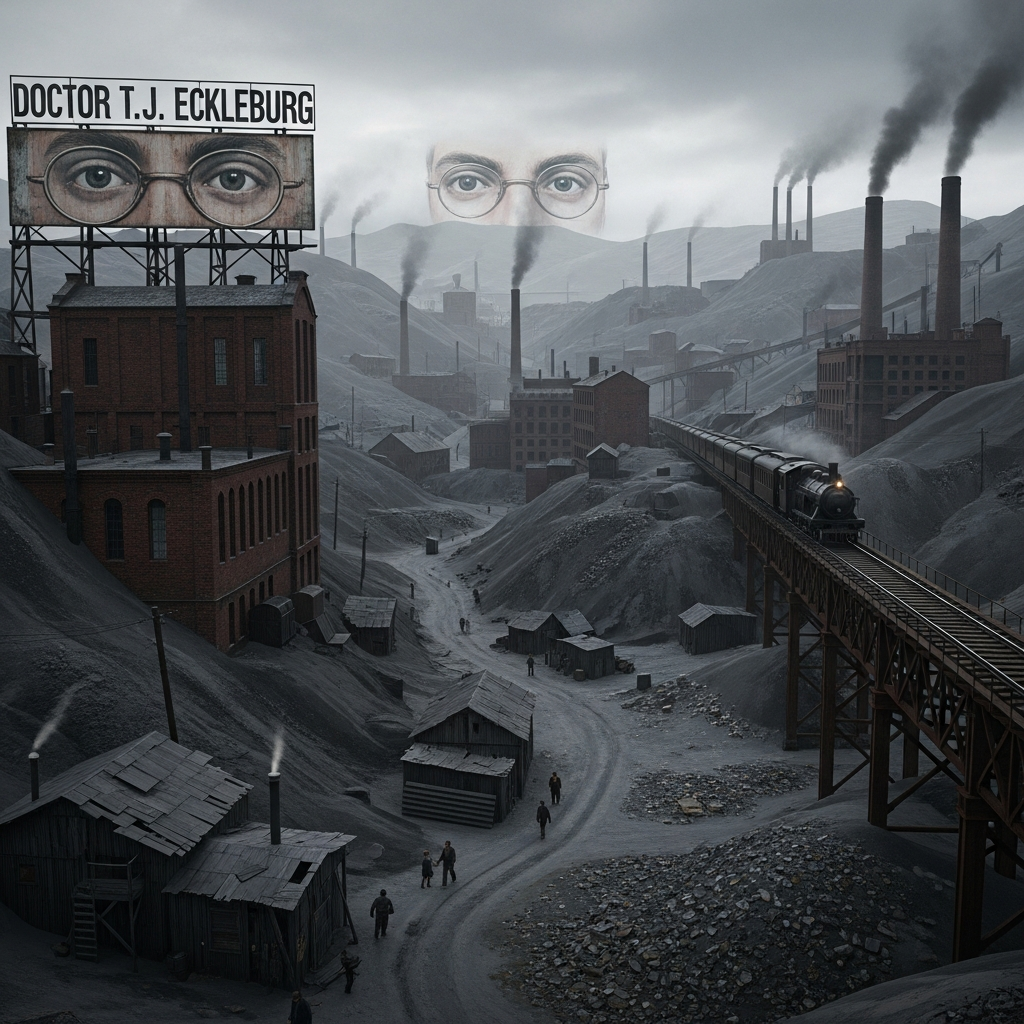
The Valley of Ashes is a fictionalized version of a real industrial wasteland located in Queens, New York. In the novel, it is described as a “fantastic farm where ashes grow like wheat into ridges and hills and grotesque gardens.” It sits halfway between the affluent suburban enclaves of West Egg and East Egg and the bustling metropolis of Manhattan.
For the characters in the novel, the valley is a place they must pass through to get to the “real” world of business and pleasure. However, for those who live there—like George and Myrtle Wilson—it is a trap of poverty and hopelessness.
The Physical Description
Fitzgerald uses a specific color palette to describe this area. You will notice a recurring theme of:
- Grey: The sky, the houses, and even the people are covered in a fine layer of grey dust.
- Ash: Representing the byproduct of industrial capitalism, the ash symbolizes the “remains” of the wealthy’s consumption.
- Dust: A metaphor for the transience of life and the lack of spiritual substance.
The Historical Context: The Corona Ash Dumps
While the Valley of Ashes feels like a surreal nightmare, it was based on a very real location: the Corona Ash Dumps in Queens. During the early 20th century, Brooklyn’s ash and refuse were transported to this site.
The area was managed by the Brooklyn Ash Removal Company. It was a swampy, foul-smelling territory where coal ash (used for heating in the city) was piled into massive mounds. You might find it interesting to know that this “valley” was eventually transformed by urban planner Robert Moses into the site for the 1939 World’s Fair, which is now known as Flushing Meadows-Corona Park.
The Eyes of Doctor T.J. Eckleburg
One of the most iconic features within the Valley of Ashes is the billboard of Doctor T.J. Eckleburg. These are a pair of “blue and gigantic” eyes looking out of “enormous yellow spectacles” which have been dimmed by time and weather.
Why the Eyes Matter
For the characters, and particularly for George Wilson, these eyes represent the eyes of God staring down at a godless society. You should consider the following interpretations:
- Divine Judgment: The eyes watch the moral corruption of the wealthy characters as they pass through the valley.
- The Death of Religion: The eyes belong to a forgotten advertisement, suggesting that in the 1920s, consumerism had replaced traditional faith.
- Indifference: The eyes see everything but do nothing, mirroring the lack of justice in the story’s world.
Social Stratification: The Rich vs. The Poor
The Valley of Ashes serves as a stark physical manifestation of the class divide. In The Great Gatsby, Fitzgerald contrasts the “Eggs” (where Jay Gatsby and the Buchanans live) with the Valley.
- West Egg/East Egg: Represent gold, silver, green (money/hope), and vibrant life.
- The Valley of Ashes: Represents the “waste” produced by the lifestyle of the rich.
When you analyze the movement of characters like Tom Buchanan, you see a man who exploits the valley. He visits it to conduct his affair with Myrtle Wilson, treating the residents as disposable objects. This dynamic highlights a central theme: the wealthy can retreat into their money and “vast carelessness,” leaving the poor to clean up the mess.
Key Characters Trapped in the Ashes
To understand the Valley of Ashes, you must understand the people who inhabit it. They are the human faces of the industrial wasteland.
George Wilson
George is the proprietor of a struggling garage. He is described as “spiritless” and “anaemic.” He is literally and figuratively covered in ash. For George, the American Dream is a lie; no matter how hard he works, he cannot escape his environment.
Myrtle Wilson
Myrtle is George’s wife and Tom Buchanan’s mistress. Unlike George, she tries to reject the “grey” of the valley by surrounding herself with tawdry, expensive things provided by Tom. However, her attempts to climb the social ladder end in tragedy, proving that the valley does not allow its residents to leave easily.
The Turning Point: The Death of Myrtle Wilson
The Valley of Ashes is the site of the novel’s climax. It is here that Daisy Buchanan, driving Gatsby’s yellow car, strikes and kills Myrtle Wilson.
This event is symbolic for several reasons:
- The Intersection of Worlds: The “wealthy” car kills the “poor” woman in the “poor” territory.
- The Failure of the Dream: Myrtle’s death represents the violent end of her aspirations to join the upper class.
- The Moral Void: After the accident, the wealthy characters flee, leaving George Wilson in a state of madness that leads to the novel’s final tragedy.
Symbolism of the “Ash-Grey Men”
Fitzgerald writes about “ash-grey men, who move dimly and already crumbling through the powdery air.” This is a powerful image of dehumanization.
In the pursuit of industrial progress and the accumulation of wealth, the working class is stripped of their individuality and vitality. They become part of the landscape—mere shadows that the wealthy, like Nick Carraway or Jordan Baker, prefer not to notice.
How the Valley of Ashes Reflects the American Dream
The American Dream suggests that anyone, regardless of their birth, can achieve success through hard work. However, the Valley of Ashes tells a different story.
You can see the valley as the graveyard of the American Dream. It is where the dreams of people like George Wilson go to die. While Gatsby tries to reinvent himself with “new money,” the valley reminds us that there is a permanent underclass that provides the labor and absorbs the waste of the elite.
Comparative Analysis: The Valley vs. Manhattan
While Manhattan is a place of “wild promise” and excitement, the Valley of Ashes is its antithesis.
- Manhattan: Represents the future, ambition, and the “shining” city.
- Valley of Ashes: Represents the consequences of that ambition—the pollution, the poverty, and the moral stagnation.
Fitzgerald forces the reader to acknowledge that the glitz of the Jazz Age was built upon a foundation of soot and suffering.
Expert Tips for Analyzing the Valley of Ashes in Literature
If you are writing an essay or studying for an exam, here are some “expert-level” angles you can use:
- Ecocriticism: Look at how Fitzgerald describes the environment. The “pollution” isn’t just physical; it’s a reflection of the characters’ souls.
- Color Theory: Track the use of the word “grey” versus “gold” throughout the book.
- The Role of Nick Carraway: As the narrator, Nick is often repulsed by the valley, yet he is complicit because he uses the train to pass through it, participating in the very system that creates it.
The Legacy of the Valley of Ashes in Modern Culture
The concept of the “industrial wasteland” has become a staple in modern storytelling. From the dystopian landscapes of Blade Runner to the gritty settings of contemporary social dramas, the Valley of Ashes remains the blueprint for depicting the “forgotten” places of society.
In film adaptations, such as Baz Luhrmann’s 2013 version, the Valley of Ashes is depicted with high-contrast CGI to emphasize its hellish nature. This visual representation helps modern audiences understand the visceral disgust Fitzgerald intended his readers to feel.
Conclusion: Why We Still Talk About the Valley of Ashes
The Valley of Ashes is not just a place in a book; it is a warning. It warns us about the dangers of a society that values profit over people and consumption over character.
As you reflect on The Great Gatsby, remember that the “green light” at the end of Daisy’s dock—the symbol of hope and the future—cannot be reached without crossing the Valley of Ashes. It is the price paid for the excesses of the era, and its dust eventually settles on everyone, rich and poor alike.
Frequently Asked Questions (FAQ)
1. Where exactly is the Valley of Ashes located?
It is located in Queens, New York, specifically between the fictional towns of West Egg (Great Neck) and East Egg (Sands Point) on Long Island and New York City.
2. Who lives in the Valley of Ashes?
The primary residents mentioned are George Wilson and his wife Myrtle Wilson. They live above a small, failing auto garage.
3. What does the ash represent in the novel?
Ash represents the moral and social decay resulting from the uninhibited pursuit of wealth. It also symbolizes the forgotten working class who are left behind by the industrial boom.
4. Is the Valley of Ashes a real place?
Yes, it was based on the Corona Ash Dumps in Queens. Today, that area is the site of Flushing Meadows-Corona Park.
5. Why are the eyes of T.J. Eckleburg in the Valley of Ashes?
The billboard was placed there for advertising purposes but was eventually abandoned. In the context of the novel, it symbolizes the loss of spiritual values and the idea that “God” has been replaced by commercialism.
6. How does the Valley of Ashes impact the ending of the book?
It is the site of Myrtle Wilson’s death. This event triggers the chain of events that leads George Wilson to murder Jay Gatsby and then take his own life, effectively ending the story’s main conflicts in tragedy.
7. What is the significance of the “grey” color?
Grey symbolizes the lack of life, hope, and spirit. It contrasts with the vibrant colors associated with the wealthy characters, highlighting the bleakness of the working-class experience.
8. Why did Fitzgerald choose the word “Valley”?
The term “valley” often has biblical connotations (e.g., the Valley of the Shadow of Death). By calling it a “Valley of Ashes,” Fitzgerald elevates the location to a place of profound spiritual and existential significance.