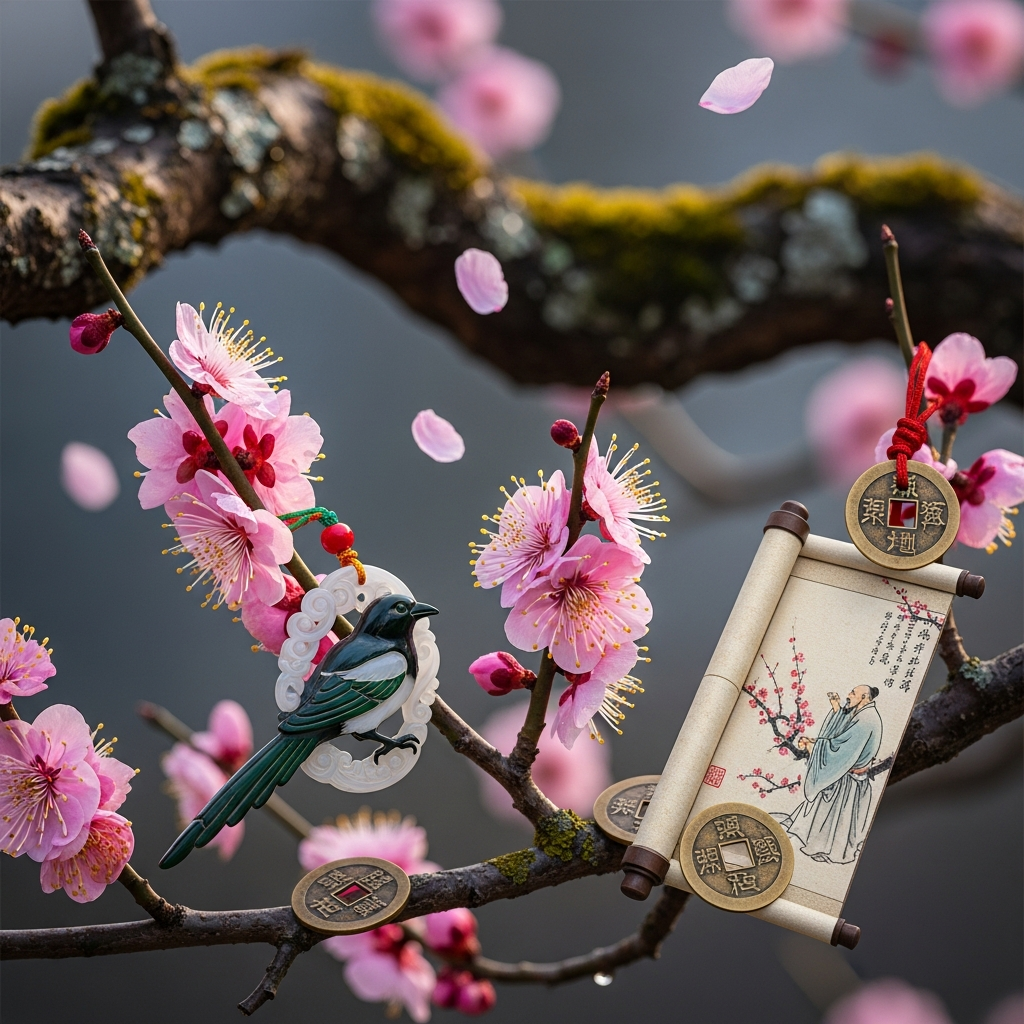
Plum Blossom Symbolism in China: The Profound Meaning of the Meihua
The plum blossom, known as Meihua (梅花) in Mandarin, is not merely a flower in the eyes of the Chinese people; it is a spiritual emblem, a philosophical guide, and a cornerstone of national identity. While many flowers are celebrated for their vibrant colors or sweet fragrances during the warmth of spring, the plum blossom earns its prestige by blooming amidst the harshest conditions of winter.
In this comprehensive guide, you will discover the multi-layered symbolism of the plum blossom in Chinese culture, its historical significance, and why it remains one of the most beloved motifs in Eastern art and philosophy.
The Resilience of the Winter Bloom
The most prominent symbolic meaning of the plum blossom is resilience and perseverance. Unlike the peony or the lotus, the plum blossom (Prunus mume) begins to bud when the snow is still on the ground. It is often the first sign that winter is waning, though it arrives while the air is still freezing.
For centuries, the Chinese have viewed this as a metaphor for the human spirit. You can observe how the Meihua represents the ability to thrive despite adversity. In traditional Chinese thought, a person of high moral character is expected to remain steadfast and virtuous even when faced with the “winter” of life—poverty, political upheaval, or personal tragedy.
The “Three Friends of Winter”
The plum blossom is a member of the Suihan Sanyou (岁寒三友), or the “Three Friends of Winter.” This group includes:
- The Pine: Representing longevity and endurance.
- The Bamboo: Representing flexibility and integrity.
- The Plum Blossom: Representing the courage to bloom in isolation.
Together, these three plants do not wither in the cold. They serve as a reminder that true friendship and true character are tested and proven during difficult times. When you see these three depicted together in Chinese ink paintings, you are looking at a celebration of steadfastness.
The Five Blessings: Symbolism of the Petals
Beyond its general representation of strength, the physical structure of the plum blossom carries specific auspicious meanings. A standard plum blossom has five petals. In Chinese numerology and folk belief, these five petals represent the Five Blessings (Wufu).
If you study traditional Chinese motifs, you will find that the plum blossom is often used as a visual shorthand for these five pillars of a good life:
- Longevity (寿 – Shòu): The ability to live a long and healthy life.
- Prosperity (富 – Fù): Wealth and abundance in resources.
- Health and Peace (康宁 – Kāngníng): Physical well-being and a tranquil mind.
- Virtue (修好德 – Xiū hǎo dé): A love of virtue and doing good for others.
- A Natural Death (考终命 – Kǎo zhōng mìng): Passing away peacefully in old age, free from tragedy.
By displaying plum blossom imagery in your home or gifting it to others, you are effectively bestowing a wish for these five distinct types of luck and harmony.
Historical Evolution of the Meihua Symbol
The appreciation of the plum blossom did not happen overnight. Its status evolved through several key dynasties, each adding a layer of meaning to the flower.
The Tang Dynasty: The Beginning of Literary Fame
During the Tang Dynasty (618–907 AD), the plum blossom began to appear more frequently in poetry. It was admired for its purity and its subtle fragrance, which was said to be “cold and elegant.” Poets began to use the flower to describe the “Junzi” or the noble gentleman.
The Song Dynasty: The Golden Age of the Plum
The Song Dynasty (960–1279 AD) is arguably when the plum blossom reached its peak of cultural importance. It was during this time that the philosophy of “plum blossom appreciation” became a refined art form. Scholars and hermits would retreat to the mountains to watch the blossoms fall against the snow.
One famous poet, Lin Bu, famously lived as a recluse on Solitary Hill in Hangzhou. He was so devoted to the flowers that it was said he “took the plum blossom as his wife and cranes as his children.” This solidified the flower’s association with purity, solitude, and intellectual independence.
The Plum Blossom in Chinese Art and Aesthetics
If you have ever visited a museum featuring Chinese antiquities, you have likely seen the plum blossom depicted in various mediums. Its aesthetic appeal is rooted in the contrast between the gnarled, dark branches and the delicate, pale petals.
Ink Wash Painting (Shuimohua)
In traditional Chinese painting, the plum blossom is one of the “Four Gentlemen” (along with the orchid, bamboo, and chrysanthemum). Artists use minimalist strokes to capture the “bones” of the tree. The gnarled branches symbolize the wisdom and scars of old age, while the fresh buds symbolize the vitality of youth and the continuity of life.
Architecture and Garden Design
You will find plum blossoms integrated into the very structure of traditional Chinese gardens. Architects often use “leak windows” (ornamental openwork windows) in the shape of plum blossoms. These windows frame views of the garden, suggesting that the beauty of nature is a gift to be viewed through the lens of virtue.
Plum Blossom vs. Cherry Blossom: Key Differences
It is common for those new to Eastern culture to confuse the plum blossom with the cherry blossom (Sakura). However, their symbolic meanings and physical characteristics are quite different.
- Timing: Plum blossoms bloom in late winter (January/February), while cherry blossoms bloom in mid-to-late spring.
- Petal Shape: Plum petals are oval and rounded at the tips. Cherry petals have a small V-shaped cleft at the tip.
- Fragrance: Plum blossoms have a strong, spicy, and sweet scent. Cherry blossoms have a very faint, almost imperceptible fragrance.
- Symbolism: While the cherry blossom in Japan symbolizes the “transience of life” (mono no aware), the plum blossom in China symbolizes the endurance of life.
The Role of Meihua in Modern Chinese Identity
The plum blossom’s significance did not end with the fall of the imperial dynasties. In the 20th century, it was officially designated as the National Flower of the Republic of China in 1928. Its three stamens were said to represent the Three Principles of the People, and its five petals represented the five branches of government.
Even today, in mainland China, the plum blossom remains a powerful cultural symbol. It is a popular motif for the Lunar New Year. Because it blooms at the turn of the season, it represents “heralds of spring.” You will see it on red envelopes (hongbao), paper cuttings, and festive decorations, signaling a fresh start and the courage to face the coming year.
How to Incorporate Plum Blossom Symbolism into Your Life
If you are inspired by the values of the Meihua, there are several ways you can integrate this symbolism into your personal environment:
- Feng Shui: Place a painting of plum blossoms in the East or Southeast sector of your home to promote health and growth. The “Five Blessings” are believed to bring balanced energy to a living space.
- Home Decor: Use plum blossom motifs in textiles or ceramics to remind yourself of the importance of resilience. It serves as a visual cue to stay strong during personal “winters.”
- Gardening: If you live in a temperate climate, planting a Prunus mume can be a rewarding experience. Watching it bloom in the cold provides a literal and metaphorical sense of hope.
The Philosophical Depth: Taoism and Confucianism
The plum blossom bridges the gap between China’s two major philosophical schools.
From a Confucian perspective, the plum blossom represents the “Moral Hero.” It follows the rules of nature but stands tall against corruption and hardship. It is the visual representation of “Ren” (benevolence) and “Yi” (righteousness).
From a Taoist perspective, the plum blossom represents the harmony of Yin and Yang. The dark, rugged branches (Yang) support the soft, delicate flowers (Yin). It shows that strength and beauty are not opposites, but necessary complements of one another.
Expert Tips for Appreciating Plum Blossoms
When you are viewing plum blossoms, whether in art or nature, experts suggest looking for four specific qualities, often referred to as the “Four Virtues of the Plum”:
- The Fragrance: It should be subtle and “cool,” not overpowering.
- The Shadow: The way the branches cast shadows on the snow or a wall is considered a separate form of art.
- The Age: Older, more “tortured” looking trees are more prized than young, straight ones because they show the history of survival.
- The Budding: A tree with a mix of fully open flowers and tight buds is considered more aesthetically pleasing than one in full bloom, as it represents the “potential” of life.
Conclusion: A Flower for the Ages
The plum blossom is far more than a botanical specimen in China. It is a teacher of ethics, a muse for artists, and a symbol of hope for billions. By understanding the plum blossom symbolism in China, you gain a deeper insight into the Chinese psyche—one that values inner strength over outward show, and integrity over easy success.
Whether you are admiring a delicate ink painting or standing before a blooming tree in the winter chill, the Meihua reminds you that no matter how cold the winter, spring is always on its way, and you have the inner strength to meet it.
Frequently Asked Questions (FAQ)
What does the plum blossom symbolize in Chinese culture?
The plum blossom primarily symbolizes resilience, perseverance, and moral integrity. It is celebrated for blooming in winter, representing the ability to overcome adversity. It also represents the “Five Blessings”: longevity, prosperity, health, virtue, and a peaceful death.
Why is the plum blossom often depicted with pine and bamboo?
Together, they are known as the “Three Friends of Winter.” They are grouped because none of them wither during the cold months, symbolizing steadfast friendship and a character that remains strong under pressure.
Is the plum blossom the national flower of China?
The plum blossom was the official national flower of the Republic of China (ROC). In the People’s Republic of China (PRC), there is no single official national flower, although the plum blossom and the peony are the two primary candidates and are both widely revered.
When is the best time to see plum blossoms in China?
The best time is usually between late January and late February, depending on the region. Cities like Nanjing, Suzhou, and Hangzhou are famous for their plum blossom festivals during this period.
What is the difference between a plum blossom and a cherry blossom?
Plum blossoms bloom earlier (winter), have rounded petals, and a strong sweet scent. Cherry blossoms bloom later (spring), have a split at the end of their petals, and have very little fragrance.
How is the plum blossom used in Feng Shui?
In Feng Shui, the plum blossom is used to attract the “Five Blessings.” It is often placed in areas where one wishes to promote new beginnings, purity, and the strength to overcome career or personal obstacles.