Plum Blossom Meaning in Chinese Culture: A Symbol of Resilience and Renewal
In the heart of winter, when most of nature lies dormant under a blanket of frost, a solitary flower emerges to defy the cold. This is the plum blossom, known in Mandarin as Meihua (梅花). For thousands of years, the plum blossom has held a position of unparalleled prestige in Chinese culture, serving as a profound metaphor for the human spirit.
If you have ever admired a traditional Chinese ink painting or observed the decorations during the Lunar New Year, you have likely encountered this delicate yet sturdy bloom. However, its significance goes far beyond mere aesthetics. To understand the plum blossom meaning in Chinese tradition is to understand the values of perseverance, purity, and the cyclical nature of life.
In this comprehensive guide, we will explore the multifaceted layers of plum blossom symbolism, its historical roots, its role in the “Three Friends of Winter,” and why it remains a beloved icon in modern China.
1. The Botanical Identity of Meihua
Before diving into the spiritual and cultural aspects, it is essential to identify what the plum blossom actually is. The Prunus mume is technically more closely related to the apricot than the common fruit-bearing plum found in Western grocery stores.
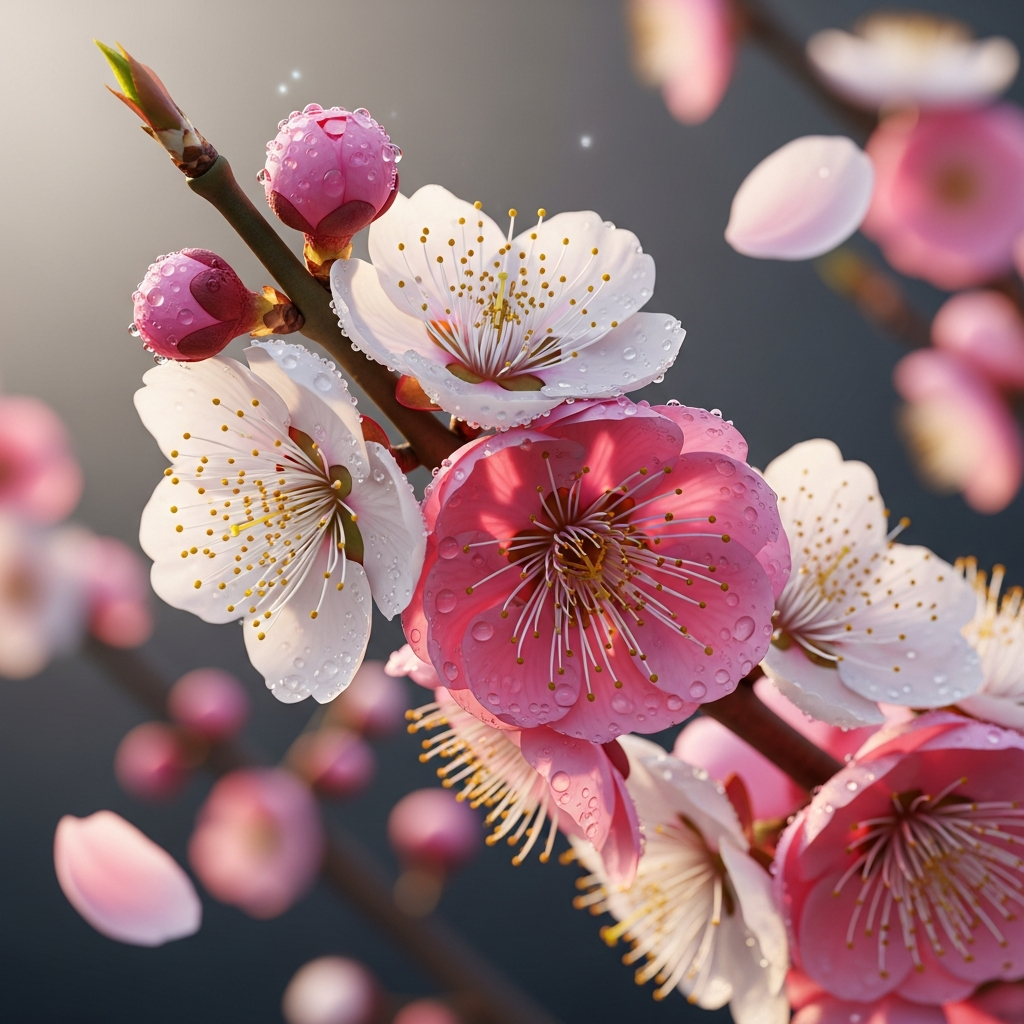
Unlike the cherry blossom (Sakura), which signifies the fleeting beauty of spring, the plum blossom is celebrated for its timing. It blooms in late winter, often while snow still clings to its gnarled, ancient-looking branches. This biological trait is the foundation for almost all its cultural symbolism.
2. Resilience: The Core Plum Blossom Meaning in Chinese Culture
The most prominent plum blossom meaning in Chinese philosophy is resilience (坚强 – jiānqiáng). Because the Meihua blooms during the harshest season, it represents the ability to thrive under pressure and endure hardship without losing one’s integrity.
The Symbol of Moral Integrity
In the eyes of ancient Chinese scholars, the plum blossom was the “gentleman” of flowers. It does not compete with the flamboyant peonies of spring or the lush lotuses of summer. Instead, it stands alone in the cold. For you, as a student of culture, this signifies:
- Inner Strength: The power to remain steadfast in your principles when faced with adversity.
- Purity: The white and pale pink petals symbolize a soul that remains untainted by the “mud” of worldly corruption.
- Hope: As the first flower to bloom, it is the herald of spring, signaling that no matter how long the winter, warmth is coming.
3. The Five Blessings: Symbolism of the Five Petals
One of the most fascinating technical aspects of the plum blossom is its structure. A typical wild plum blossom has five petals. In Chinese numerology and folk belief, these five petals represent the Five Blessings (Wufu – 五福).
When you see a plum blossom motif, it often carries a silent prayer for these five areas of life:
- Longevity (寿 – Shòu): A long and healthy life.
- Wealth (富 – Fù): Financial stability and abundance.
- Health and Composure (康宁 – Kāngníng): Physical wellness and peace of mind.
- Love of Virtue (攸好德 – Yōu hào dé): A moral character and the desire to do good.
- Natural Death (考终命 – Kǎo zhōng mìng): Passing away peacefully at an old age, free from tragedy.
By displaying plum blossom art in your home, you are traditionally inviting these five streams of luck into your living space.
4. The Three Friends of Winter (Suihan Sanyou)
The plum blossom rarely stands alone in Chinese iconography. It is most famously grouped into a trio known as the Three Friends of Winter (岁寒三友). This group includes:
- The Pine (松): Symbolizing longevity and constancy because it stays green all year.
- The Bamboo (竹): Symbolizing flexibility and humility (it bends but does not break).
- The Plum Blossom (梅): Symbolizing the courage to bloom in the cold.
Together, these three represent the ideal qualities of a scholar or a person of high character. They are the symbols of “evergreen” friendship and the collective strength required to survive difficult times.
5. Plum Blossoms in Chinese Art and Literature
You cannot separate the plum blossom meaning in Chinese history from its depiction in the “Four Arts.” For centuries, poets and painters have used the Meihua as their primary muse.
The Aesthetics of the Branch
In Chinese ink wash painting (Shuimohua), the branches of the plum tree are often depicted as “dragon-like”—twisted, rugged, and dark. This creates a visual contrast with the delicate, soft petals. This juxtaposition represents the Yin and Yang balance: the “Yang” (hard, old wood) and the “Yin” (soft, new life).
Famous Literary Connections
During the Song Dynasty (960–1279), plum blossom poetry reached its zenith. The poet Lin Bu, who lived as a hermit, famously claimed that the plum blossom was his “wife” and the cranes were his “children.” His descriptions of the flower’s “sparse shadows” and “faint fragrance” defined the aesthetic standard for centuries.
6. Plum Blossom vs. Cherry Blossom: Key Differences
It is a common mistake for beginners to confuse the plum blossom with the Japanese cherry blossom (Sakura). To ensure you understand the unique plum blossom meaning in Chinese contexts, here are the key differences:
| Feature | Plum Blossom (Meihua) | Cherry Blossom (Sakura) |
|---|---|---|
| Blooming Time | Late Winter (Jan – Feb) | Early Spring (Mar – Apr) |
| Petal Shape | Round, no cleft at the tip. | Oval with a small V-shaped cleft. |
| Fragrance | Intense, sweet, and spicy. | Very faint or scentless. |
| Growth Pattern | Blooms directly on the branch. | Blooms on long stalks (pedicels). |
| Symbolism | Resilience and Longevity. | Transience and Fleeting Beauty. |
7. The Plum Blossom in Modern China
Even in the 21st century, the plum blossom remains a potent national symbol. While the Peony is often considered the “unofficial” national flower of China due to its association with prosperity, many citizens and scholars advocate for the Plum Blossom because it represents the national spirit of the Chinese people—the ability to endure and rise again after periods of struggle.
Chinese New Year Traditions
During the Lunar New Year, you will find plum blossom branches (real or silk) used as decorations. Because they bloom at the turn of the lunar calendar, they signify “New Beginnings.” They are often paired with red envelopes (Hongbao) and couplets to welcome a year of “Five Blessings.”
8. How to Incorporate Plum Blossom Symbolism in Your Life
If you resonate with the plum blossom meaning in Chinese culture, there are several ways you can integrate this powerful symbol into your personal environment:
- Home Decor: Place a painting of plum blossoms in your study or office to inspire focus and resilience during difficult projects.
- Gardening: if you live in a temperate climate, planting a Prunus mume can be a living reminder of the beauty that can be found in “winter” seasons of life.
- Jewelry: Wearing plum blossom motifs can serve as a personal talisman for the “Five Blessings.”
- Meditation: Use the image of the plum blossom blooming in the snow as a visualization tool for building inner strength.
9. Frequently Asked Questions (FAQ)
What does the plum blossom symbolize in a relationship?
In a relationship, the plum blossom symbolizes enduring love. Just as the flower survives the cold, it represents a bond that can withstand the “winters” of life, including distance, hardship, and time.
Why is the plum blossom often painted in black ink?
Traditional ink wash painting uses black ink to emphasize the spirit (Qi) and the form of the branch rather than just the color. It highlights the “bony” strength of the tree, which is central to its meaning of resilience.
Is the plum blossom the national flower of China?
There is a long-standing debate in China between the Peony and the Plum Blossom. Currently, China does not have one single “official” national flower, but the Plum Blossom was the official national flower designated by the Republic of China (ROC) in 1928 and remains a top contender in the People’s Republic of China (PRC).
What color are plum blossoms usually?
They most commonly appear in shades of white, pink, and deep red. White symbolizes purity, while red is associated with joy and the warmth of the coming spring.
10. Conclusion: The Timeless Appeal of the Meihua
The plum blossom meaning in Chinese culture is a testament to the human desire for meaning in the natural world. It teaches us that beauty is not just found in the easy, sun-drenched days of summer, but also in the quiet, freezing depths of winter.
By embracing the spirit of the Meihua, you acknowledge that challenges are not obstacles to your growth, but the very conditions required for you to bloom. Like the plum blossom, your most beautiful “petals” may emerge precisely when the world is at its coldest.
Whether you appreciate it for its delicate fragrance, its historical depth, or its philosophical weight, the plum blossom remains one of the most inspiring symbols of the East—a reminder that spring is never truly far away.