Dreidel Symbols: The Complete Guide to Their Meaning, History, and Rules
The festival of Hanukkah is synonymous with the glowing lights of the Menorah, the aroma of fried latkes, and the spirited spinning of a four-sided top known as the dreidel. To the casual observer, the dreidel may look like a simple children’s toy, but it carries profound historical, linguistic, and spiritual weight.
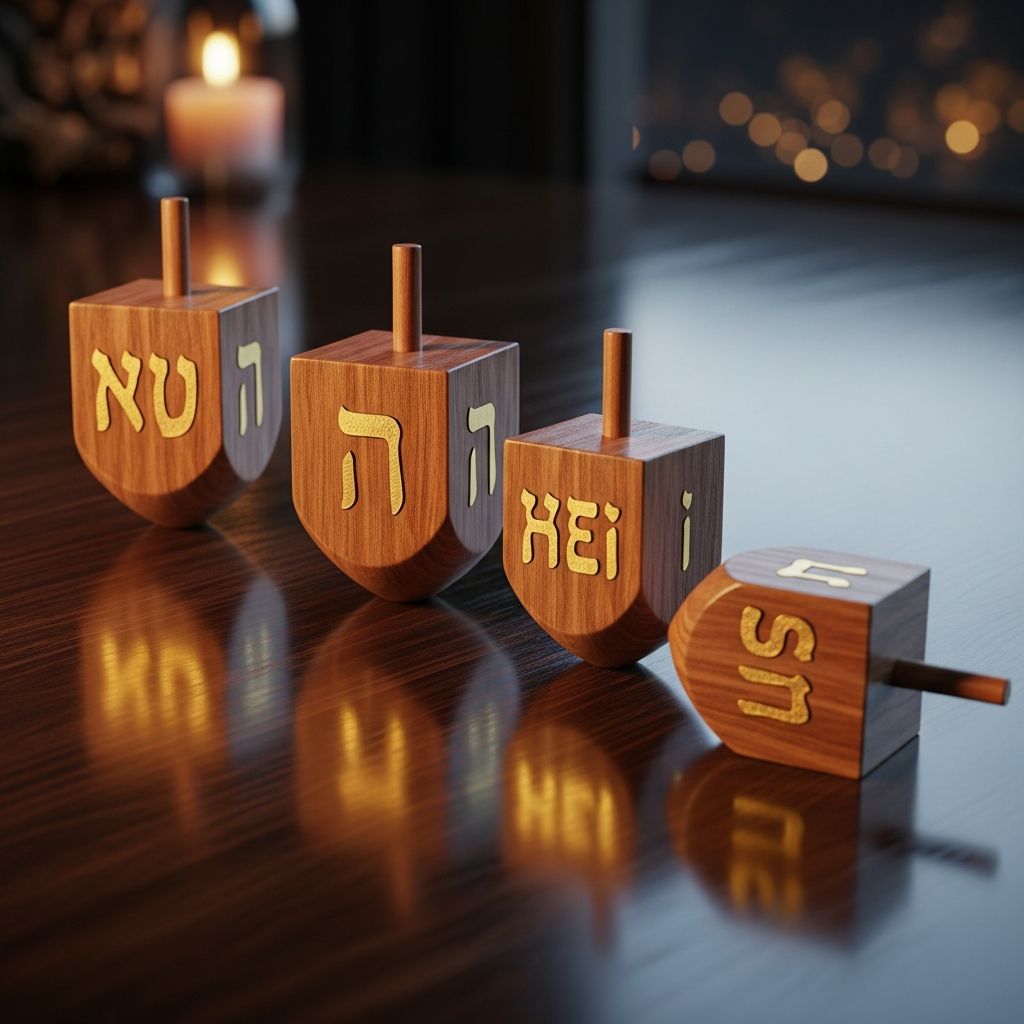
At the heart of this tradition are the four dreidel symbols etched onto its sides. These Hebrew letters are not merely decorative; they dictate the flow of the game and encapsulate a miracle that has inspired generations. Whether you are a beginner looking to understand the rules or a history enthusiast seeking deeper meaning, this comprehensive guide will explore everything you need to know about dreidel symbols.
What is a Dreidel?
The word “dreidel” derives from the Yiddish word dreyen, which means “to turn” or “to spin.” In Hebrew, the toy is called a sevivon. It is a four-sided spinning top used specifically during the Jewish holiday of Hanukkah.
Each side of the dreidel features a distinct Hebrew letter. These symbols serve two primary purposes: they act as instructions for a popular gambling game played with chocolate coins (Gelt), and they form an acronym for a central Hanukkah message.
The Four Dreidel Symbols and Their Meanings
To play the game and understand its significance, you must first recognize the four Hebrew letters. Each letter corresponds to a specific action in the game and represents a word in a famous Hebrew phrase.
1. Nun (נ)
The letter Nun is the first symbol you will encounter. In the context of the game’s rules, Nun stands for the Yiddish word nisht, which translates to “nothing.”
- Game Action: If the dreidel lands on Nun, the player does nothing. The turn passes to the next person without any pieces being added or taken from the pot.
- Symbolic Meaning: It represents the word Nes, meaning “Miracle.”
2. Gimel (ג)
Gimel is the most coveted symbol in the game. It stands for the Yiddish word gants, which means “whole” or “everything.”
- Game Action: If the dreidel lands on Gimel, the player wins the entire pot! This is the ultimate goal for every participant.
- Symbolic Meaning: It represents the word Gadol, meaning “Great.”
3. Hei (ה)
The letter Hei (or Hey) provides a partial victory. It stands for the Yiddish word halb, meaning “half.”
- Game Action: When the dreidel lands on Hei, the player takes half of the items in the pot. If there is an odd number of items, the player usually rounds up.
- Symbolic Meaning: It represents the word Haya, meaning “Was” or “Happened.”
4. Shin (ש)
The letter Shin is the symbol players hope to avoid. It stands for the Yiddish word shtel, meaning “put in” or “place.”
- Game Action: If the dreidel lands on Shin, the player must add one piece (usually a chocolate coin or a token) to the pot.
- Symbolic Meaning: It represents the word Sham, meaning “There.”
The Secret Message: “A Great Miracle Happened There”
When you put the four dreidel symbols together—Nun, Gimel, Hei, and Shin—they form the acronym for the Hebrew phrase: “Nes Gadol Haya Sham.”
This translates to “A Great Miracle Happened There.” This phrase refers to the miracle of the oil in the Holy Temple in Jerusalem. After the Maccabees successfully revolted against the Syrian-Greeks, they found only enough consecrated oil to light the Menorah for one day. Miraculously, the oil lasted for eight full days, providing enough time to prepare a fresh supply.
The dreidel serves as a portable reminder of this divine intervention, turning a simple game into a storytelling device for Jewish history.
The Israel Variation: The Letter Pey (פ)
If you purchase a dreidel in Israel, you will notice a significant difference in the dreidel symbols. While three of the letters remain the same (Nun, Gimel, Hei), the letter Shin is replaced by the letter Pey.
Why this change? In Israel, the miracle didn’t happen “there”—it happened “here.” Therefore, the letter Pey stands for the word Po, meaning “Here.” The acronym on an Israeli dreidel (Nun, Gimel, Hei, Pey) stands for “Nes Gadol Haya Po,” or “A Great Miracle Happened Here.”
How to Play the Dreidel Game: Step-by-Step
The dreidel game is a wonderful way to bring family and friends together. It is easy to learn and can be played by people of all ages. Here is a detailed guide on how to set up and play.
Required Materials
- A Dreidel: A four-sided top with the symbols Nun, Gimel, Hei, and Shin (or Pey).
- Game Pieces: Traditionally, these are Hanukkah Gelt (chocolate coins), but you can use pennies, nuts, raisins, or plastic tokens.
- Players: Two or more people.
The Setup
- Distribute an equal number of game pieces to each player (usually 10–15 pieces).
- Every player places one piece into the center “pot” to start the round.
- Decide who goes first by spinning the dreidel; the highest letter (Gimel) usually starts.
The Rules of Play
On your turn, spin the dreidel once. Depending on which symbol is facing up when the top stops spinning, take the following action:
- Nun: Nothing happens. The next player takes their turn.
- Gimel: Take the entire pot. Everyone then puts one piece back in to replenish the pot.
- Hei: Take half of the pot.
- Shin/Pey: Put one piece into the pot.
The game continues until one player has won all the pieces or until everyone decides to stop and eat the chocolate!
The Fascinating History of Dreidel Symbols
While the spiritual meaning of the dreidel symbols is deeply rooted in Jewish tradition, the physical toy has a diverse history that spans cultures.
From Ancient Times to Medieval Europe
Spinning tops have existed for thousands of years in various civilizations. However, the specific design of the dreidel is believed to have evolved from a German gambling toy called a “Teetotum,” which was popular in the 16th century.
The Teetotum had four sides marked with letters representing Latin instructions: N (Nihil – nothing), A (Aufer – take), D (Depone – put), and T (Totum – all). When Jewish communities in Central and Eastern Europe adopted the game, they replaced the Latin letters with Hebrew letters that sounded similar or had similar meanings in Yiddish.
The Legend of the Maccabees
A popular Jewish legend provides a more ancient origin for the dreidel. It is said that during the time of the Maccabees, the Syrian-Greek King Antiochus IV prohibited the study of the Torah. Jewish scholars and children would gather in secret to study anyway.
When Greek soldiers approached to inspect their gatherings, the Jews would quickly hide their scrolls and pull out spinning tops, pretending they were just gathered for a simple game of gambling. In this way, the dreidel symbols became a tool of resistance and a way to preserve Jewish identity under oppression.
Spiritual and Mystical Interpretations
For scholars of Jewish mysticism (Kabbalah), the dreidel symbols contain deeper layers of meaning beyond the surface-level game rules.
The Gematria of Dreidel
In Hebrew, every letter has a numerical value (Gematria). The values of the four dreidel letters (Nun=50, Gimel=3, Hei=5, Shin=300) add up to 358.
Interestingly, the Hebrew word for “Messiah” (Mashiach) also has a Gematria of 358. This connection suggests that spinning the dreidel is a symbolic way of “spinning” the world toward a time of ultimate peace and redemption.
The Four Kingdoms
Some commentators suggest that the four letters represent the four ancient empires that attempted to destroy the Jewish people: Babylon, Persia, Greece, and Rome. By spinning the top, we symbolize that these empires have fallen while the Jewish spirit remains upright and continuous.
Tips for Buying and Collecting Dreidels
Today, dreidels are more than just game pieces; they are works of art. If you are looking to buy one, consider these variations:
- Plastic Dreidels: Best for large groups and children. They are durable and inexpensive.
- Wooden Dreidels: Offer a classic, traditional feel and often spin the longest.
- Artisanal Dreidels: Made from sterling silver, hand-painted ceramic, or glass. These are beautiful for display in a Judaica collection.
- Electronic Dreidels: Modern versions that light up and play Hanukkah music when spun.
Frequently Asked Questions about Dreidel Symbols
Why is there a Shin on some dreidels and a Pey on others?
The “Shin” stands for Sham (There), used outside of Israel. The “Pey” stands for Po (Here), used specifically on dreidels in Israel to signify that the miracle happened in the land of Israel.
What is the best material for a dreidel to spin well?
Balanced wooden or heavy plastic dreidels tend to spin the best. The key is a centered stem and a smooth, pointed bottom.
Can adults play the dreidel game?
Absolutely! While it is popular with children, many adults enjoy the game as a nostalgic tradition, often using real currency or more “high-stakes” items for fun.
What does the word ‘Gelt’ mean?
Gelt is the Yiddish word for “money.” In the context of Hanukkah, it usually refers to chocolate coins wrapped in gold or silver foil.
Conclusion
Understanding dreidel symbols transforms a simple holiday pastime into a meaningful connection with the past. From the “nothing” of the Nun to the “everything” of the Gimel, the game teaches us about the nature of luck, the history of a people, and the enduring power of miracles.
This Hanukkah, as you gather around the table to spin the top, remember the message: Nes Gadol Haya Sham. A great miracle happened there—and through the preservation of these traditions, the spirit of that miracle lives on today. Whether you win the Gelt or put a coin in the pot, you are participating in a story that has spanned millennia.