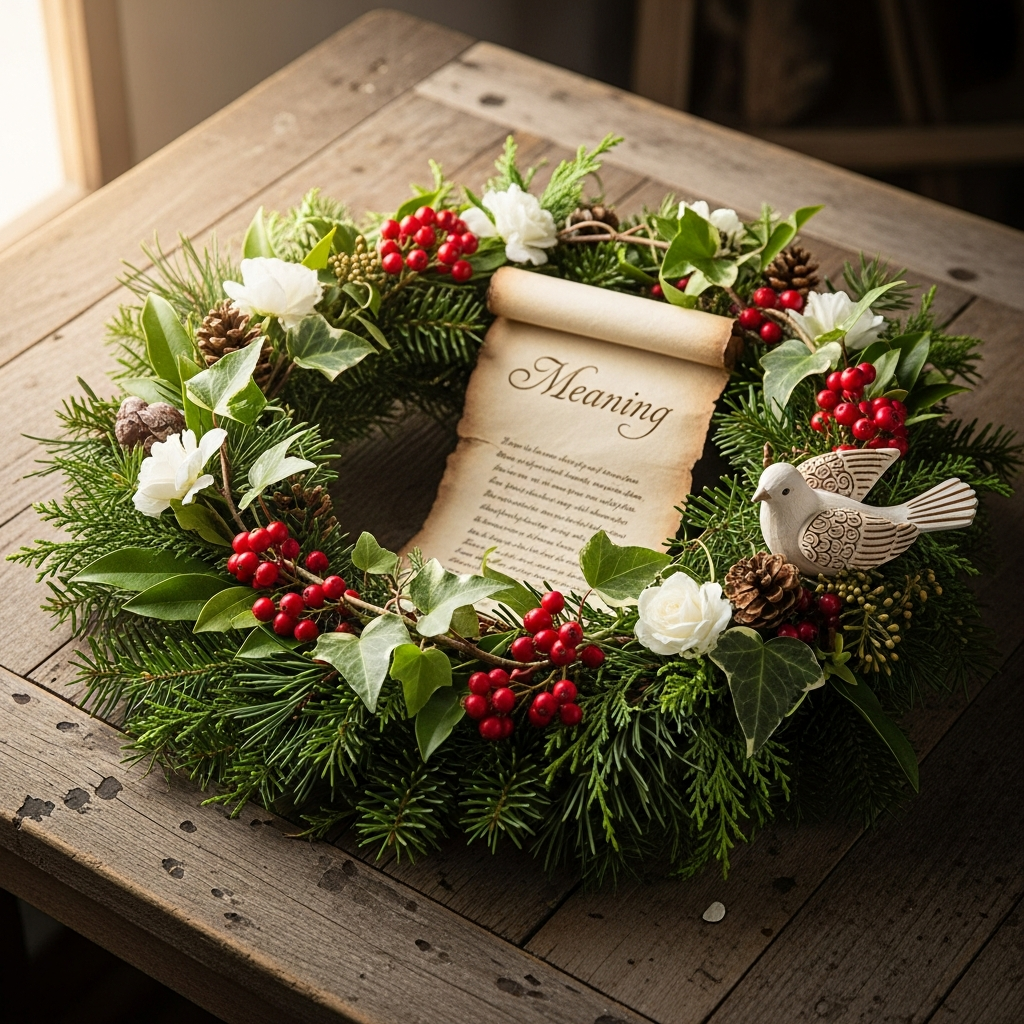
Wreath Meaning: Unveiling the Symbolism, History, and Cultural Significance
When you walk through a neighborhood during the holiday season or pass by a solemn memorial service, you are almost certain to encounter a circular arrangement of foliage known as a wreath. While they are often viewed as simple decorative items, the wreath meaning spans thousands of years, crossing cultural, religious, and geographical boundaries.
From the laurel crowns of Ancient Greece to the festive evergreens on modern front doors, wreaths carry a weight of symbolism that many people overlook. In this comprehensive guide, you will explore the multifaceted meanings behind these circular ornaments, their historical evolution, and how they continue to serve as powerful messengers in our daily lives.
The Core Symbolism: Why the Circle Matters
To understand the wreath meaning, you must first look at its most fundamental characteristic: its shape. A wreath is traditionally constructed in a perfect circle. In almost every culture, the circle represents eternity, infinity, and the cycle of life.
Because a circle has no beginning and no end, it serves as a visual metaphor for the soul’s immortality and the continuous cycle of nature. Whether it is the changing of the seasons or the concept of life after death, the circular form of the wreath offers a sense of continuity and divine perfection.
- Endless Love: In modern contexts, giving a wreath can symbolize a love that never fades.
- Unity: The interwoven branches represent strength in togetherness and community.
- Protection: Historically, circles were often used as symbols of protection against negative influences.
The Ancient History of Wreaths
The practice of creating wreaths dates back to ancient civilizations, where they were far more than just “door decor.” They were symbols of status, achievement, and religious devotion.
1. Ancient Greece and the Laurel Wreath
In Ancient Greece, wreaths were used as rewards for athletes and symbols of high social standing. The laurel wreath (made from Laurus nobilis) was associated with Apollo, the god of light and wisdom. Winners of the Pythian Games were crowned with laurel, signifying victory and honor. This is where we get the modern term “poet laureate.”
2. The Roman Empire and Civic Crowns
The Romans adopted the Greek tradition but expanded its use. Wreaths became “civic crowns” given to soldiers who saved the lives of fellow citizens. They were also worn by emperors to signify authority and divine right. Hanging a wreath on a door in Rome was often a sign of victory or a celebration of a successful military campaign.
3. Germanic and Scandinavian Traditions
Pre-Christian Germanic tribes used “wreaths of light” during the dark winter months. They would place candles on a wheel-shaped structure made of evergreens to encourage the return of the sun. This practice is widely considered the precursor to the modern Advent wreath.
Religious Wreath Meaning: Christianity and Beyond
In the Christian faith, the wreath took on new layers of spiritual significance. You will find that the materials used in religious wreaths are chosen with great intentionality.
The Advent Wreath Meaning
The Advent wreath is perhaps the most spiritually significant use of this decoration. It features four (sometimes five) candles placed in a circle of evergreens. Each element carries a specific message:
- The Evergreens: Symbolize eternal life through Christ.
- The Circle: Represents God’s unending love and the eternity of the soul.
- The Candles: Each candle represents a week of Advent, focusing on Hope, Peace, Joy, and Love.
The Christmas Wreath on the Front Door
Hanging a wreath on your front door during Christmas is a tradition that invites the spirit of the season into your home. Historically, it was also a way for Christians to signify that “Christ has entered this house.” The use of prickly holly in these wreaths is often interpreted as a symbol of the crown of thorns worn by Jesus, with the red berries representing his blood.
The Significance of Funeral Wreaths
While we often associate wreaths with celebration, they play a vital role in mourning rituals. The funeral wreath meaning is deeply rooted in the idea of the “Circle of Life.”
When you send a wreath to a funeral, you are offering a tribute to the deceased’s enduring spirit. Unlike a bouquet, which is linear, the wreath suggests that while the physical life has ended, the essence of the person continues in a different form. It is a gesture of remembrance, respect, and eternal life.
Common flowers used in funeral wreaths include:
- Lilies: Representing the restored innocence of the soul.
- Roses: White for purity, red for deep love, and yellow for friendship.
- Chrysanthemums: In many European cultures, these are strictly used for funeral tributes to symbolize grief.
Seasonal Wreath Meanings Throughout the Year
You don’t have to wait for December to enjoy the beauty of a wreath. Modern home decor has embraced seasonal wreaths, each carrying its own unique vibe and meaning.
Spring Wreaths: Rebirth and Growth
Spring wreaths are typically made with vibrant flowers like tulips, daffodils, and forsythia. They symbolize renewal, fertility, and the awakening of nature after a long winter. They are a “welcome” sign to the warmer months ahead.
Summer Wreaths: Vitality and Energy
Summer wreaths often feature dried grasses, sunflowers, or citrus elements. These represent abundance, sunshine, and the peak of life’s energy. They are meant to radiate warmth and hospitality.
Autumn Wreaths: Harvest and Gratitude
As the leaves change, autumn wreaths incorporate wheat, corn husks, pumpkins, and fallen leaves. The wreath meaning here is centered on the harvest, gratitude for the year’s bounty, and the beauty of transition.
Decoding the Materials: What Your Wreath is Saying
The specific plants and ornaments used in a wreath can change its message entirely. If you are choosing or making a wreath, consider these traditional meanings:
| Material | Symbolic Meaning |
|---|---|
| Holly | Protection, immortality, and strength. |
| Ivy | Fidelity, attachment, and undying affection. |
| Pine/Fir | Endurance, longevity, and survival through hardship. |
| Laurel | Victory, achievement, and intellectual greatness. |
| Oak Leaves | Power, faith, and endurance. |
| Lavender | Purity, silence, and devotion. |
How to Choose the Right Wreath for Your Home
When selecting a wreath, you should think about the message you want to convey to your guests and the energy you want to bring into your space. As an expert tip, always consider the color psychology of your wreath.
Red accents symbolize passion and energy, making them perfect for festive holiday wreaths. Blue or White accents promote peace and tranquility, ideal for winter or sympathy wreaths. Yellow and Orange are welcoming and friendly, perfect for spring and fall door decor.
Placement Matters
Where you hang your wreath also influences its meaning. A wreath on the front door is a public statement of hospitality and belonging. A wreath placed above a fireplace creates a focal point of warmth and family unity. In some traditions, placing a wreath on a cemetery headstone is the ultimate act of “never forgetting.”
DIY Wreath Making: Connecting with Tradition
There is a profound sense of satisfaction in creating your own wreath. It allows you to infuse your personal intentions into the decoration. Here is a brief guide on how to create a meaningful wreath from scratch:
- Select Your Base: Use a grapevine base for a rustic, natural look, or a wire frame for a more structured, modern design.
- Choose Your “Anchor” Greenery: Start with evergreens or sturdy leaves that represent your foundation (e.g., Pine for endurance).
- Layer Your Symbolism: Add flowers or ornaments that reflect your current life stage or the season.
- Secure with Wire: As you wrap the wire around the stems, visualize the “binding” of your family or your goals.
- The Finishing Touch: Add a ribbon. A red ribbon can represent the “thread of life,” while a gold ribbon signifies success and light.
The Modern Evolution: Wreaths as Art
In the 21st century, the wreath meaning has expanded into the realm of personal expression and interior design. We now see “asymmetrical wreaths” that leave half the frame exposed, symbolizing transparency and modern minimalism. We see “succulent wreaths” that represent resilience and adaptability in harsh conditions.
Regardless of the materials—whether they are made of recycled paper, dried exotic flowers, or traditional pine—the wreath remains one of the most enduring symbols in human history. It is a bridge between the physical world and the spiritual realm, a silent guardian of our doors, and a beautiful reminder that life, in all its forms, is a continuous, beautiful circle.
Conclusion: Embracing the Wreath in Your Life
Understanding the wreath meaning transforms a simple piece of decor into a storytelling tool. Whether you are celebrating a victory, mourning a loss, welcoming a new season, or simply decorating for the holidays, the wreath serves as a powerful symbol of eternity and connection.
Next time you hang a wreath or see one on a neighbor’s door, take a moment to appreciate the thousands of years of history and the deep spiritual significance woven into those branches. You aren’t just looking at a decoration; you are looking at a universal symbol of the human experience.
Frequently Asked Questions About Wreath Meanings
1. What does it mean when someone hangs a wreath upside down?
While rare, hanging a wreath upside down (especially a pentagram-shaped one) can have various occult meanings. However, in standard decor, it is usually just a stylistic choice or an accidental error. Traditionally, the “top” of the wreath is where the hanger or the most prominent bow is located.
2. Is it okay to keep a wreath up all year?
Yes! While specific holiday wreaths might look out of place, “all-season” wreaths made of eucalyptus, magnolia leaves, or dried wildflowers are perfect for year-round display. They represent a constant state of welcome and life in the home.
3. Why are wreaths used in the military?
Wreaths are used in military ceremonies (like at the Tomb of the Unknown Soldier) to represent the nation’s eternal gratitude and the immortality of the fallen soldiers’ bravery. They are usually made of laurel or evergreens to signify victory and everlasting life.
4. Can a wreath be a symbol of bad luck?
In some very old superstitions, a wreath made entirely of certain types of “weeping” willow or certain dark berries was thought to bring sadness. However, in almost all modern cultures, wreaths are viewed as positive symbols of protection, welcome, and celebration.
5. What is the spiritual meaning of a wreath in a dream?
Dreaming of a wreath often signifies a completion of a cycle or a coming “crowning achievement.” It can also be a message from the subconscious about the need for wholeness and spiritual unity.