The Hidden Language of Flowers: A Comprehensive Guide to Floral Symbolism in Buddhist Art
When you step into a serene Buddhist temple or gaze upon an ancient Thangka painting, your eyes are immediately met with a riot of colors and intricate patterns. Among the most prevalent motifs are flowers. However, in the context of Buddhist iconography, these are far from mere decorative elements. They are a sophisticated “visual language” that communicates profound spiritual truths, philosophical concepts, and the path to liberation.
Floral symbols serve as a bridge between the mundane world and the transcendental realm. For centuries, artists have used blossoms to illustrate the teachings of the Buddha (the Dharma), capturing the essence of enlightenment, impermanence, and purity. In this guide, you will discover the deep-seated meanings behind these sacred plants and how to interpret their presence in Buddhist masterpieces.
The Core Philosophy: Why Flowers Matter in Buddhism
To understand floral symbolism, you must first understand the Buddhist perspective on nature. Flowers are the ultimate teachers of Anicca (Impermanence). A flower buds, blooms in exquisite beauty, and inevitably withers. This cycle is a direct metaphor for human life and the nature of existence.
In Buddhist art, flowers represent:
- Spiritual Growth: The journey from the “mud” of worldly suffering to the “sunlight” of wisdom.
- Purity: The ability to remain untainted by the surrounding environment.
- Offerings: A gesture of humility and respect towards the Triple Gem (Buddha, Dharma, Sangha).
- The Fragrance of Virtue: Just as a flower’s scent spreads, so does the influence of a virtuous life.
The Sovereign Symbol: The Sacred Lotus (Padma)
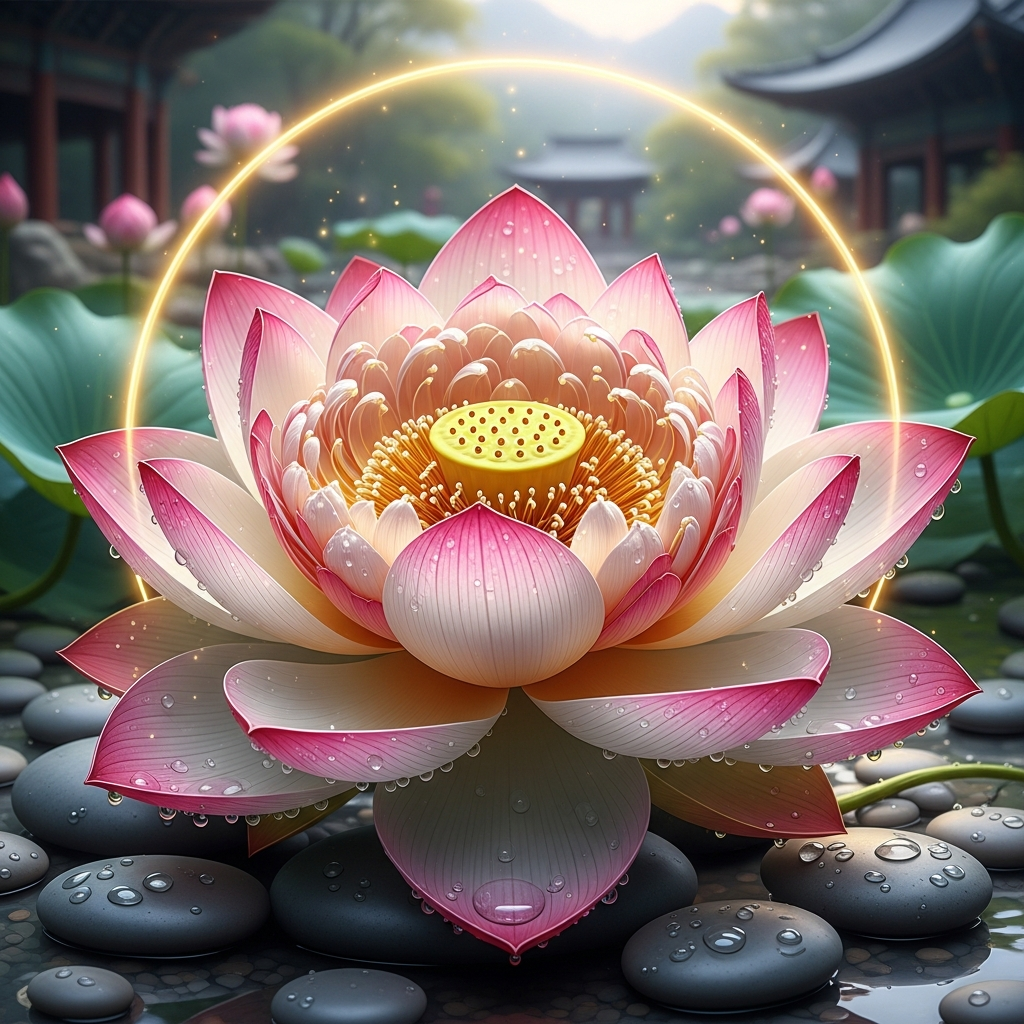
If there is one floral symbol that defines Buddhist art, it is the Lotus (Padma). You will find it beneath the feet of deities, held in the hands of Bodhisattvas, and adorning the ceilings of sacred caves.
The Biological Metaphor of the Lotus
The lotus is unique because it grows in murky, stagnant water. Its roots are buried in the mud, yet its flower rises above the surface, pristine and untouched by the grime. This is the perfect analogy for a Bodhisattva or an enlightened being who lives in the world of Samsara (the cycle of birth and death) but remains unstained by its attachments and delusions.
The Significance of Lotus Colors
In Buddhist art, the color of the lotus is never accidental. Each hue carries a specific vibration and meaning:
- The White Lotus (Pundarika): This represents the state of spiritual perfection and total mental purity. It is often associated with the Buddha and the female deity White Tara.
- The Pink Lotus (Kamala): This is considered the “Supreme Lotus.” It is reserved for the historical Buddha, Siddhartha Gautama, and represents the highest reaches of the spirit.
- The Red Lotus (Kamala): Symbolizing the heart, this flower represents love, compassion, and the original nature of the soul. It is closely linked to Avalokiteshvara, the Bodhisattva of Compassion.
- The Blue Lotus (Utpala): Often depicted as a partially opened bud, it symbolizes the victory of the spirit over the senses. It represents wisdom and knowledge, often held by Manjushri, the Bodhisattva of Wisdom.
The Tree of Awakening: The Bodhi Tree and Beyond
While blossoms are central, the trees that produce them are equally vital in the narrative of Buddhist art.
The Bodhi Tree (Ficus religiosa)
No discussion of Buddhist flora is complete without the Bodhi Tree. It was beneath this sacred fig tree in Bodh Gaya that Siddhartha Gautama attained full enlightenment. In early Aniconic Buddhist art (where the Buddha was not shown in human form), the Bodhi tree was used to represent his presence.
The heart-shaped leaves of the Bodhi tree are a recurring motif in Buddhist architecture and metalwork, symbolizing the “Awakened Mind.”
The Ashoka Tree (Saraca asoca)
The Ashoka tree, which translates to “without sorrow,” is associated with the birth of the Buddha. According to tradition, Queen Maya gave birth to Prince Siddhartha while holding a branch of a flowering Ashoka tree in the Lumbini garden. In art, this tree represents fertility, joy, and the auspicious beginning of a new era.
The Sal Tree (Shorea robusta)
If the Ashoka tree represents birth, the Sal tree represents the Parinirvana (the final passing). The Buddha is said to have passed away between two Sal trees, which miraculously bloomed out of season to shower him with flowers. This tree serves as a poignant reminder of the cycle of life and the peace of final liberation.
Other Significant Floral Elements in Iconography
Beyond the lotus and sacred trees, several other flowers play supporting roles in the vast tapestry of Buddhist aesthetics.
The Jasmine Flower
In many Southeast Asian Buddhist traditions, Jasmine is prized for its intoxicating scent and pure white color. It is the primary flower used for offerings. In art, jasmine patterns often decorate the robes of monks or the borders of temple murals, representing the “scent of morality” that travels even against the wind.
The Marigold and Chrysanthemum
Commonly found in Tibetan and Himalayan art, these hardy flowers represent longevity and the sun. Their vibrant yellow and orange tones are often used to symbolize the “Saffron Robe” of the monastic order and the radiant light of the Dharma.
The Magnolia and Plumeria
In East Asian Buddhist art (China, Japan, Korea), the Magnolia is a symbol of feminine beauty and grace, often associated with Guan Yin. The Plumeria (Frangipani), with its simple five petals, is often linked to the five precepts of Buddhism and is frequently planted around pagodas in Laos and Thailand.
Flowers in the Eight Auspicious Signs (Ashtamangala)
The Ashtamangala is a suite of eight symbols common to many Indian religions. In Buddhism, the Lotus is one of these eight symbols. When you see the Lotus grouped with the Golden Fish, the Treasure Vase, and the Endless Knot, it signifies the preservation of the primordial purity of one’s soul.
In these artistic groupings:
- The Lotus represents the purification of the body, speech, and mind.
- The Treasure Vase is often depicted with a “wish-granting tree” or flowers spilling out, symbolizing spiritual abundance.
The Ritualistic Use of Flowers: Art in Motion
Buddhist art is not just static; it is lived. The act of offering flowers at an altar is a form of “performance art” that reinforces the teachings.
Why do you offer flowers?
- To Honor the Buddha: Recognizing the beauty of the teachings.
- To Meditate on Decay: As you watch the flower on the altar wilt over several days, you are meant to reflect on your own mortality.
- To Accumulate Merit: Generosity (Dana) is a key pillar of the path.
In many temples, you will see “Floral Mandalas” — intricate patterns made entirely of loose petals. These are destroyed shortly after completion, emphasizing the Buddhist concept of detachment.
Regional Variations in Buddhist Floral Art
As Buddhism spread across Asia, it absorbed local floral traditions, leading to diverse artistic expressions.
1. Tibetan Thangka Paintings
In Tibetan art, flowers are often stylized and vibrant. You will see “Floating Lotuses” in the sky and deities holding stems that curl elegantly around their shoulders. The precision of these floral elements is a testament to the artist’s meditative focus.
2. Zen Ink Wash Paintings (Sumie-e)
In Japan, Zen art takes a minimalistic approach. A single plum blossom or a branch of bamboo might be the entire subject. Here, the “emptiness” (Sunyata) around the flower is as important as the flower itself, representing the vast, unconditioned nature of reality.
3. Southeast Asian Stone Carvings
In places like Borobudur (Indonesia) or Angkor Wat (Cambodia), floral motifs are carved into stone with incredible depth. These “floral creepers” (Lata) symbolize the interconnectedness of all living beings and the vitality of the life force.
How to Interpret Floral Motifs in Buddhist Art: A Step-by-Step Guide
If you are looking at a piece of Buddhist art and want to decode its floral symbols, follow these steps:
- Identify the Primary Flower: Is it a lotus? If so, look at the color. A red lotus indicates a focus on compassion, while a blue one points to wisdom.
- Observe the Stage of Bloom: A closed bud represents the potential for enlightenment (the “Buddha Nature” within everyone). A full bloom represents the realization of that potential.
- Look at the Placement: If a deity is standing on a lotus pedestal (Padmasana), it means they exist in a realm of purity, above the cycle of suffering.
- Check for Accompanying Trees: Is there a tree in the background? A Bodhi tree suggests a scene of meditation or teaching, while an Ashoka tree might indicate a scene from the Buddha’s early life.
- Examine the Symmetry: Buddhist art often uses floral patterns to create a sense of balance and harmony, reflecting the “Middle Way” — the path of moderation.
Expert Tips for Art Collectors and Enthusiasts
- Look for Hand-Painted Details: In high-quality Thangkas, the veins on a lotus leaf are often painted with a single-hair brush using real gold. This level of detail signifies the “preciousness” of the Dharma.
- Understand the “Mud” Context: When appreciating a lotus motif, don’t just look at the flower. Look at how the artist depicts the water or mud below. A stark contrast emphasizes the triumph of the spirit.
- Respect the Symbolism: If you display Buddhist art in your home, it is respectful to keep it in a high, clean place, as these floral symbols are considered sacred representations of the mind’s highest potential.
Frequently Asked Questions (FAQ)
What is the most important flower in Buddhism?
The Lotus is the most significant flower. It symbolizes the path from the ignorance of the “mud” to the enlightenment of the “blossom.”
Why do Buddhist statues sit on flowers?
Statues sit on a lotus throne to signify that the enlightened being is grounded in the world but completely free from its impurities and suffering.
Does the Bodhi tree produce flowers?
Yes, the Ficus religiosa produces small, fig-like fruits and tiny flowers, but in art, the focus is almost always on its distinctive heart-shaped leaves rather than its blossoms.
What does a withered flower mean in Buddhist art?
A withered flower is a teaching tool for impermanence (Anicca). It reminds the viewer that all conditioned things are subject to decay and that one should seek the “unconditioned” state of Nirvana.
Are there specific flowers for different Buddhas?
Yes. For example, the Medicine Buddha is often associated with the Myrobalan plant, while Avalokiteshvara is almost always depicted with a red or white lotus.
Conclusion: The Eternal Bloom of Wisdom
Floral symbols in Buddhist art are more than just aesthetic choices; they are profound philosophical statements. By understanding the language of the lotus, the Bodhi tree, and the sacred blossoms of the East, you gain a deeper appreciation for the rich spiritual heritage of Buddhism.
The next time you encounter these symbols, remember that they are an invitation. They invite you to rise above the “mud” of daily anxieties, to grow toward the light of understanding, and to realize that, like a flower, beauty and wisdom can bloom even in the most unlikely places. Whether through a stone carving or a delicate silk painting, these floral messengers continue to spread the timeless fragrance of the Dharma across the world.