Confetti Meaning: The Deep Symbolism, History, and Evolution of Celebration
When you witness a cloud of colorful paper fluttering through the air during a wedding or a championship parade, you are participating in a tradition that spans centuries. But have you ever paused to consider the true confetti meaning? Beyond the visual spectacle, these small pieces of paper carry profound cultural weight, representing joy, abundance, and the collective marking of a milestone.
In this comprehensive guide, you will explore the origins of confetti, its symbolic evolution, and how it has become an indispensable element of modern festivities. Whether you are planning a grand event or are simply curious about the “why” behind the ritual, this article provides an expert deep dive into the world of confetti.
What is the Literal Meaning of Confetti?
The word “confetti” finds its roots in the Italian language. Interestingly, the singular form is confetto, which historically referred to a small sweet or “confection.” In many Mediterranean cultures, these were specifically sugar-coated almonds or seeds given away during weddings and carnivals.
In the English-speaking world, the term transitioned from describing edible treats to describing the small scraps of paper we use today. This linguistic shift occurred as the practice of throwing sweets evolved into throwing paper—a more practical and less painful alternative for large crowds.
Today, the confetti meaning is synonymous with a “shower of blessings.” It signifies a moment so significant that it requires a visual explosion to match the emotional intensity of the occasion.
The Historical Evolution: From Seeds to Paper
The history of confetti is a fascinating journey through human celebration. To understand its modern application, you must look back at how our ancestors marked their most important transitions.
1. The Ancient Tradition of Grain and Seeds
Long before paper was mass-produced, people threw grain, rice, or seeds at newlyweds. This was not merely for decoration; it was a symbolic act intended to wish the couple fertility and prosperity. The seeds represented the “planting” of a new life together, with the hope that it would yield a bountiful harvest of children and wealth.
2. The Italian “Confetto” Era
During the Middle Ages and the Renaissance in Italy, participants in carnivals threw coriandoli (sugar-coated coriander seeds). However, as these became expensive, people began using plaster pellets or “chalk” confetti. This often became messy and even dangerous, leading to local bans on the practice in various European cities.
3. The Invention of Modern Paper Confetti
The transition to paper is often credited to Enrico Mangili of Milan in 1875. Mangili began selling the small paper discs that remained after the production of silkworm bedding. This byproduct was lightweight, fluttered beautifully, and was far safer than throwing plaster or hard candy. By the late 19th century, paper confetti became the global standard for celebrations.
The Symbolism of Confetti in Modern Celebrations
Why do we feel the urge to throw things in the air when we are happy? The confetti meaning in a psychological and symbolic context is multi-layered.
A Visual Representation of Joy
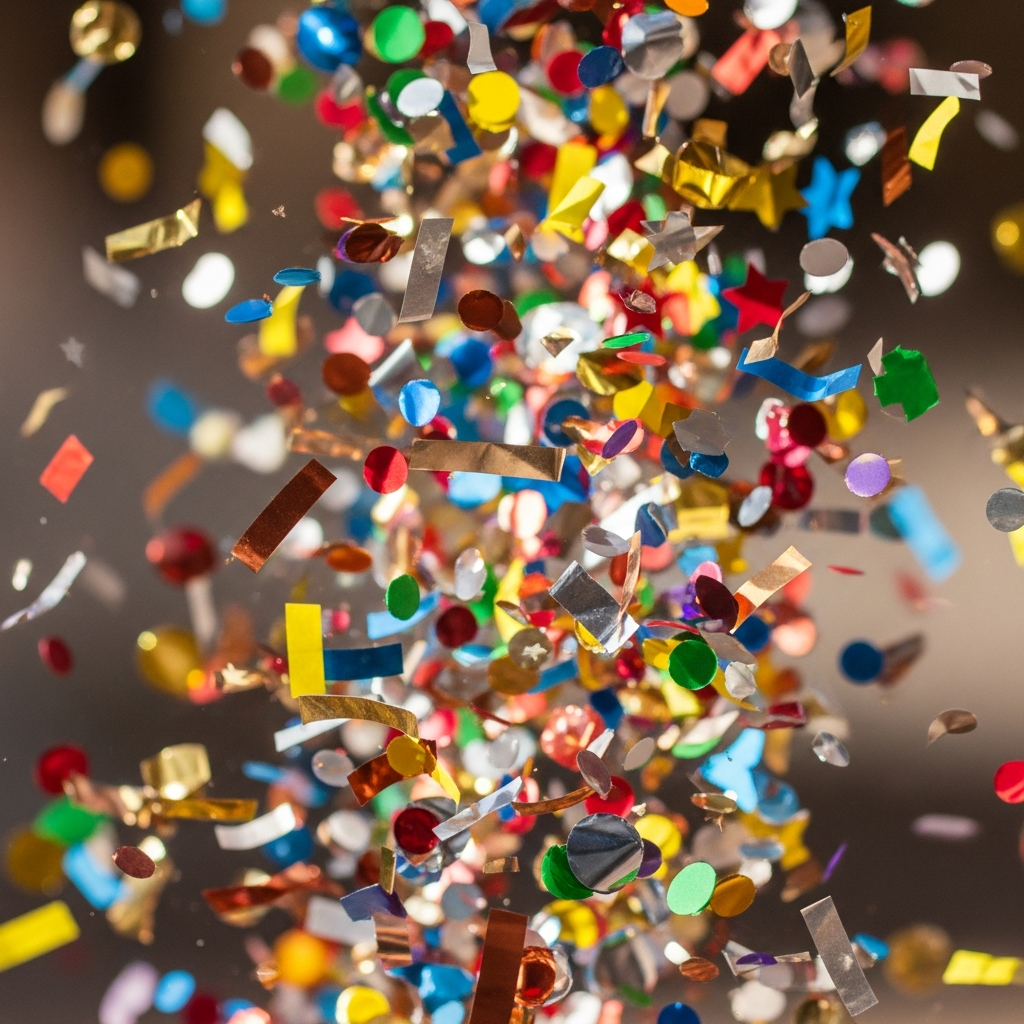
Confetti serves as a physical manifestation of an invisible emotion. Joy is fleeting and intangible, but a “confetti blast” fills the visual field with color and movement, making the happiness of the moment feel tangible and shared by everyone in the room.
The “Shower of Blessings”
In many cultures, the act of falling confetti mimics rain. Just as rain brings life to the earth, confetti symbolizes a “downpour” of good luck, health, and success upon the individuals being celebrated. This is why the “confetti toss” is the climax of many wedding ceremonies.
Marking a Threshold
Confetti is rarely used during the middle of an event. It is almost always reserved for a transition—the end of a ceremony, the start of a new year, or the crowning of a champion. It acts as a “sensory punctuation mark,” telling the brain that one phase has ended and a new, exciting one has begun.
Types of Confetti and Their Specific Uses
As you plan your event, you will realize that not all confetti is created equal. The material and shape you choose can drastically change the “vibe” and the meaning of your celebration.
- Tissue Paper Confetti: This is the most popular choice for weddings. It is lightweight and has a “slow-fall” effect, staying in the air longer for better photographs.
- Metallic (Mylar) Confetti: Often used at concerts and New Year’s Eve parties. It reflects light, creating a shimmering, high-energy effect that signifies luxury and excitement.
- Biodegradable Confetti: Made from cornstarch or water-soluble paper. This represents a modern commitment to environmental stewardship while maintaining tradition.
- Floral Confetti: Real dried flower petals (roses, lavender, or delphiniums). This returns to the organic roots of the tradition, symbolizing natural beauty and romance.
- Seed Paper Confetti: A growing trend where the confetti contains actual wildflower seeds. When thrown outdoors, it literally brings new life to the ground, echoing the ancient confetti meaning of fertility.
How to Choose the Right Confetti for Your Event
To ensure your celebration is both meaningful and successful, you should consider several practical factors before purchasing your supplies.
1. Consider the Venue’s Policy
Many venues, particularly historic churches or outdoor parks, have strict rules against plastic or metallic confetti. Always check if they require biodegradable or “water-soluble” options. Choosing an eco-friendly option shows respect for the environment and the venue.
2. Match the Color Palette to the Symbolism
Color psychology plays a huge role in the confetti meaning. White symbolizes purity and new beginnings (perfect for weddings). Gold and silver represent achievement and wealth (ideal for anniversaries). Multi-colored confetti represents diversity, chaos, and pure fun (best for birthdays and festivals).
3. Timing the “Confetti Moment”
For maximum impact, you must time the release perfectly. In a wedding, this is usually as the couple walks back up the aisle (the recessional). For a New Year’s party, it is exactly at the stroke of midnight. Coordination with your photographer is essential to capture the “money shot” where the air is filled with color.
The Environmental Impact and the Shift to Eco-Confetti
In recent years, the confetti meaning has expanded to include environmental responsibility. Traditional plastic or metallic confetti can take centuries to decompose and can be harmful to wildlife if ingested.
As a conscious consumer, you have several sustainable alternatives:
- Leaf Confetti: You can use a hole puncher on fallen leaves to create 100% natural, free, and beautiful confetti.
- Birdseed: A classic alternative that provides a snack for local wildlife after the party is over.
- Rice Paper: This dissolves almost instantly when it comes into contact with water or rain, leaving no trace behind.
The Psychology of the “Confetti High”
Have you ever noticed how people reflexively smile and raise their hands when confetti falls? Psychologists suggest that the “confetti effect” triggers a release of dopamine. The sudden change in environment—from a static room to a dynamic, swirling space—breaks our usual patterns of perception and forces us into a state of “awe.”
This “awe” fosters a sense of social connection. In that moment, everyone under the falling paper is part of the same experience, breaking down social barriers and creating a lasting memory of collective joy.
Step-by-Step: How to Plan the Perfect Confetti Toss
If you want to execute a professional-grade confetti moment, follow these steps:
- Quantity is Key: You need more than you think. Aim for at least two handfuls per guest to ensure the air looks “full” in photos.
- Distribution: Use “confetti cones” or small envelopes. This makes it easier for guests to hold their confetti until the big moment.
- Instructions: Have your officiant or DJ announce when the toss should happen. Without guidance, guests might throw it too early or too late.
- The Throw Technique: Advise your guests to throw “up and out” rather than directly at your face. This creates a beautiful canopy effect.
- The Cleanup Plan: If you are using non-dissolvable confetti, ensure you have a team or a vacuum ready to clear the area, especially in public spaces.
Frequently Asked Questions (FAQ)
Why do we throw confetti at weddings?
We throw confetti at weddings to symbolize a “shower of blessings” for the couple. It is a tradition rooted in ancient rituals of throwing grain or rice to wish the newlyweds fertility, prosperity, and a life full of abundance.
Is confetti bad for the environment?
Traditional plastic or metallic confetti is harmful because it does not biodegrade and can be mistaken for food by animals. However, you can choose biodegradable, water-soluble, or natural petal confetti to celebrate sustainably.
What is the difference between confetti and glitter?
The primary difference is size. Confetti consists of larger pieces (usually 0.25 inches or larger) designed to flutter through the air. Glitter is much smaller and is designed to stick to surfaces and provide a constant shimmer.
Can I make my own confetti?
Yes! You can make your own confetti using a hole puncher and colorful paper, dried leaves, or even flower petals. This is a cost-effective and often more eco-friendly way to customize your celebration.
Conclusion: The Lasting Magic of Confetti
The confetti meaning goes far beyond simple decoration. It is a bridge between our ancient past and our modern celebrations. It is a symbol of hope, a marker of transition, and a catalyst for shared human joy. When you choose to include confetti in your next milestone, you are not just throwing paper; you are participating in a timeless human ritual of gratitude and celebration.
By understanding its history and choosing the right materials, you can ensure that your “confetti moment” is not only beautiful but also meaningful and responsible. So, the next time you see those colorful fragments dancing in the wind, remember: you are witnessing the visual heartbeat of a celebration.