The Ultimate Guide to Red Envelopes (Hongbao): History, Etiquette, and Cultural Significance
The red envelope, known as hongbao in Mandarin or ang pao in Hokkien, is far more than just a decorative piece of stationery. It is a profound cultural symbol representing luck, protection, and the sharing of blessings. Whether you are attending a Chinese New Year celebration, a wedding, or a birthday party, understanding the nuances of this tradition is essential for navigating social interactions with grace and respect.
In this comprehensive guide, you will discover the ancient legends behind the red envelope, the strict etiquette rules that govern their exchange, and how this thousands-year-old tradition has successfully transitioned into the digital age.
What is a Red Envelope?
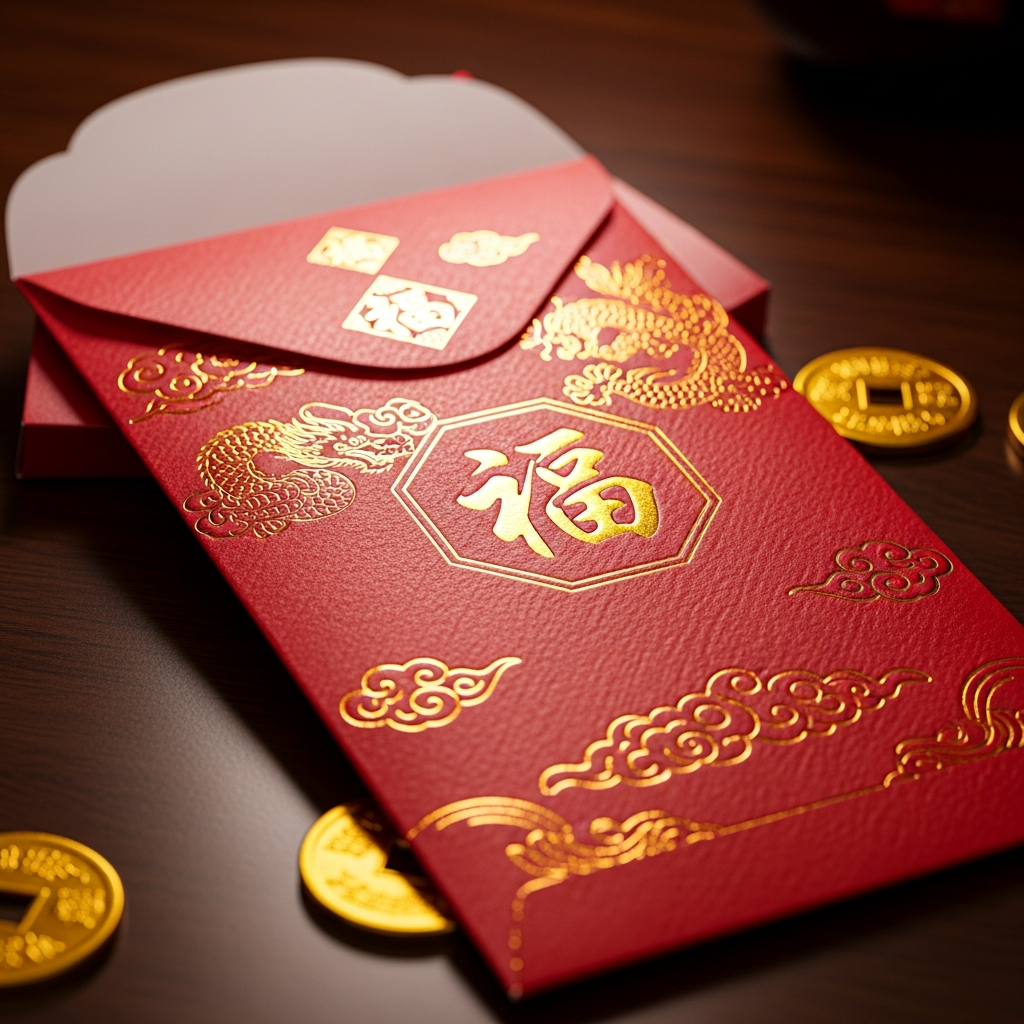
At its simplest, a red envelope is a small paper packet, typically decorated with beautiful gold calligraphy and symbols, containing “lucky money.” However, the true value of the gift is not the cash inside; it is the red paper itself.
In Chinese culture, red symbolizes energy, happiness, and good fortune. By giving a red envelope, you are symbolically passing on a wish for a safe and prosperous year to the recipient. It is a gesture of goodwill that strengthens social bonds and honors familial hierarchies.
The Origin and Legend of the Red Envelope
To truly appreciate the significance of the red envelope, one must look back at Chinese mythology. The most popular legend involves a terrifying demon named Sui.
The Legend of Sui
According to folklore, Sui was a demon that appeared on New Year’s Eve to terrify children while they slept. It was said that if Sui touched a child’s head, the child would fall ill or lose their intelligence.
To protect their children, parents would keep lights burning all night (a tradition known as shousui). One particular story tells of a couple who gave their son eight coins to play with to keep him awake. When the child eventually fell asleep, they placed the coins in a red pouch under his pillow.
When Sui attempted to touch the child, the coins emitted a powerful golden light that scared the demon away. These eight coins were actually the Eight Immortals in disguise. From that day forward, giving money wrapped in red paper became a standard practice to keep children safe and bring them good luck—a practice originally called yasui qian (money to suppress Sui).
When are Red Envelopes Given?
While the Lunar New Year is the most prominent occasion for red envelopes, they are used throughout the year for various life milestones.
1. Chinese New Year (Spring Festival)
This is the peak season for red envelopes. They are given by married couples and elders to children and unmarried younger adults. It is also common for adult children to give red envelopes to their parents and grandparents as a sign of respect and filial piety.
2. Weddings
At a Chinese wedding, the red envelope serves as the primary gift for the newlyweds. Instead of a physical gift registry, guests provide cash in red packets to help the couple start their new life together and to offset the costs of the wedding banquet.
3. Birthdays and “Full Moon” Celebrations
Red envelopes are frequently given to infants during their “Full Moon” ceremony (the one-month mark) and to elders on their milestone birthdays (such as 60 or 80) to wish them longevity.
4. Graduations and Success
Achieving a significant milestone, such as graduating from university or landing a prestigious job, is often rewarded with a red envelope from proud relatives.
The Golden Rules of Red Envelope Etiquette
Giving and receiving a red envelope is a ritualized process. To avoid social blunders, you should follow these established rules of etiquette.
Rules for the Giver
- Use New Bills: Fresh, crisp, and clean banknotes are a must. Giving wrinkled or dirty money is considered a sign of laziness or a lack of care. Most banks in Asia see long queues before the New Year as people exchange old bills for new ones.
- Avoid Coins: Red envelopes should contain paper bills. Coins are generally avoided unless you are following a very specific local tradition.
- Check the Amount: The amount of money you give is highly significant (see the section on numbers below).
- Never Use White Envelopes: In many Asian cultures, white envelopes are reserved for funerals and are associated with death. Giving a white envelope at a celebration is a grave insult.
- Do Not Seal the Flap (Optional): Many people choose not to seal the envelope with glue or tape so that it can be opened easily, though this varies by region.
Rules for the Recipient
- Receive with Both Hands: This is a universal sign of respect in many Asian cultures. Using only one hand can be perceived as dismissive or arrogant.
- Express Gratitude: Always offer a polite “Thank you” or a New Year greeting like “Gong Xi Fa Cai” (Mandarin) or “Gong Hey Fat Choy” (Cantonese).
- Do Not Open Immediately: It is considered extremely impolite to open a red envelope in front of the person who gave it to you. Wait until you are in private to check the contents.
The Numerology of Giving: Lucky vs. Unlucky Amounts
In the context of the red envelope, the number on the banknote is often more important than the total value. Chinese culture places a heavy emphasis on homophones (words that sound like other words).
Lucky Numbers
- The Number 8: This is the luckiest number because it sounds like “wealth” or “prosper” (fa). Any amount featuring the number 8 (e.g., $88, $800) is highly auspicious.
- The Number 6: This number sounds like “smooth” or “flow,” suggesting that the coming year will be free of obstacles.
- Even Numbers: For joyful occasions, even numbers are preferred. They represent “doubling” the luck.
Unlucky Numbers
- The Number 4: Avoid this at all costs. The word for “four” in Chinese sounds almost identical to the word for “death.” Giving an amount like $40 or $400 is considered a curse rather than a gift.
- Odd Numbers: Odd numbers are traditionally associated with funerals and should be avoided for weddings or New Year celebrations.
How Much Money Should You Put Inside?
There is no fixed “price list” for red envelopes, as the amount depends on your income and your relationship with the recipient. However, here are some general guidelines for Chinese New Year:
- Your Own Children: This is usually the largest amount, ranging from $50 to several hundred dollars depending on the family’s wealth.
- Parents and Grandparents: High amounts ($100 – $500) are common to show respect and support.
- Younger Relatives (Nieces, Nephews): Typically between $10 and $50.
- Children of Friends or Colleagues: A token of $5 to $20 is standard.
- Employees: In a professional setting, bosses often give a “start of work” red envelope to employees, usually equivalent to a day’s pay or a lucky number like $88.
Regional Variations: Ang Pao, Li Xi, and Otoshidama
While the core concept remains the same, the red envelope tradition manifests differently across Asia:
- Vietnam (Li Xi): Similar to the Chinese tradition, children receive Li Xi from elders. The focus is heavily on the “wishes” exchanged during the process.
- Malaysia and Singapore (Ang Pao): In these multicultural hubs, the tradition has influenced other ethnicities. It is common to see “Green Envelopes” during Hari Raya (Eid al-Fitr) and “Purple Envelopes” during Deepavali.
- Japan (Otoshidama): While influenced by the Chinese custom, Japanese envelopes (pochibukuro) are often white or decorated with various colors, and the money is folded into thirds.
The Digital Revolution: Virtual Red Envelopes
In the last decade, the red envelope has gone digital. In 2014, the Chinese messaging app WeChat introduced the “Virtual Red Envelope” feature, which revolutionized how people celebrate the Lunar New Year.
Why Digital Red Envelopes are Popular:
- Convenience: You can send money instantly to friends and family across the globe.
- Gamification: WeChat introduced a “lucky draw” feature where a sender puts a lump sum into a group chat, and the app randomly distributes different amounts to those who click it first. This creates a fun, competitive atmosphere.
- Environmental Impact: As people become more eco-conscious, digital packets reduce the waste associated with millions of paper envelopes.
Despite the rise of digital versions, the physical exchange of red envelopes remains a vital part of formal gatherings and family reunions, as the physical touch adds a layer of intimacy that technology cannot replicate.
Expert Tips for Buying and Preparing Red Envelopes
If you are new to this tradition, here are some professional tips to ensure you are well-prepared:
- Check the Zodiac Sign: Red envelopes often feature the animal of the year (e.g., the Dragon, Rabbit, or Tiger). Ensure you are using an envelope that matches the current lunar year, or choose a “timeless” design featuring the character Fu (Prosperity).
- Stock Up Early: During the weeks leading up to Lunar New Year, red envelopes can sell out quickly in Asian supermarkets and stationery stores.
- Keep a Few Spares: It is wise to carry a few “emergency” red envelopes with a small amount of money inside. You never know when you might run into a friend’s child or a distant relative you didn’t expect to see.
Frequently Asked Questions (FAQ)
1. Can a single person give a red envelope?
Generally, the tradition dictates that married people give red envelopes to unmarried people. However, if you are a working adult, it is increasingly common to give them to your parents or younger siblings regardless of your marital status.
2. Is it okay to give digital red envelopes to elders?
While many elders are tech-savvy, a physical red envelope is still preferred for parents and grandparents as it carries more traditional weight and respect.
3. What should I do if I receive a red envelope but have nothing to give back?
If you are younger or unmarried, you are not expected to give one back. Simply offer a warm, sincere New Year greeting. If you are of the same social standing, a polite thank you is sufficient, or you can reciprocate at a later date.
4. Can I put a check in a red envelope?
Cash is the standard. Checks are generally avoided unless it is for a very large wedding gift where carrying that much cash would be impractical or unsafe.
Conclusion
The red envelope is a beautiful testament to the enduring power of tradition. It bridges the gap between generations, fosters community spirit, and serves as a vibrant reminder of the values of generosity and hope.
Whether you are placing crisp bills into a gold-embossed packet or tapping a “send” button on a smartphone, you are participating in a ritual that has brought joy to millions for centuries. By following the etiquette and understanding the symbolism outlined in this guide, you can participate in this tradition with confidence and sincerity.
May your year be filled with prosperity, health, and many red envelopes!