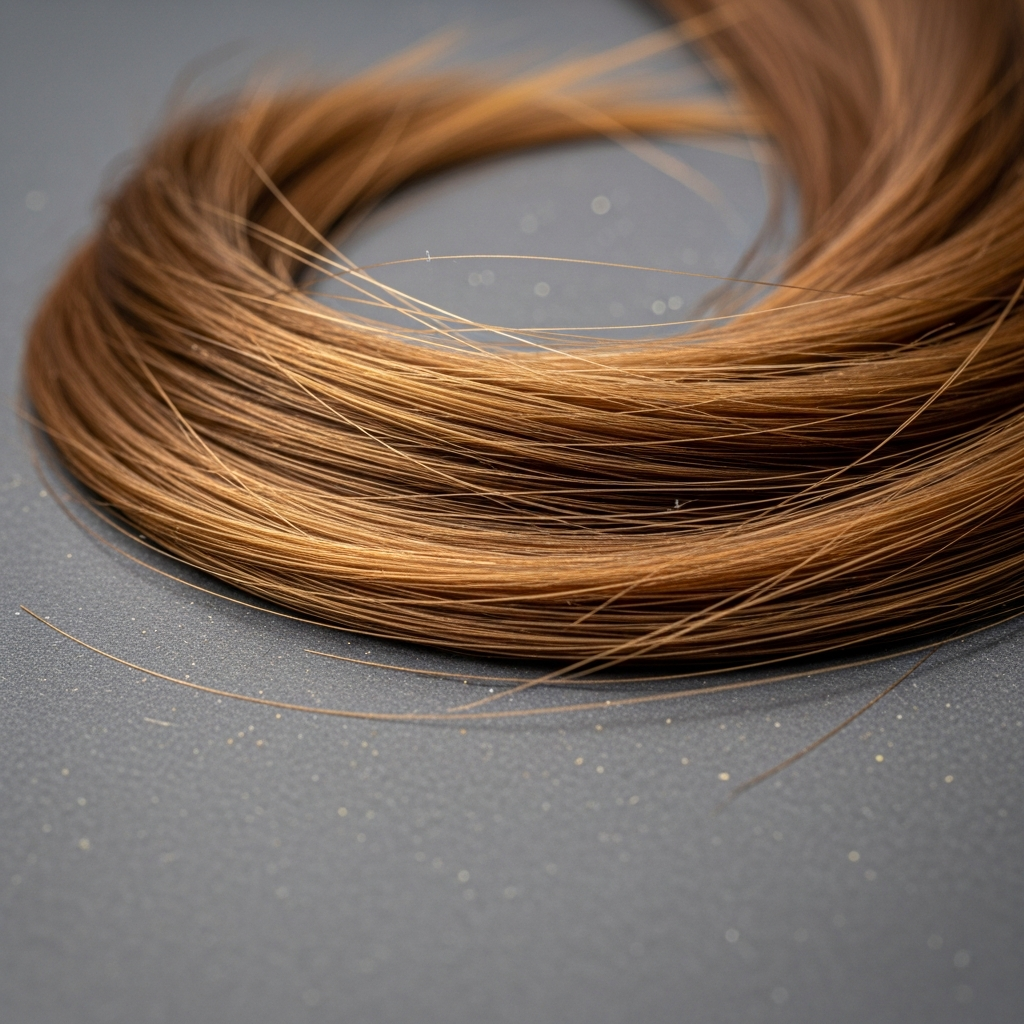
A lock of hair is far more than just a small bundle of keratin strands; it represents an intimate, tangible connection to an individual, a moment in time, and a wealth of hidden information. This simple physical token has served humanity for centuries as a profound symbol of love, mourning, and identity, traversing the realms of romance, fine art, and rigorous scientific examination. The profound, enduring significance of a lock of hair makes it a truly universal relic. It is a biological archive that encapsulates personal history and chemical data, remaining resistant to the decay that affects other organic materials, thus preserving its narrative for future generations.

The Timeless Token: A Lock Of Hair in History and Culture
For millennia, the simple act of keeping a lock of hair has been a powerful, emotionally charged gesture across diverse civilizations. In its essence, a lock represents a physical piece of a person that can be held long after distance or death has separated individuals. It is a profoundly personal memento that transcends mere sentimentality, serving as a material echo of a human presence. The significance of a lock of hair shifts dramatically depending on the cultural and historical context, evolving from a protective talisman to a sophisticated piece of art.
Victorian Sentimentalism: Hair Jewelry and Memento Mori
The Victorian Era (1837-1901) stands as the pinnacle of sentimentalism surrounding the lock of hair. During this time, the practice was elevated to an art form, moving beyond simply storing a small curl in a locket. Hairwork, or memento mori (remember you must die) jewelry, became extremely fashionable, especially after Queen Victoria herself wore a lock of hair from her deceased husband, Prince Albert, in a brooch. This royal endorsement cemented hair jewelry as a social necessity for commemorating loved ones.
The depth of this tradition is evident in the elaborate crafting techniques employed by skilled artisans. They did not simply coil a lock of hair; they wove it, braided it, and intricately manipulated it into complex patterns. These artistic creations ranged from delicate watch fobs and earrings to large, detailed brooches and necklaces. For instance, a lock of hair might be woven into a tight, lace-like pattern and encased under glass within a gold locket, or braided into a thick bracelet, creating a piece that was both functional and deeply personal. This intense investment of time and artistry demonstrated the sincerity and depth of the relationship being commemorated. The enduring nature of the hair itself was considered a powerful analogy for everlasting love or memory, a striking contrast to the fleeting nature of life. Therefore, receiving a finely crafted piece containing a lock of hair from a lover or family member was the ultimate declaration of affection and a promise of remembrance. This particular cultural trend illustrates how a simple lock of hair could become a treasured symbol of commitment, a tangible promise of an eternal bond.
The exchange of a lock of hair was not solely related to mourning, though that remains the most famous context. Before a long journey, a marriage, or an engagement, couples frequently exchanged locks of hair as tokens of fidelity. A bride might gift her future husband a miniature portrait containing a lock of her hair, ensuring she remained close to his heart even when they were apart. The sentimental market for jewelry that could house a lock of hair soared in volume and diversity, ensuring that this form of intimate souvenir remained a vital part of social interaction. The Victorian fascination transformed a basic organic material into an emotional and artistic artifact, showcasing an entire society’s dedication to preserving personal connections through physical objects. Today, these antique pieces offer a valuable window into 19th-century interpersonal dynamics and the profound cultural value placed on a carefully preserved lock of hair.
Ancient Beliefs and the Spiritual Lock
The spiritual and symbolic power associated with a lock of hair predates the sentimental Victorians by thousands of years. In many ancient societies, hair was regarded as an external manifestation of an individual’s soul, life force, or spiritual power. This belief system imbues the gift or the removal of a lock of hair with significant, often dangerous, meaning.
Key Symbolic Meanings of a Lock of Hair:
- Sacrifice and Devotion: In classical Greek culture, and extending into the Roman Empire, a lock of hair was often offered to deities as a mark of devotion or a votive offering. This was a common practice among sailors before a perilous voyage or warriors preparing for battle, seeking divine favor through a sacrifice of part of their physical essence. The belief was that the offering of a lock of hair created an unbreakable spiritual contract.
- Magical Power and Control: A more pervasive belief across various cultures held that owning someone’s lock of hair granted a person some degree of magical control or influence over them. This concept often appears in folklore and ancient texts, where witches or sorcerers seek a lock of hair to perform spells, curses, or enchantments. This fear of vulnerability often made people extremely cautious about whose hands a lock of hair might fall into, underscoring its perceived potency.
Spiritual Identity: For groups such as the Akan people in Ghana, Mpɛsɛ*, or locked hair (often referred to as dreadlocks), signifies a deep spiritual connection to a higher power. Here, the lock of hair is not merely an aesthetic choice but a visible, sacred symbol of one’s devotion and spiritual state. This practice elevates the maintenance and growth of a lock of hair to a religious discipline, where the entire head of hair becomes a physical anchor for spiritual energy.
These traditions illustrate a fundamental difference from the later romantic interpretation: the ancient and spiritual view of a lock of hair was rooted in power and the sacred. Unlike the Victorian keepsake meant for remembrance, the ancient lock of hair was an active component in ritual and belief systems, serving as a tangible link to both the divine and the supernatural world. The enduring power of this symbol across such vast spans of history demonstrates a shared human instinct to assign deep meaning to this otherwise simple organic material.
The Microscopic Vault: A Lock Of Hair in Modern Science
While history views a lock of hair through the lens of romance and ritual, modern science regards it as a robust, incredibly valuable biospecimen. The chemical structure of hair, primarily keratin, makes it exceptionally resistant to decomposition, allowing it to retain a detailed chronological record of an individual’s life. In the laboratory, a lock of hair transforms from a sentimental relic into a microscopic vault, capable of unlocking complex forensic and historical mysteries.
Forensic Toxicology: Tracing the Chemical Chronology
The forensic analysis of a lock of hair is one of the most critical and rapidly developing fields in modern criminology and toxicology. Hair analysis offers a detection window far exceeding that of blood or urine, providing a historical timeline of substance exposure that can stretch back months or even years. This capability is due to the way substances—including drugs, toxins, and metabolites—are absorbed into the hair follicle and then integrated into the growing shaft.
How a Lock of Hair Becomes a Timeline:
- Growth Rate as a Clock: Human hair grows at a relatively consistent and predictable rate, typically about one centimeter per month. By analyzing segments of a lock of hair sequentially, scientists can establish a month-by-month timeline of an individual’s chemical history. For example, by segmenting a twelve-centimeter lock of hair into twelve one-centimeter sections, toxicologists can pinpoint when a specific drug was ingested over the course of a year.
- The Extended Detection Window: The persistence of drug and environmental markers within a lock of hair makes it an invaluable tool for retrospective investigation. If an event occurred six months ago, and blood or urine samples would have long since cleared the substance, a lock of hair may still retain the chemical signature, allowing investigators to confirm or deny claims of exposure.
- Emerging Techniques: Recent technological advancements involve using highly sensitive instruments like Direct Analysis in Real Time-High-Resolution Mass Spectrometry (DART-HRMS) for (un)targeted scanning of drugs of abuse directly on a lock of hair sample. This innovative approach promises faster, more detailed analysis and further solidifies the role of a lock of hair as a cornerstone of forensic evidence. The chemical analysis of a lock of hair is essential for reconstructing events long after they occurred.
The use of a lock of hair in forensic toxicology moves far beyond simple drug testing; it is vital in environmental exposure cases, confirming chronic poisoning, and providing key evidence in child protection proceedings. The ability of even a single lock of hair to hold a detailed chemical biography makes it a unique and powerful biospecimen in the pursuit of justice.
Advanced Techniques: Laser and Isotope Analysis
Beyond chemical analysis, the physical and isotopic properties of a lock of hair are providing breakthrough information in identifying individuals and reconstructing their geographic movements. The latest research is leveraging sophisticated physical sciences to extract unprecedented data from these seemingly inert fibers. This represents a significant advancement over traditional microscopic analysis, moving toward high-precision, non-destructive testing of a precious lock of hair.
One particularly exciting innovation involves the development of a new laser-based technique that can effectively “lock hair in time”. This method, led by geochemists, examines the isotopic ratios within a lock of hair. Isotopes of elements like Hydrogen, Oxygen, and Carbon are naturally incorporated into the body through diet and local water sources. Because different geographic regions have distinct isotopic signatures in their water supply, analyzing the isotopic ratios along a lock of hair can provide a powerful proxy for tracking where an individual has lived or traveled during the period the hair was growing. This revolutionary process means that a lock of hair can act as a GPS-enabled diary of the recent past.
Furthermore, scientists are continually refining methods to analyze the minute details present in a single strand. A lock of hair, even if dyed or treated, contains a wealth of clues about the individual’s history. Recent studies have demonstrated the ability to forensically identify a single dyed hair strand, an accomplishment previously hampered by the presence of cosmetic chemicals. By combining high-resolution mass spectrometry with other advanced chemistry, a single, tiny lock of hair found at a scene can be matched with much higher certainty, revealing details about hair products, dyes, and even the type of cosmetic process used. This level of detail in the analysis of a lock of hair is transformative for identifying perpetrators or victims.
This marriage of physical and analytical chemistry has fundamentally changed the value of a lock of hair in both criminal investigations and archaeological studies. When used in archaeology, for example, the isotope analysis of an ancient lock of hair can reveal migration patterns, dietary shifts, and environmental stressors faced by ancient populations, providing a biological anchor for historical narratives that only this resilient material can offer. The scientific potential of a lock of hair is still being fully realized.

Collecting the Personal Relic: Valuing a Lock Of Hair
The enduring cultural and scientific significance of a lock of hair naturally leads to its value as a collectible and historical artifact. The market for personal relics, particularly those associated with famous figures, is a unique segment of the memorabilia world. The value assigned to a lock of hair in this context is purely sentimental and historical, often commanding prices that defy rational explanation, turning an intimate object into a high-value investment.
The Market for Celebrity Locks: Auction Trends and Values
When a lock of hair belongs to a historically significant or highly celebrated person, its monetary value can skyrocket into the tens or even hundreds of thousands of dollars. These items are coveted not for their intrinsic material worth, but for the story, the fame, and the direct, personal connection they provide to the individual. Owning a lock of hair from a great historical figure is the closest one can get to owning a piece of their actual physical presence.
Examples of High-Value Locks of Hair:
- Musical Legends: Locks of hair from icons like Elvis Presley or John Lennon have repeatedly fetched significant sums at auction. A lock of hair from Elvis, reportedly trimmed during his brief stint in the US Army, sold for over \$15,000, illustrating the fervent desire of fans to possess a piece of their idol.
- Political and Scientific Giants: Even more potent are the locks from historical giants. A small lock of hair purported to be from Abraham Lincoln has been known to be included in major sales, serving as a powerful American relic. Furthermore, a lock of hair from the great physicist Albert Einstein has also been authenticated and valued, often being passed down through private collections as a scientific treasure. The allure is in the proximity to genius.
- The Human Connection: The market frenzy for a celebrity lock of hair highlights a deep human need to touch the past. These items are often framed alongside accompanying documentation—a letter from the barber, a date, or an account of how the lock of hair was acquired—which is often as important as the hair itself for confirming provenance and authenticity.
The valuation of a lock of hair is highly dependent on an unbreakable chain of custody. The more credible the documentation tracing the lock of hair back to the celebrity’s head, the higher the price it will command at auction. The ultimate value is a reflection of the enduring power of celebrity and the human desire for a tangible link to historical greatness. A genuine, authenticated lock of hair becomes a historical document in its own right, a physical proof of existence.
Preservation: Keeping a Lock Of Hair Intact for Generations
Whether a lock of hair is a multi-thousand-dollar celebrity artifact or a cherished family keepsake, proper preservation is paramount to maintaining its integrity and symbolic value. As a biological specimen, a lock of hair is remarkably durable, yet it remains susceptible to damage from environmental factors like light, humidity, and pests. The goal of preservation is to halt any further degradation, ensuring the lock of hair remains a viable, recognizable artifact for centuries.
Best Practices for Storing a Lock of Hair:
- Avoid Direct Light: Prolonged exposure to sunlight or strong indoor lighting can cause the pigment in a lock of hair to fade irreversibly, losing its original color and character. Always store the lock in a dark, climate-controlled environment.
- Manage Humidity and Temperature: High humidity encourages the growth of mold and mildew, which can destroy the keratin structure. Conversely, overly dry air can make the hair brittle. Ideal storage involves a stable, cool temperature and a relative humidity level below 50%. This helps a lock of hair maintain its flexibility and strength.
- Use Archival-Safe Materials: Never store a lock of hair directly against acidic paper, cardboard, or non-archival plastics, as these materials off-gas chemicals that can damage the hair over time. Use acid-free tissue paper, Mylar sleeves, or non-reactive lockets and enclosures. The surrounding material must not chemically react with the lock of hair.
- Physical Protection: Placing the lock of hair inside a secured locket, a small, sealed presentation box, or a glass-covered frame protects it from dust, physical abrasion, and handling. The key is to minimize manipulation once it is safely stored.
Preservation techniques for a familial lock of hair often mirror those used in museum conservation. For individuals with valuable antique hair jewelry, professional cleaning and repair by specialists in memento mori pieces are often necessary to ensure the setting and the embedded lock of hair remain stable. The care taken to preserve a lock of hair is a testament to the enduring respect and affection for the person it represents, allowing its unique narrative to continue through the generations. The physical preservation of a lock of hair directly preserves a segment of personal or public history.
The Enduring Allure of a Lock Of Hair
From a simple, profound token of enduring love in the Regency period to an essential piece of evidence in a modern forensic laboratory, the lock of hair maintains a singular, powerful position in the human experience. Its journey from a personal gift pressed into a book to a high-tech biospecimen on a mass spectrometer slide is a fascinating narrative that underscores its inherent value. The lock of hair continues to captivate because it is the ultimate personal artifact: intimately connected to the body, yet capable of existing independently for centuries.
This small segment of biology is a profound communicator, speaking volumes about connection, memory, science, and the passage of time. Whether you encounter a vintage brooch holding a perfectly coiled Victorian lock of hair or read about a forensic breakthrough based on isotope analysis of a single strand, the message is consistent: the lock of hair is a testament to individuality and the resilience of human memory. It is a biological signature that the modern world continues to utilize, appreciate, and cherish, solidifying its place as one of humanity’s most timeless and multifaceted relics. The future will only bring more advanced ways to interpret the stories contained within every preserved lock of hair.
*
Frequently Asked Questions (FAQ)
What is the primary historical significance of a lock of hair?
A lock of hair’s primary historical significance lies in its use as a tangible symbol of affection, remembrance, and mourning, peaking during the Victorian and Regency eras. It was frequently woven into intricate jewelry—such as brooches, rings, and bracelets—and exchanged between lovers, family members, or used as a memento mori to commemorate a deceased loved one. The physical permanence of the lock of hair represented the enduring nature of the connection.
How is a lock of hair used in modern forensic science?
In modern forensic science, a lock of hair is utilized as a stable biological archive for toxicology and identity analysis. Because hair is resistant to decomposition and grows at a predictable rate, scientists can segment a lock of hair to create a chronological timeline, detecting and tracing the history of drug exposure, toxins, and environmental chemicals over months or even years. Advanced techniques also use isotope analysis of a lock of hair to determine an individual’s recent travel history or geographic location.
Why do some celebrity locks of hair sell for very high prices?
Celebrity locks of hair command high prices at auction because they represent a unique, direct, and intimate physical link to a historical or cultural icon. The value is driven by the rarity of the artifact, the fame of the individual, and the authenticity established by documented provenance (proof of origin). Buyers are motivated by the desire to own a genuine, tangible piece of history, elevating a simple lock of hair to the status of a high-value collectible.
How should I properly preserve a family lock of hair?
To properly preserve a family lock of hair, you should store it in an environment that is dark, cool, and stable, avoiding fluctuations in temperature and humidity. Crucially, the lock of hair must be protected from direct sunlight to prevent color fading. Use archival-safe materials, such as acid-free paper or non-reactive plastic envelopes, and place it in a sealed container or locket to shield it from dust and physical damage. This ensures the lock of hair remains intact for future generations.