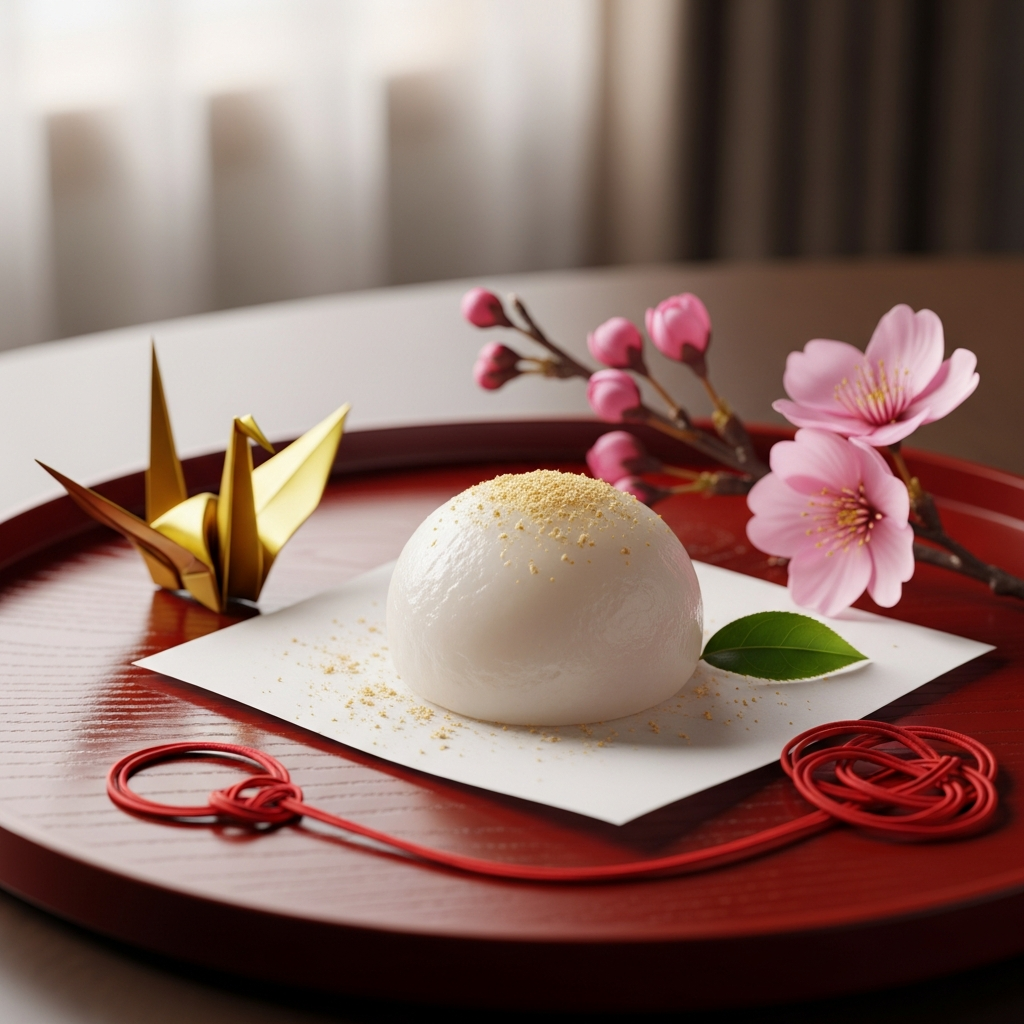
The sweet, chewy, and deceptively simple rice cake known as mochi holds a significance that reaches far deeper than its delightful taste. So, What Does Mochi Symbolize across the rich tapestry of Japanese culture? It is a food steeped in ancient tradition, often embodying profound wishes for prosperity, longevity, fertility, and strong familial bonds. This deeply cultural delicacy, made from glutinous mochigome rice, is intrinsically linked to important ceremonial moments, most notably the New Year, where its unique elasticity is seen as a physical manifestation of resilience and endurance for the year ahead. Understanding what mochi symbolizes means exploring centuries of history, from religious offerings to powerful metaphors of unity and good fortune.
Unpacking the Deep Cultural Meanings: What Does Mochi Symbolize?
Mochi is far more than a snack; it is an edible artifact woven into the cultural fabric of Japan, with its symbolism shifting slightly depending on the occasion or its specific preparation. Historically, rice itself was viewed as a sacred gift from the gods, signifying life and prosperity. By transforming this sacred grain into the resilient, stretchy cake, the symbolism becomes concentrated and potent. When asking what mochi symbolizes, the most immediate answer relates to the core Japanese values of endurance and fortune.
Longevity and Resilience: The sticky, elastic texture of mochi is the primary physical representation of longevity. Eating this food is symbolic of stretching one’s own life span and developing the gaman* (patience and perseverance) needed to overcome future challenges.
- Prosperity and Fortune: Since mochi is a product of rice, a staple and historical unit of wealth, consuming it is a direct wish for financial health and general good fortune in the coming year.
Unity and Community: The traditional method of preparation, mochitsuki* (the rhythmic pounding of steamed rice with mallets), is a communal activity. This act of working together physically embodies the concept of social cohesion and family unity.
- Purity and Sacredness: Historically, mochi was used in religious rituals and offerings to the gods, cementing its role as a pure, sacred food used to celebrate important transitions and seasons.
The tradition of consuming this delicacy, particularly during the festive season, is an indispensable practice that perfectly captures what mochi symbolizes in the collective Japanese consciousness.
The Central Role in Shōgatsu (New Year): A Wish for the Future
The peak season for mochi consumption, both culturally and statistically, is the New Year period (Shōgatsu), where the majority of mochi-related traditions are observed. What does mochi symbolize at this most critical time of transition? It is fundamentally about setting intentions and wishing for a successful future. Traditional consumption during this time is said to symbolize prosperity, good fortune, and longevity.
The Annual Mochitsuki Ritual: Community and Resilience
The communal pounding ritual, mochitsuki, is a powerful visual and physical answer to what mochi symbolizes in a social context. It transforms a simple grain into a durable, sticky paste, mirroring the strength gained through collective effort.
The process is deeply ceremonial and usually takes place just before the New Year:
Pounding (Tsuki): One person rhythmically pounds the steamed rice with a heavy wooden mallet (kine*).
Turning (Kaeshi): A second person swiftly turns and wets the sticky rice mass (mochigome*) between the mallet’s strikes.
- Rhythm and Trust: The entire process requires immense coordination, rhythm, and mutual trust, which itself is a symbol of harmony and cooperation within the family or community.
This tradition vividly demonstrates the idea that just as the individual grains of rice are pounded into a single, cohesive, powerful unit, so too should the family or community remain unified and strong for the next generation. The energy expended in making the mochi is an investment in the year’s well-being, clarifying what mochi symbolizes beyond just its consumption.
Kagami Mochi: A Sacred Decoration
Perhaps the most recognized symbolic form of the rice cake is Kagami Mochi (Mirror Mochi), a traditional decoration placed in Japanese homes and businesses during the New Year. The setup is highly symbolic, embodying several wishes for the new cycle:
Shape and Harmony: It consists of two round mochi disks—one large at the bottom, one slightly smaller stacked on top—often topped with a daidai* (Japanese bitter orange). This structure is variously interpreted to symbolize the moon and sun, or the concepts of the going and coming years, emphasizing harmony.
Generational Continuity: The daidai* (orange) is essential because its name can be interpreted to mean “generations,” hence the whole arrangement is a prayer for the continuation of the family line.
The Mirror of the Soul: The name Kagami (mirror) refers to the ancient, round copper mirrors used in Shinto rituals. These mirrors were considered the dwelling place of the gods (kami*). By shaping the mochi like this, it becomes a temporary altar, inviting the gods to reside within the home for the New Year.
The Kagami Mochi is traditionally broken and eaten in a ritual called Kagami Biraki (“mirror opening”) on January 11th, a practice that formally concludes the New Year celebrations and solidifies the transfer of the gods’ good fortune to the household. This entire ritualistic usage answers the question of what mochi symbolizes as a powerful vessel for spiritual well-being.
Mochi in Seasonal Festivals and Life Cycle Events
While its New Year role is paramount, the question what does mochi symbolize extends to various other festivals and personal life milestones throughout the year, marking different phases of life and nature.
Spring: Hishimochi and Hanami Mochi
The arrival of spring and the Hina Matsuri (Doll Festival or Girls’ Day) in March brings Hishimochi, a diamond-shaped mochi with three distinct colored layers: pink, white, and green. This specific presentation of what mochi symbolizes is deeply linked to health and fertility:
- Pink/Red: Represents blossoms, driving away evil, and wishes for health and vitality.
- White: Represents the snow still lingering, symbolizing purity and fertility.
- Green: Represents new growth, signifying longevity and hope for the future.
Later in the spring, during Hanami (cherry blossom viewing), mochi is transformed into Hanami Dango (skewered rice dumplings) or Sakuramochi (mochi wrapped in a pickled cherry leaf). Here, what mochi symbolizes is ephemeral beauty, transition, and the joy of the present moment, mirroring the short, beautiful lifespan of the cherry blossoms.
Autumn: Tsuki-mi Dango
When the moon is at its fullest and brightest in autumn, Tsuki-mi Dango (moon-viewing dumplings) are prepared. These small, simple white mochi balls are stacked in a pyramid shape as an offering to the moon, mirroring the full moon itself. In this context, what mochi symbolizes is a prayer for a bountiful harvest and gratitude for the successful year of cultivation. The smoothness of the mochi is also thought to mimic the flawless beauty of the autumn moon.
Celebrations of Life: Birth, Marriage, and Home
The usage of mochi is not limited to national holidays; it sanctifies personal milestones, emphasizing that what mochi symbolizes is universal well-wishes for an individual’s journey.
- Birth (Osekihan Mochi): Often, red-bean rice (sekihan), a festive rice dish traditionally served with mochi, is offered to celebrate a child’s birth, symbolizing joy and a life free from sickness.
Marriage (Isshō Mochi): Some regions feature a tradition called Isshō Mochi (literally, ‘one sho of mochi’), where a child celebrates their first birthday by carrying a large mochi cake on their back. The word Isshō* is a homophone for “lifetime,” thus this tradition carries a heavy symbolism of a full, prosperous, and lifelong future.
Housewarming (Mochi-maki): In certain regions, particularly when building a new house, a ritual called Mochi-maki* (mochi scattering) is performed. Here, the house owner throws small mochi pieces (sometimes with coins) from the roof to a gathered crowd. Catching a piece of mochi is believed to bring good fortune and luck to the recipient. This practice underscores what mochi symbolizes as a transferable form of blessing.
The Modern Adaptation: What Does Mochi Symbolize in the Global Context?
In the contemporary global landscape, the question of what does mochi symbolize has taken on layers of modern interpretation, even as its traditional meanings endure. The versatility of mochi has allowed it to transcend cultural boundaries, becoming a symbol of culinary innovation and cultural fusion.
The rise of mochi ice cream is the most prominent example of this globalization. While purists might argue this adaptation dilutes the tradition, its worldwide popularity has instead elevated the original cake, making the core question, What Does Mochi Symbolize, relevant to a new generation.
- Cultural Bridge: In Western countries, mochi often symbolizes an accessible gateway into Japanese culinary arts and culture. It is a gentle introduction, a sweet, palatable first step into a deeper understanding of the country’s customs.
- Innovation and Playfulness: The use of mochi in non-traditional formats (like savory dishes, donuts, or in conjunction with modern dessert flavors) represents the adaptability and continuous evolution of Japanese food traditions. It symbolizes the successful blending of ancient ingredients with contemporary tastes.
- A Taste of Home (The Diaspora): For the Japanese diaspora around the world, making or eating mochi remains a powerful connection to their heritage. In this context, what mochi symbolizes is the memory of home, an anchor to tradition, and the preservation of identity across generations.
This modern expansion ensures that the inherent symbolism of prosperity and unity continues to travel and embed itself in diverse cultural settings.
Statistical Insights: The Consumption and Peril of Mochi
To truly grasp the cultural weight behind the question, what does mochi symbolize, one must look at the real-world impact of its consumption. The Japanese tradition of eating mochi, particularly the soup-based Ozōni or the skewered Yaki-mochi, is significant enough to generate national statistics.
According to data compiled from the Ministry of Internal Affairs and Communications, the annual consumption of mochi in Japan is substantial, with an estimated average consumption of approximately 2,300 grams per household of two or more persons. This figure is testament to its status as a seasonal staple, underscoring the societal importance of what mochi symbolizes.
However, the powerful stickiness that provides the symbolism of longevity also carries a dangerous risk. The dense, elastic quality of the rice cake makes it a choking hazard, especially for the elderly, during the New Year period. Statistical reports frequently highlight this peril:
- Choking Incidents: More than 40% of mochi-related choking deaths occur during the year-end and New Year period. This grim statistic, reported annually by authorities, serves as a stark reminder of the gravity and cultural concentration of this tradition during Shōgatsu.
This dual reality—the profound wish for a long life juxtaposed with the very real, annual danger of choking—lends a unique, bittersweet gravitas to the answer of what mochi symbolizes. It represents a powerful tradition that is both life-affirming and potentially life-threatening, making the ritual of consumption even more significant.
The Symbolism of the Rice Itself
Before the final form of mochi is achieved, one must consider the symbolism inherent in its core ingredient: rice, or kome. The history of what mochi symbolizes is inextricably linked to the history of rice cultivation in Japan, which dates back to the Yayoi period.
- Ancient Divinity: In ancient Japan, rice was not merely a food source; it was viewed as a divine commodity and a medium for communication with the gods. Its cultivation required communal effort and reliance on the natural world, cementing its role in religious rites and harvest ceremonies.
Economic Standard: Historically, wealth was often measured in koku (a unit of volume for rice), showing its central role in the economy and governance. Therefore, when mochi is consumed, the underlying wish for economic stability and prosperity* is always present.
- The Transformation: The act of turning individual grains of rice into a cohesive mass of mochi symbolizes the transformation of the individual into the collective. It takes a fragile grain and gives it powerful, resilient structure, a metaphor for strengthening the human spirit and community through cooperation. Understanding the rice’s original meaning is key to understanding what mochi symbolizes in its finished form.
Conclusion: The Enduring Answer to What Does Mochi Symbolize
In conclusion, the question, What Does Mochi Symbolize, reveals a rich and continuous narrative spanning millennia of Japanese history and tradition. Far from being a mere seasonal dessert, this chewy rice cake is a compact repository of cultural hopes, familial bonds, and spiritual reverence. From the ancient Shinto shrines to the modern ice cream shop, the core meaning remains beautifully intact:
- Mochi symbolizes a deep desire for enduring longevity and resilience against the trials of the coming year.
- Mochi symbolizes prosperity and good fortune, inherited from the sacred status of the rice grain from which it is formed.
Mochi symbolizes the harmony and unity of the family and community, especially evidenced by the strenuous, cooperative act of mochitsuki*.
Whether as a ceremonial Kagami Mochi decoration welcoming the gods, a pink-white-green Hishimochi wishing health upon a child, or a simple Ozōni in the depth of winter, the tradition of eating and utilizing this food is an active declaration of hope. The enduring, elastic texture of the finished cake is the perfect physical metaphor for the resilient spirit of the culture that created it, answering in profound detail the essential question: What Does Mochi Symbolize. The significance of this delicacy ensures that its place at the center of important life events remains unchallenged, continuing its legacy as a delicious and deeply meaningful cultural icon.
FAQ (Frequently Asked Questions)
Is Mochi always eaten sweet?
No, mochi is not always eaten sweet. While many people are familiar with sweet varieties like daifuku (stuffed with sweet bean paste or fruit) or mochi ice cream, the traditional preparation for New Year’s, known as Ozōni, is a savory soup. Mochi is also grilled (Yaki-mochi) and seasoned with soy sauce, or served plain alongside savory meals, emphasizing the diverse ways in which what mochi symbolizes can be integrated into daily life.
Why is Mochi considered dangerous?
Mochi is considered dangerous primarily because of its incredibly dense, sticky, and elastic texture. When improperly chewed, it can become lodged in the throat, leading to choking and asphyxiation, particularly among the elderly who may have difficulty chewing or swallowing. This risk is highest during the New Year holiday when consumption peaks, which highlights a challenging paradox in the question of what mochi symbolizes—a wish for longevity contrasted with a life-threatening risk.
What is the difference between mochi and dango?
Mochi and dango are both Japanese rice cakes, but they differ in preparation and texture. Mochi is typically made from pounded steamed whole glutinous rice (mochigome), resulting in a very smooth, stretchy, and highly elastic texture. Dango, on the other hand, is usually made from rice flour (mochiko or shiratamako), which is mixed with water, rolled into small balls, and then boiled or steamed. Dango is generally chewier and slightly less elastic than mochi, and it often comes on a skewer, but the symbolism of rice remains central to what mochi symbolizes and what dango means.
What Does Mochi Symbolize in terms of romance or marriage?
While mochi is not an overt symbol of romance like a red rose, it is a powerful symbol of unity and unbreakable bond, which is highly relevant to marriage. The process of mochitsuki, where separate grains are pounded into a single, cohesive, unbreakable cake, serves as a beautiful metaphor for a couple becoming one. Furthermore, the wish for longevity—a key answer to what mochi symbolizes—is a fundamental component of wedding blessings.
Is Mochi consumed year-round or only during New Year?
Mochi is certainly consumed year-round, often as a dessert or snack in its many forms (like daifuku or dango). However, its consumption and cultural significance are overwhelmingly concentrated during the New Year (Shōgatsu). The rituals, such as the Kagami Mochi decoration and the Ozōni meal, ensure that the tradition of eating mochi to activate the symbolism of prosperity and longevity is firmly centered around the turn of the year, answering the core question: What Does Mochi Symbolize with seasonal specificity.