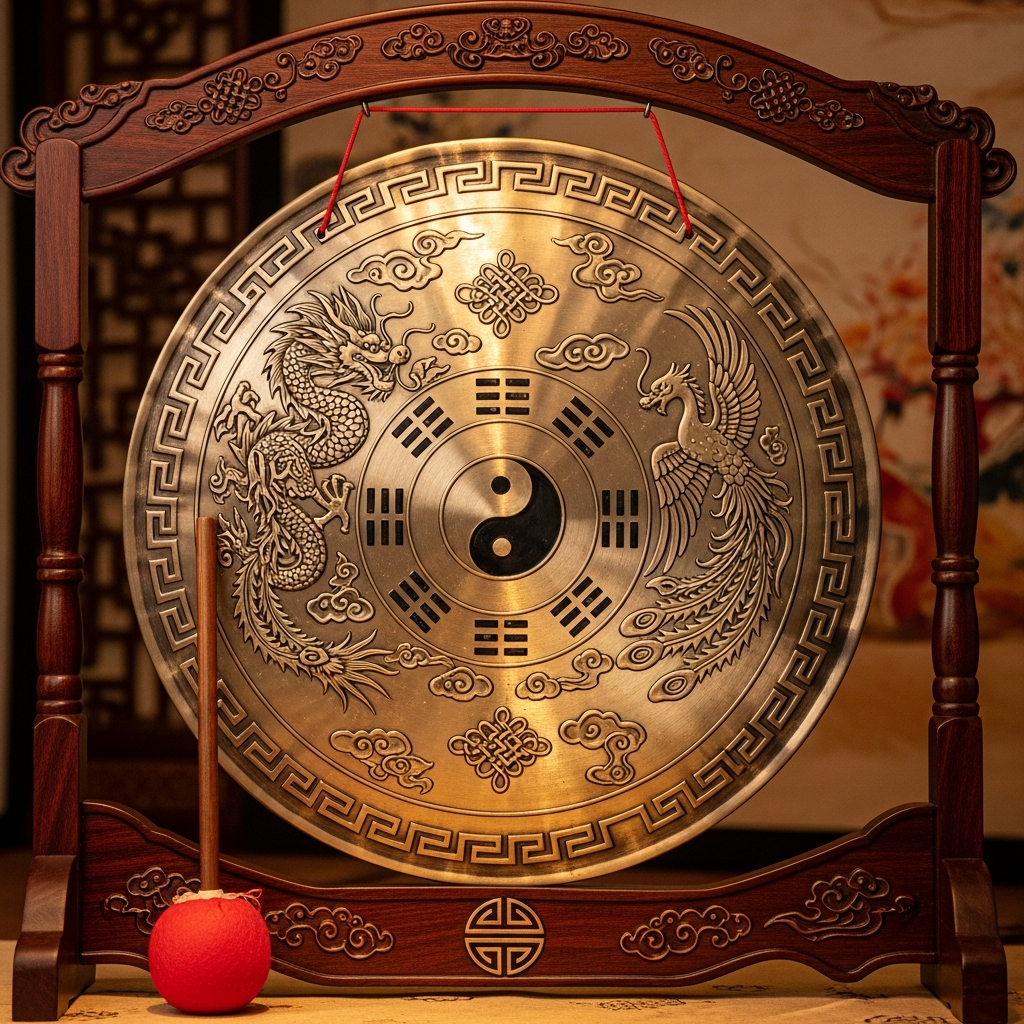
The sound of a gong is more than just a musical tone; it is an experience, a command, and a bridge between worlds. The profound depth and vibrational complexity of this seemingly simple instrument have cemented its place across millennia as a powerful cultural and spiritual artifact. Understanding Gong Symbolism requires a journey through ancient courts, sacred temples, and modern wellness sanctuaries, where its thunderous voice continues to resonate with deep, intrinsic meaning. This symbolism is not static; it has evolved from an emblem of temporal power to a tool for profound personal transformation, yet its core essence remains tied to unity and the cosmos.
Defining the Resonance: What is Gong Symbolism?
Gong Symbolism is the collective set of deep, often multi-layered meanings, cultural values, and spiritual properties assigned to the gong instrument across various societies and historical periods.
This rich symbolic tradition encompasses several key areas:
- Social Status: In East Asian cultures, the size and material of a gong often represented the owner’s wealth and social standing.
- A Call to Order: Historically, the sound served as a powerful signal for battle, religious ceremonies, and community gatherings.
- Spiritual Awakening: In contemporary use, particularly in sound healing, the gong symbolizes the journey toward inner peace, energetic clearance, and deep spiritual shifts.
- Cosmic Representation: Its circular shape often reflects the sun, the moon, or the totality of the universe.
The complex layers of sound the instrument produces reflect a symbolism that is rich, continuous, and universally impactful, making the study of Gong Symbolism a fascinating exploration of human connection to sound.
A Journey Through Time: Historical and Cultural Gong Symbolism
The history of the gong spans more than three millennia, originating primarily in Bronze Age cultures of Asia. The earliest known examples of gongs trace back to China and the region now known as Indochina. From its inception, the instrument was inherently entwined with power, ritual, and communication, immediately establishing a deep and commanding layer of Gong Symbolism that persists to this day. This historical context is vital, as the original use cases informed the subsequent spiritual and cultural weight the instrument would carry.
The sheer difficulty and expense of casting large, high-quality bronze gongs meant that only the elite could commission or own them. This simple fact of metallurgy is the foundation for one of the instrument’s earliest meanings: an undeniable symbol of Status and Authority in East Asia.
Status and Authority in East Asia
In ancient China, the possession of a large, finely crafted gong was not merely a musical choice; it was a visible declaration of aristocratic standing and wealth. Families often showcased gongs as a representation of their social standing, where the sound itself announced their presence and importance. This aspect of Gong Symbolism transformed the object from an instrument into an heirloom, a tangible link to family history and prestige.
Furthermore, the gong’s role extended far beyond private displays of wealth. Its powerful, penetrating sound made it an ideal signaling device for both the military and the state. Imagine a battlefield or a royal procession: the booming voice of the gong cuts through the noise, serving as the ultimate audible command. It was the sound of authority, demanding immediate attention and obedience, a practical function that reinforces the inherent power in Gong Symbolism.
In the Indonesian archipelago, particularly on Java and Bali, the gong is the backbone of the Gamelan ensemble, a sophisticated orchestral form. Here, Gong Symbolism takes on a cosmological structure. The largest gongs, known as Gong Ageng, anchor the entire ensemble, both musically and symbolically.
The Gong Ageng* is the spiritual center: It is often treated with reverence, draped in fine cloth, and never stepped over.
Its sound marks the cycle: The resonant, deep, and final strike of the Gong Ageng demarcates the end of a musical cycle (gongan*). This act symbolizes the return to unity, the completion of a cosmic pattern, or the end of a temporal period, representing order and cyclical time.
- It embodies the ultimate truth: The great gong is often considered the most sacred instrument in the Gamelan, embodying the ultimate spiritual reality or the divine essence from which all other elements of the music emerge and to which they ultimately return.
This intricate role in the Gamelan demonstrates how profoundly Gong Symbolism can be woven into the cultural fabric, representing not just wealth, but philosophical and cosmological truths.
The Metaphysical and Spiritual Power
Beyond its secular status, the gong has always possessed potent metaphysical properties, especially within the spiritual traditions of Buddhism and Daoism. In these contexts, the symbolism shifts from earthly power to transcendent reality. For example, some traditional Chinese gongs used for religious rituals are inscribed with the Mandarin characters ‘Tai Loi,’ which beautifully translate to ‘Happiness has Arrived’. This simple inscription speaks volumes about the instrument’s capacity to usher in positive spiritual energies and good fortune.
The sound itself is the key to this spiritual Gong Symbolism. It is often described as creating a ‘void’ or an ’empty space’ in the listener’s mind.
- Cutting through Illusion: The sheer complexity and overwhelming nature of the gong’s sound—a wall of complex overtones—is believed to bypass the analytical mind, silencing the internal chatter that constitutes everyday suffering and illusion.
- A Call to the Divine: In temples, the striking of a gong signals prayer times, announces the beginning of a ceremony, or marks the passage of time, acting as a clear, resonant call to mindfulness and spiritual presence. It helps practitioners detach from the mundane and connect with the sacred.
The ancient belief that touching a gong brings you good fortune and strength further highlights the profound respect and spiritual association the instrument carries. This isn’t just a physical contact; it’s an energetic one, a belief in transferring the gong’s powerful, unifying resonance directly to the individual. Therefore, throughout its history, the deeper layers of Gong Symbolism have been about channeling powerful, benevolent forces—whether they be military, governmental, or spiritual.
The Cosmic Mirror: Astrological and Elemental Gong Symbolism
One of the most elaborate and fascinating developments in the symbolism of the instrument comes from the modern interpretations of the gong’s ability to mirror the cosmos. This is most vividly expressed in the concept of Planet Gongs, a specialized form of the instrument tuned to specific orbital frequencies of celestial bodies. This practice elevates Gong Symbolism from an earthly cultural object to a microcosm of the entire universe, a sound device that vibrates with the mathematics of the heavens.
The Gong as a Microcosm of the Universe
The circular shape of the gong is the initial key to its cosmic Gong Symbolism. A perfect disc, it naturally evokes the sun, the moon, and the planets. It represents totality, unity, and the boundless nature of the universe. When struck, the radiating waves of sound move outward from the center, mirroring the very act of creation, the Big Bang itself, or the ripple effect of energy through space.
The planet gong tradition, inspired by the work of mathematician Hans Cousto, ties the frequencies of the gong directly to astronomical movements:
- The Sun Gong: Represents vitality, life force, and the center of being, resonating with a frequency related to the Earth’s orbit around the Sun. Its sound is often deep, grounding, and powerful, symbolizing the source of all energy.
- The Earth Gong: Tuned to the orbital path or rotation of the Earth, its sound promotes grounding, stability, and connection to the physical realm. It is the sonic equivalent of feeling truly “at home” in one’s body.
- The Neptune Gong: With its connection to the more mysterious, spiritual, and oceanic realms, its sound is often ethereal, symbolizing intuition and the collective unconscious.
This specific tuning system transforms the instrument into a sonic map of the solar system. Playing a planet gong is, in essence, sounding the very notes of the universe, allowing listeners to ‘vibrate’ in harmony with the celestial order. This intricate system greatly expands the field of Gong Symbolism, connecting personal well-being directly to cosmic cycles. The fact that practitioners choose specific gongs to address specific human conditions—like choosing a Mercury gong for communication issues or a Venus gong for issues of harmony and love—demonstrates the incredible specificity of modern Gong Symbolism.
The Elemental Connection: Earth, Water, Fire, Air
In many traditions, including both Chinese and Vedic systems, the universe is composed of fundamental elements. The gong, in its material, its use, and its sound, reflects all of these. This deep elemental connection is another pillar of strong Gong Symbolism.
- Earth Symbolism: The gong itself is a physical object, often made of bronze, an alloy of copper and tin. This solid, metallic origin ties it firmly to the Earth element, representing stability, material form, and grounding. The deep, heavy resonance of a large gong can feel physically grounding, much like a deep connection to the earth beneath one’s feet.
- Water Symbolism: Paradoxically, the sound of a gong, particularly a high-quality Paiste or similar-style gong, is often described as ‘shimmering’ or ‘fluid.’ The wash of complex harmonics can evoke the sound of a deep ocean, rushing waterfalls, or gently flowing rivers. This fluidity relates to the element of Water, symbolizing emotion, healing, and flow, representing the emotional release often experienced during a sound session.
- Fire Symbolism: The manufacturing process itself is a testament to the element of Fire. The metals must be melted, purified, and forged through intense heat, a process that mirrors transmutation and purification. The sharp, initial impact of the mallet can also be symbolic of Fire, representing energy, action, and the clearing of stagnant energy.
- Air/Ether Symbolism: Most importantly, the sound travels through the air, embodying the element of Air, which symbolizes movement, intellect, and breath. The highest form of this is the element of Ether (or Space), which the sound ultimately fills. This filling of space and the overwhelming nature of the sustained sound is the ultimate expression of Gong Symbolism as a tool to access non-physical, transcendent states of consciousness.
By encompassing all the elements, the instrument itself becomes a complete ecosystem, a perfect object for holistic healing and spiritual practice. This full-spectrum elemental connection is what gives the sound of the instrument its unparalleled therapeutic power and its complex Gong Symbolism.
The Modern Resurgence: Gong Symbolism in the Wellness World
While the ancient and cultural roots of Gong Symbolism are profound, its modern expression has catapulted the instrument into the mainstream wellness industry. The phenomenon known as the ‘Gong Bath’ or ‘Sound Bath’ has become a global trend, demonstrating a remarkable resurgence of interest in its vibrational and psychological effects. This is not a new-age fad but a contemporary adoption of an ancient technology, reflecting a society-wide desire for stress relief and deeper connection.
Statistical data confirms this trend: the popularity of sound baths, where the gong is the central instrument, has seen an explosive rise, with one report noting a 285% increase in popularity over a recent period. This trend illustrates a massive shift in how the public perceives and utilizes the power inherent in Gong Symbolism. It has transitioned from a ceremonial object to a personal therapeutic tool.
Spiritual Awakening and Inner Shift: The Sound Bath Phenomenon
In the context of sound healing, Gong Symbolism is primarily focused on transformation. The overwhelming, enveloping soundscape created by a master practitioner is often described as creating a kind of sonic cocoon. In this environment, the instrument is symbolic of spiritual awakening and the initiation of profound inner shifts.
The sound bath experience leverages the gong’s complex array of overtones to induce a state of deep relaxation, often reaching the delta and theta brainwave states associated with deep sleep and meditative insight.
The Symbolism of the Void: The deep state of meditation fostered by the sound is symbolic of entering a void*—a place where the mental noise of the external world is temporarily silenced. This void is not empty but full of potential, a space for self-reflection and the clearing of emotional debris.
Energetic Clearing: Many practitioners believe that the physical vibration of the gong works to clear energetic blockages* in the body, aligning the chakras, or subtle energy centers. In this sense, the sound’s powerful resonance symbolizes the force that breaks through stagnation, facilitating a flow of vital energy and health.
The consistent, therapeutic use of gongs in yoga studios, retreat centers, and sacred spaces globally underscores this new chapter of Gong Symbolism: the instrument is now a global ambassador for inner peace. It represents the accessible path to a higher state of consciousness, a non-denominational tool for self-exploration and mental hygiene. The rise in popularity shows that more people are seeking to experience the deep resonance of Gong Symbolism firsthand as a means of improving their overall wellbeing.
Therapeutic Value: Vibration as a Healing Force
The modern interpretation of Gong Symbolism is heavily rooted in the concept of vibrational medicine. The premise is that everything in the universe, including the human body, is in a state of vibration. If this vibration is distorted—through stress, illness, or trauma—illness can manifest. The gong is then used as a powerful acoustic tool to ‘retune’ the body.
The physical experience of a gong bath provides compelling evidence for the therapeutic layer of Gong Symbolism:
- Stress Reduction: The immense wash of sound immediately triggers the body’s parasympathetic nervous system, initiating the “rest and digest” response. The gong here symbolizes the powerful release of tension and stress.
- Cellular Resonance: Because the low-frequency sounds of the gong can be felt as much as they are heard, the sound is believed to resonate with the body’s cells and fluids. This physical connection positions the gong as a symbol of holistic realignment, treating the body not just as a mind but as a complete vibrational system.
- The Mandala of Sound: The complex, chaotic-yet-ordered overtones of the gong sound are often compared to a sonic mandala—a complex, ever-changing pattern that aids in focusing the mind. The therapeutic value is found in the ability of this sound to demand attention, yet simultaneously permit the mind to enter a deeply passive state.
This focus on health and relaxation in sound therapy, which includes the use of gongs, is part of a growing market trend in holistic health. The efficacy of these practices is supported by quantitative and anecdotal results, which suggest that the deep vibration inherent in Gong Symbolism positively affects symptoms and overall well-being. This proves that the ancient understanding of the gong as a force for power and change is still relevant, simply channeled toward a personal, rather than societal, power shift.
Interpreting the Shapes and Materials: Deeper Layers of Gong Symbolism
The sheer variety of gongs produced across the world speaks to further complexity in Gong Symbolism. Not all gongs are created equal, and the type, shape, and metallurgy of the instrument all carry their own specific meanings and sonic signatures. The materials are often seen as embodying different forces, making the choice of instrument a deeply symbolic one.
The Symbolism of Shape: Flat vs. Bossed
The two most common physical structures for gongs—flat or ‘Chinese’ gongs, and bossed or ‘nipple’ gongs—represent fundamentally different approaches to sound and, consequently, different Gong Symbolism.
- Flat Gongs (e.g., Chau Gong or Wind Gong): These are characterized by their large, flat profile, with or without a central bullseye. They produce a ‘crash’ or a ‘wash’ of complex, non-specific pitch.
Symbolism: These gongs symbolize the Cosmic Unity or the Void. Their lack of a definite, single pitch reflects the boundless, undifferentiated nature of the universe before form arose. When struck, they transition from silence to a full spectrum of sound (the Om* or primordial sound), representing the moment of creation itself. The black and brass rings on the traditional Chau Gong symbolize the balance between Yin and Yang, the light and the shadow, the continuous cycling of cosmic energy.
- Bossed Gongs (e.g., Javanese Gongs or Knobbed Gongs): These feature a distinct central dome or ‘boss.’ Striking the boss produces a clear, focused fundamental pitch, which is characteristic of Indonesian Gamelan music.
Symbolism: The boss or nipple symbolizes the center point, the focus, or the individual self. Its clear, identifiable pitch represents structure, clarity, and the attainment of a specific, defined state. In the Gamelan, as noted, the bossed gong (Gong Ageng*) symbolizes the ultimate return to the source, a defined end to the musical journey.
The choice between these two forms of Gong Symbolism dictates the nature of the ritual or therapeutic experience, one emphasizing cosmic boundlessness and the other emphasizing focused, structural clarity.
The Metal and the Fire: The Metallurgy of Gong Symbolism
The traditional material for most high-quality gongs is Bronze, an alloy of copper and tin. This choice is no accident, as the material itself holds ancient and powerful Gong Symbolism.
The forging of a gong requires a mastery of metallurgy, a process that has been treated with ritual and deep respect for centuries. The metal must be heated, repeatedly hammered, and then cooled—a process of transformation.
- Copper: Historically associated with the planet Venus, representing love, harmony, and beauty.
- Tin: Associated with the planet Jupiter, representing wisdom, expansion, and prosperity.
The blending of these metals is itself an act of symbolic harmony. The resulting bronze is often referred to as the ‘metal of sound’ because it possesses the perfect combination of hardness and resonance required to produce the complex, sustained vibrations. The gong thus symbolizes the harmonious union of different forces (Venus and Jupiter, masculine and feminine, soft and hard) to create a higher, unified whole: the ultimate sound.
The long, laborious process of its creation imbues the instrument with a sense of immense worth and spiritual power. Every hammer blow is said to infuse the metal with intention and strength, reinforcing the inherent power embedded in the cultural tradition of Gong Symbolism.
The Art of Striking: The Gong Symbolism of Action
The final layer of symbolism lies not just in the instrument itself, but in the act of playing it. A gong is a passive object until it is activated by the mallet, which is traditionally wrapped in felt or leather. The way the instrument is struck—the speed, the intensity, and the placement—all carry their own symbolic weight, moving beyond the physical sound to the intention behind the action.
The Call and Response of the Cosmos
The single, dramatic strike of a large gong often symbolizes a Divine Command or a Cosmic Event. In a sound bath, the initial strike is a symbolic breaking of the everyday silence, an initiation of the journey. It is a moment of powerful declaration, forcing the listener’s awareness fully into the present moment. This deliberate action embodies the powerful, transformative nature of Gong Symbolism.
The sustained, continuous play, where the gong is brought to its full power—a technique known as ‘riding the gong’—symbolizes the continuity of the universe. The practitioner acts as the conduit, maintaining the complex field of sound, which mirrors the continuous, active process of creation and decay that characterizes all existence. It is a living metaphor for the interconnectedness of all things.
The entire practice of sound healing with a gong can be seen as a ritual drama:
- Initial Silence: Represents the state of unmanifested potential.
- The Strike: Represents the moment of creation or the awakening call.
- The Wash of Sound: Represents the continuous, complex unfolding of the material universe.
- The Return to Silence: Represents the completion of a cycle and the return to the ultimate void, where true stillness and insight reside.
Through this ritual, the inherent messages of Gong Symbolism—creation, transformation, and unity—are communicated not through language, but through pure, visceral vibration.
Gong Symbolism in Contemporary Cultural Crossovers
Today, the instrument is finding new symbolic roles outside of traditional spiritual and wellness settings, showcasing its adaptability and enduring power. Gong Symbolism is evolving in unexpected ways, appearing in modern orchestral music, film scores, and even contemporary art installations.
In film, the dramatic sound of the gong is universally recognized as a symbol for:
- Imminent Danger or Catastrophe: Its powerful, sustained crash creates immediate tension, symbolizing the overwhelming nature of a crisis.
- A Shift in Fate: A strike can denote a major plot turning point, symbolizing an unavoidable change or revelation.
- The Exotic or Ancient: Its distinct timbre is often used to instantly signal a connection to East Asian settings, ancient history, or spiritual mysticism.
These contemporary uses, though secular, rely entirely on the deep-seated emotional and cultural weight established over centuries of Gong Symbolism. The sound’s inherent power to command attention and signal a major shift remains the core of its symbolic use.
Conclusion: The Enduring Power of Gong Symbolism
The humble, circular piece of metal holds one of the richest, most complex symbolic histories of any instrument in the world. From being a symbol of wealth and military might in ancient courts to its modern status as a revered tool for achieving personal spiritual awakening, the fundamental message inherent in Gong Symbolism is one of unification and profound transformation.
The journey through the history, metaphysics, and current trends confirms that the gong’s symbolic power is not waning; rather, it is expanding, resonating with a new generation seeking balance and depth in a chaotic world. Whether experienced in a Gamelan orchestra, a quiet temple, or a bustling wellness studio, the sound serves as a potent reminder of our connection to the cosmos, the elements, and the profound, transformative power that is waiting within each of us. The enduring legacy of Gong Symbolism is a testament to the fact that the most powerful messages are often conveyed not through words, but through the deep, unifying voice of vibration itself, a voice that continues to call us toward our highest potential. The global fascination with Gong Symbolism shows that humanity is consistently drawn to the instruments that echo the grand, unified truth of existence.
*
FAQ (Pertanyaan yang Sering Diajukan)
What is the most common meaning of the gong?
The most common and pervasive meaning of the gong is as a powerful symbol of unity and transformation. Its circular shape symbolizes the complete, unified cosmos (the sun or the universe), and its all-encompassing sound is understood to facilitate a spiritual or psychological shift, moving the listener from a state of fragmentation to one of holistic oneness. This core element of Gong Symbolism is consistent from ancient ritual to modern sound healing.
What is the significance of the gong in sound healing?
In sound healing, the significance of the gong is primarily therapeutic and spiritual. It symbolizes energetic clearance and spiritual awakening. The dense, complex vibrations are believed to break up energetic blockages, silence the analytical mind, and induce deep meditative states (theta and delta brainwaves). This deep relaxation supports the body’s natural healing processes and facilitates profound emotional and mental release.
Where did the symbolism of the gong originate?
The symbolism of the gong largely originated in ancient East Asia, particularly in China, Southeast Asia, and the Indonesian archipelago, with a history spanning over 3,000 years. Initially, its symbolism was tied to status, wealth, and military power due to the high cost of its bronze materials and the authority of its commanding sound. Over time, spiritual traditions adopted the instrument, enriching Gong Symbolism with meanings of cosmic order and metaphysical power.
Why is the gong considered a symbol of good fortune?
The gong is considered a symbol of good fortune in several East Asian cultures because of its historical association with noble status and spiritual ceremony. For instance, traditional Chinese gongs used for religious purposes are often inscribed with the characters ‘Tai Loi,’ which translate to ‘Happiness has Arrived’. Additionally, a popular belief holds that merely touching a gong can bring the individual good fortune and strength.
*